
March 9, 2010
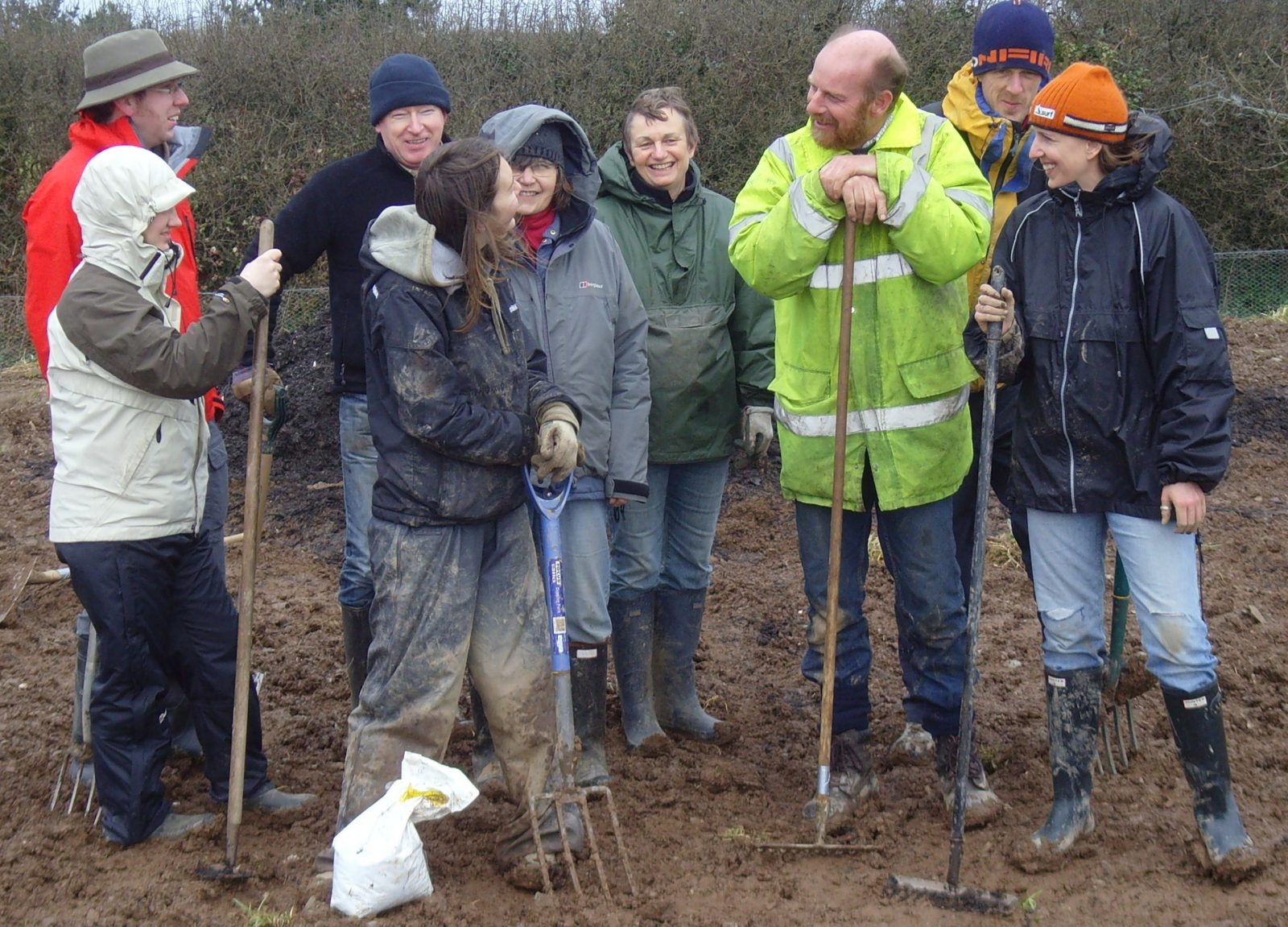
You’re all invited to join our first vegetable growing session of the year this Sunday 14 March. It’s exactly a year to the day since our volunteer team started preparing the ground and planting the first seeds.
We’ll be out in force from 10am onwards on Camel CSA’s site behind St Kew Harvest Farm Shop, just outside St Kew Highway. There’s plenty of parking.
Please turn up any time between 10am and 12 noon. We’re a friendly and energetic bunch and you’ll be made to feel very welcome. We represent all ages, shapes and sizes.
Be prepared to get your hands dirty. Wear old clothes, boots and a hat and bring gardening gloves.
If it’s threatening rain you’ll need a waterproof jacket and some waterproof trousers, as there’s limited shelter from the elements. If you can, please bring tools – forks for tackling the dockleaves, plus hoes and hand tools for weeding the broad beans and garlic. We’ll be planting some celeriac and parsley seeds into modules as well.
We always stop for a refreshment break – tea, coffee and water are provided. You may want to bring a snack to boost your energy levels as it can be hard work! If you’d like to know more about these Sunday growing sessions, don’t hesitate to contact us.
Other jobs
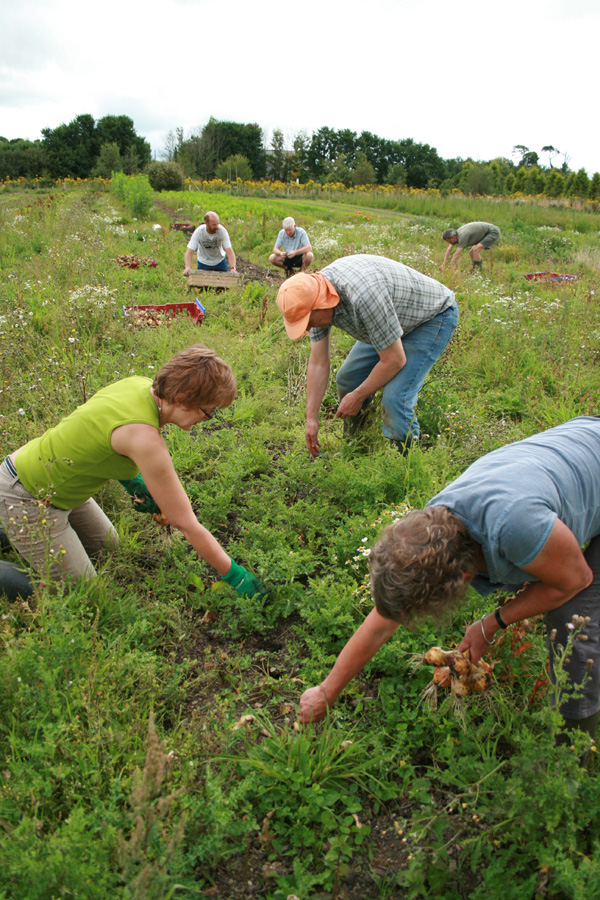
If you’d rather help with preparing vegetables and packing veg boxes, you can join our volunteer picking and packing team on a Friday morning between 10am and 12 noon.
This enthusiastic and sociable group has been turning out every week since our first harvest last July.
A few of the regulars normally have a cup of coffee or tea (cakes optional!) in the shop afterwards. Please contact us if you’d like to join the Friday picking and packing rota.
Lastly, if admin’s more your thing we can always use your skills. Please get in touch with a member of the core group to find out what needs doing. There’s always something on the to-do list.
March 8, 2010
The local food movement is too fragmented and can only work if the government puts its full weight behind it. So Professor Kevin Morgan of Cardiff University, told guests at the Growing Collaboration event at the Eden Project in Cornwall.
The “quiet revolution” against our industrialised food system is helping more people to understand where their food comes from and how it’s produced.
But action is needed at the centre to counteract the hidden health, environmental and economic costs of our cheap food culture, said Professor Morgan, a member of the Food Ethics Council:
“Nothing helps people to reconnect more than food. Locally, sustainably-produced food is absolutely essential.
The biggest weakness of our local food movement is fragmentation and localisation. It can’t do anything until central government acts in a more strategic way. The government has to get its act together to be more supportive.”
The Growing Collaboration conference was organised by Eatsome, an NHS-funded project which aims to improve healthy eating in Cornwall. The event enabled people who grow, prepare and eat food in a sustainable way to get together, share their experience and strengthen contact.
The fragmented nature of Cornwall’s own local food projects became evident during the three-minute “soap box” slot at the conference, when we all had a chance to explain what we’re doing.
Here’s a selection: –
- Camel Community Supported Agriculture – that’s us, of course
- Bugle Greenspace – its Growing Together project aims to link owners of unused gardens and greenhouses with other local people who would like to grow their own but don’t have a growing space
- Trevalon Organic Vegetables – established organic veg box scheme and online shop near Liskeard supplying local businesses. In the process of setting up a Community Supported Agriculture Scheme
- Chyan Community Field – volunteers around Penryn are developing allotments, pond, strawbale tea-shed and toolstore, sensory garden, composting area, covered cob seat, playground and community orchard
- Seeds, Soup and Sarnies – providing families in St Blazey and Treverbyn parishes and parts of St Austell with the chance to share gardening skills and favourite recipes
- Cornish Guild of Smallholders – Lostwithiel Local Produce Market, Taste Cornwall community shop in Liskeard, annual show
- Transition Cornwall Network – supporting Transition groups throughout Cornwall move towards a positive, resilient, low carbon future
- Soil Association – helping to develop community supported agriculture projects in partnership with Making Local Food Work
- Cornwall Neighbourhoods for Change (CN4C) – its Growing Food at Home programme aims to make home-grown food more accessible. Works with Cornwall Waste Action‘s compost project
- Healthy Early Years (HEY) – “nipper nutrition” project aimed at nurseries
- The Big Lunch – annual Eden Project initiative to get people out on their street, raise a glass and share food with their neighbours
- Penair School chef – unorthodox and award-winning approach to school dinners in Cornwall
- Cornwall Food Programme – addressing the local food supply needs of the NHS in Cornwall
- Cornwall Healthier Eating and Food Safety Awards (CHEFS) – award scheme for restaurants and cafes
- Cornwall Agri-food Council – aims to “transform Cornwall into the UK’s exemplar agri-food centre of excellence”
- Somerset Land & Food – developing a digital tool to map food projects in the south west
It should now be clear why we all need to be working together in a much more organised way!
March 5, 2010
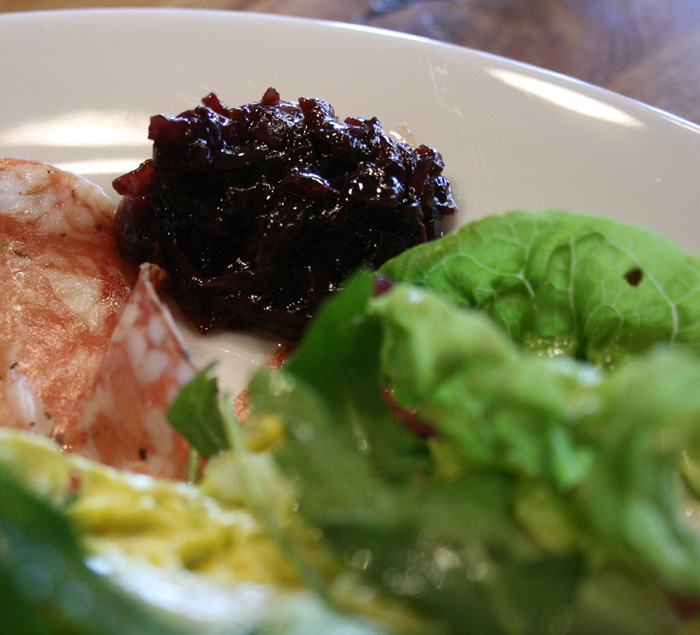
From Sarah Raven’s Garden Cookbook – “the perfect thing to eat for lunch with bread and cheese … and it’s delicious with sausages and mash”, she says. It keeps well in the fridge for about a month.
Preparation: 10 minutes
Cooking: about an hour
Ingredients (for 3-4 jars)
2 garlic cloves
sea salt and black pepper
4 tbsp olive oil
450g red onions, sliced
4 tbsp red wine
4 tbsp balsamic vinegar
1 tbsp soft brown sugar
few sprigs of thyme
Method
Crush the garlic with some sea salt and heat the olive oil in a heavy-based saucepan. Add the onions and garlic, and sweat gently, without allowing them to brown, for 20 minutes. Cook until they are translucent and soft.
Add the red wine, balsamic vinegar and brown sugar, and simmer gently until most of the liquid has evaporated, which will take about 15-20 minutes.
Add the thyme, season with salt and pepper and cook for a further 5 minutes. Put into warm sterilised jars and cover while still hot.
All the boxes this week will have:
potatoes (Burlerrow Farm, St Mabyn)
onions (Rest Harrow Farm, Trebetherick)
carrots (Rest Harrow Farm)
* parsnips (Jeremy Brown)
* jerusalem artichokes (Camel CSA)
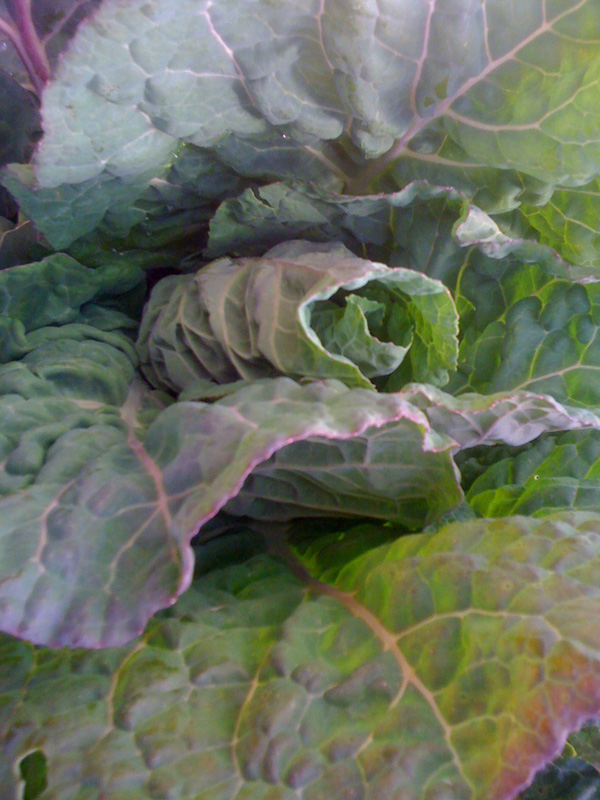
savoy cabbage (Rest Harrow Farm)
spring greens (Rest Harrow Farm)
Standard boxes will have larger quantities of some of these plus:
* pak choi (Jeremy)
leeks (Rest Harrow Farm)
cauliflower (Rest Harrow Farm)
Large boxes will also have:
* coriander (Jeremy)
swede (Rest Harrow Farm)
red cabbage (Rest Harrow Farm)
Read a Guardian article about jerusalem artichokes – including a few recipe suggestions.
March 1, 2010
The days of food rationing may be long over but the need to alter our eating habits is as important as ever. This became clear on my recent visit to – of all places – the Imperial War Museum in London.
Its Ministry of Food exhibition reveals some fascinating parallels between the dig for victory campaign in the Second World War and the enthusiasm that we all now share for growing our own food.
It shows that eating seasonal fruit and vegetables, healthy nutrition, recycling and reducing imports were just as important in 1940 as they are today.
But for very different reasons 70 years ago, of course.
Back then as now, people queued up for allotments and pledged to grow fruit and vegetables at work and in their gardens. They learned all about crop rotation, the value of nutritious green manure and how to create rich, sweet-smelling compost. They clubbed together to raise pigs, poultry and rabbits.

By 1943, more than six million British families were growing their own veg. The number of allotments had doubled to 1.75 million compared to 850,000 in 1939. Potatoes – led by cheery icon Potato Pete – replaced imported wheat as a staple of the wartime diet because they were full of vitamin C, easy to grow, cheap, filling and energy-rich.
A vegetable list to provide “winter meals from a well-planned plot” itemised potatoes, cabbage, sprouting broccoli, carrots, onions, shallots, beetroot, swede, brussels sprouts, parsnips, leeks, kale, savoy cabbage, spinach beet and turnip.
Unsurprisingly, it mirrors the contents of Camel Community Supported Agriculture’s own seasonal weekly veg boxes being handed out to our members during the winter months.
The only difference is, thanks largely to multicultural influences, that our seasonal recipes are much more tasty and adventurous!
The Ministry of Food exhibition runs at the Imperial War Museum in London until 3 January 2011. It’s sponsored by Company of Cooks.