-
We veg growers hate those meeces to pieces!
Posted on March 27th, 2012 1 comment
Wee, sleekit, cow’ring, tim’rous beasties? Or nasty little pests that dig up our seeds and pee all over our polytunnels?Sharing a vegetable-growing site with Cornish wildlife can have its drawbacks. We’ve been overrun by a plague of long-tailed field mice.
They’ve taken up residence in our potting shed amid the piles of cardboard that we’re using for our lasagne gardening. They’ve run riot all over the polytunnels and eaten everything from beetroot to
onion seeds.So we’ve begun to hang the seed trays from the rafters of the polytunnels. And we’ve decided to resort to more drastic action.
Camel CSA 1: Meeces 0
But as the war against pesky predators continues, so much for the best-laid schemes o’ mice an’ men. Now we’ve discovered an entire newly-sown bed of broad beans have gone missing…
-
Seasonal local food recipe No 136: Chocolate beetroot cake
Posted on March 9th, 2012 No commentsThis Nigel Slater recipe is for a cake that’s rich, moist and oozing. It’s recommended by Danny Barry, Camel CSA’s treasurer. ”Ideal for supper parties,” she says. It’s from Nigel Slater’s Tender Volume 1.
Preparation time: 30-40 minutes
Cooking time: 40 minutesIngredients
250g beetroot
200g fine dark chocolate (70% cocoa solids)
4 tbsp hot espresso coffee
200g butter
135g plain flour
1 heaped tsp of baking powder
3 tsp good-quality cocoa powder
5 eggs
190g golden caster sugar
Crème fraîche and poppy seeds, to serveMethod
Lightly butter a 20cm loose-bottomed cake tin and line the base with a disc of baking parchment. Set the oven to 180C/gas mark 4.Cook the beetroot, whole and unpeeled, in boiling unsalted water. Depending on their size, they will be knifepoint tender within 30 to 40 minutes. Young ones may take slightly less. Drain them, let them cool under running water, then peel them, slice out their stem and root, and blitz to a rough purée.
Melt the chocolate, snapped into small pieces, in a small bowl resting over a pot of simmering water. Don’t stir. When the chocolate looks almost melted, pour the hot coffee over it and stir once. Cut the butter into small pieces – the smaller the better –and add to the melted chocolate. Dip the butter down under the surface of the chocolate with a spoon (as best you can) and leave to soften.
Sift together the flour, baking powder and cocoa. Separate the eggs; put the whites in a mixing bowl. Stir the yolks together.
Now, working quickly but gently, remove the bowl of chocolate from the heat and stir until the butter has melted into the chocolate. Leave for a few minutes, then stir in the egg yolks. Do this quickly, mixing firmly so the eggs blend into the mixture. Fold in the beetroot. Whisk the egg whites until stiff, then fold in the sugar. Firmly but tenderly fold the beaten egg whites and sugar into the chocolate mixture. A large metal spoon is what you want; work in a deep, figure-of-eight movement but take care not to over-mix. Fold in the flour and cocoa.
Transfer quickly to the prepared cake tin and put in the oven, turning the heat down immediately to 160C/gas mark 3. Bake for 40 minutes. The rim of the cake will feel spongy, the inner part should still wobble a little when gently shaken.
Leave to cool (it will sink a tad in the centre), loosening it around the edges with a palette knife after half an hour or so. It is not a good idea to remove the cake from its tin until it is completely cold. Serve in thick slices, with crème fraîche and poppy seeds.
Nigel Slater adds:”The serving suggestion of crème fraîche is not just a nod to the soured cream so close to beetroot’s Eastern European heart, it is an important part of the cake.”
If you liked this, why not try Beetroot seed cake?
-
More seasonal local veg in the boxes this week
Posted on February 9th, 2012 No commentsEveryone will have:
* onions
* savoy cabbage
* carrots
* beetroot
* jerusalem artichokes
purple sprouting broccoli (Restharrow Farm, Trebetherick)
potatoes (Burlerrow Farm, St Mabyn)Standard boxes will have extra potatoes plus:
* salad bag
cauliflower (Restharrow Farm))
leeks (Restharrow Farm) -
Chilli festive garlands ready to go in Christmas veg boxes
Posted on December 19th, 2011 No comments
Camel CSA members got together as planned to create around 40 decorative chilli strings for our Christmas vegetable boxes.At a ready guess we used up more than 4,000 surplus chillies harvested from the magnificent crop in our second polytunnel.
The garlands make beautiful swags for the mantelpiece, table centrepieces or runners, or Christmas tree decorations.
And, of course, they can be eaten!
Festive greetings to the chilli stringing team – Anne, Caroline, Cath, Charlotte, Danny, Evie, Jenny, Kitty, Mark, Penny, Robert, Tess and Trish F.
-
Hot chilli Christmas garlands create festive fire
Posted on December 4th, 2011 No commentsCamel CSA’s vegetable boxes have been overflowing with a surplus of produce for months now.
All kinds of chutneys and preserves have been made from the veg gluts, but we’ve been almost defeated by the enormous surplus of chillies cultivated in our second polytunnel.The problem with chillies is that a little goes a very long way.
They feature regularly in our weekly vegetable boxes. Volunteer veg packer Henrietta has made some into chilli jam. Volunteer grower Mark M (who loves to crunch them up raw) pickled some chillies in vinegar. Membership secretary Cath experimented with chilli oil.
All these culinary enterprises proved extremely expensive and time-consuming. I still have hundreds - no thousands – of chillies drying out slowly on the laundry rack above my boiler at home.
Enter now the artistic wing of our food-growing social enterprise.
The latest plan is to turn the chilli surplus into natural edible garlands to go in our Christmas veg boxes. After the festivities are over, the chillies can be plucked from the decorative string and used in cooking.We’re holding a chilli stringing evening this coming week, when the hundreds of chillis will be threaded on to fishing line. We’re supplying the wine, the chillies, the materials and the surgical gloves(!) Camel CSA members are providing the labour.
I’m amazed at what people charge for hot chilli garlands, centrepieces and edible chilli and herb garlands, so I’ll be interested to see how many we can string together in just one evening!
-
‘Cut and come again’ salads are worth the effort
Posted on November 30th, 2011 No commentsNow I know why oriental salad leaves are so expensive in the supermarkets!
We’re cultivating an assortment of indoor-grown oriental and other baby leaves in our first polytunnel.These “cut and come again” crops should last us until early spring (with a gap when they stop for a rest in the short, dull days of mid-winter).
There’s quite a variety - spicy red mustard, mizuna and mibuna, pak choi, curly endive, baby chard, parsley (“French” flat as well as curly-leaved) and mixed lettuce.
But it takes two or more people around two hours every Friday morning to pick enough leaves for the 35 or more weekly vegetable boxes. It requires nimble fingers and is incredibly labour intensive.There’s one big mitigating factor about all this for the volunteer pickers. Salad leaf picking is guaranteed warm, dry work which is also out of the wind.
Arguably much more satisfactory than parsnip, leek or carrot lifting which are cold, wet and muddy jobs.
-
Camel CSA invites food lovers to join veg box scheme
Posted on November 7th, 2011 No commentsKeep an eye out for our stunning new posters designed by Emma Julian of Pickle Design in Wadebridge.
They’re helping to spread the word about our community grow-your-own project and weekly vegetable box scheme in north Cornwall.
It’s a great way to support local food and save food miles! Anyone living within a 10-mile radius of St Kew Highway is welcome to join us. We grow a range of vegetables to organic principles. The weekly boxes are ready to collect by 12 noon every Friday.
-
How Camel CSA deals with veg gluts and surpluses
Posted on October 18th, 2011 No commentsI love autumn. And there’s no better time of year to be involved in a community agriculture project.
The veg boxes are bursting with our own-grown Cornish produce – including delicacies like raddichio and fresh borlotti beans.At this moment my kitchen is filling with a tantalising spicy aroma - a mix of allspice, ginger, pepper, brown sugar, vinegar - coming from a large pan of chutney bubbling on the stove.
The green tomato and apple chutney is being made with our surplus produce – using unripe tomatoes from the polytunnel, apples from our adopted orchard and onions and garlic from our dry store.
Other Camel CSA members are also busy making pickles and preserves from other vegetables. Henrietta has a garage full of runner bean chutney, turnip pickle and tomato marmalade. Cath’s about to start producing chilli oil (oh boy, do we have a glut of chillis!)
We’re not doing anything new, of course. Preserving is a traditional way of using up fruit and veg surpluses that helps provide some variety in the winter months and during the “hungry gap” in spring.
So look out for all these delicious goodies as they start appearing from Christmas onwards in our weekly veg boxes.
-
Camel CSA joins the Eden Cafe Conversations
Posted on October 17th, 2011 No commentsOur community supported agriculture project has a guest slot this Wednesday evening at the Eden Project’s Cafe Conversations.

Eden’s new eco cafe is in St Austell town centre. Its free event this Wednesday 19 October from 6.30 - 8.30pm is about the joys of growing, cooking and eating community food.
I’ll be talking about what we’ve learned at Camel CSA about running a community grow-your-own project – the successes and the setbacks. The other guest is Clive Cobb, creative thinker behind Town Mill Bakery in Dorset and the new Eden Bakery.
In the Eden Project’s words: “Whether you’re a food producer, aspiring grower or just curious to know a bit more, come and join the conversation.”
Why not join us? Find the Eden Project Cafe here.
-
Apple Day generates juicy treats for us all
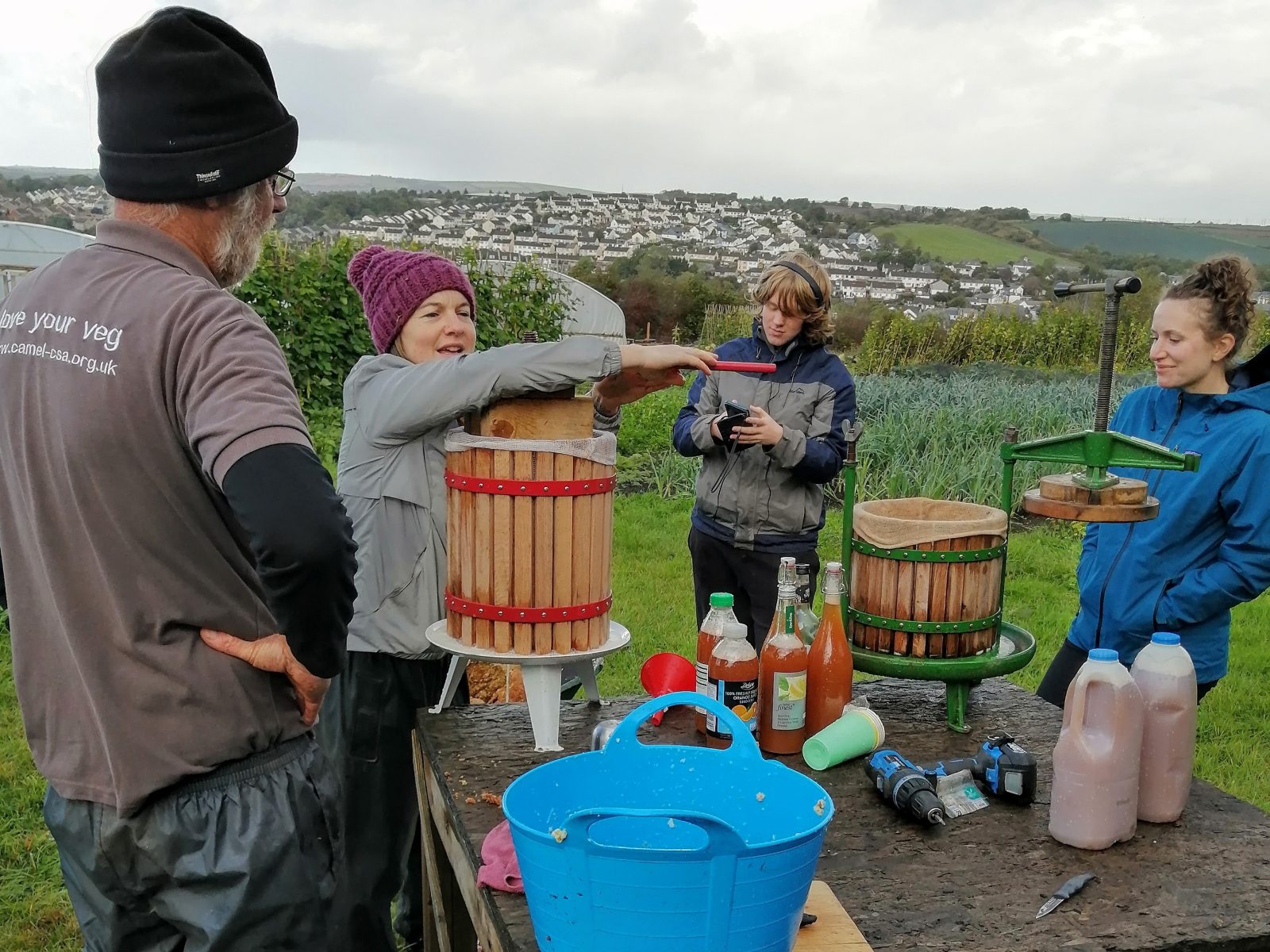
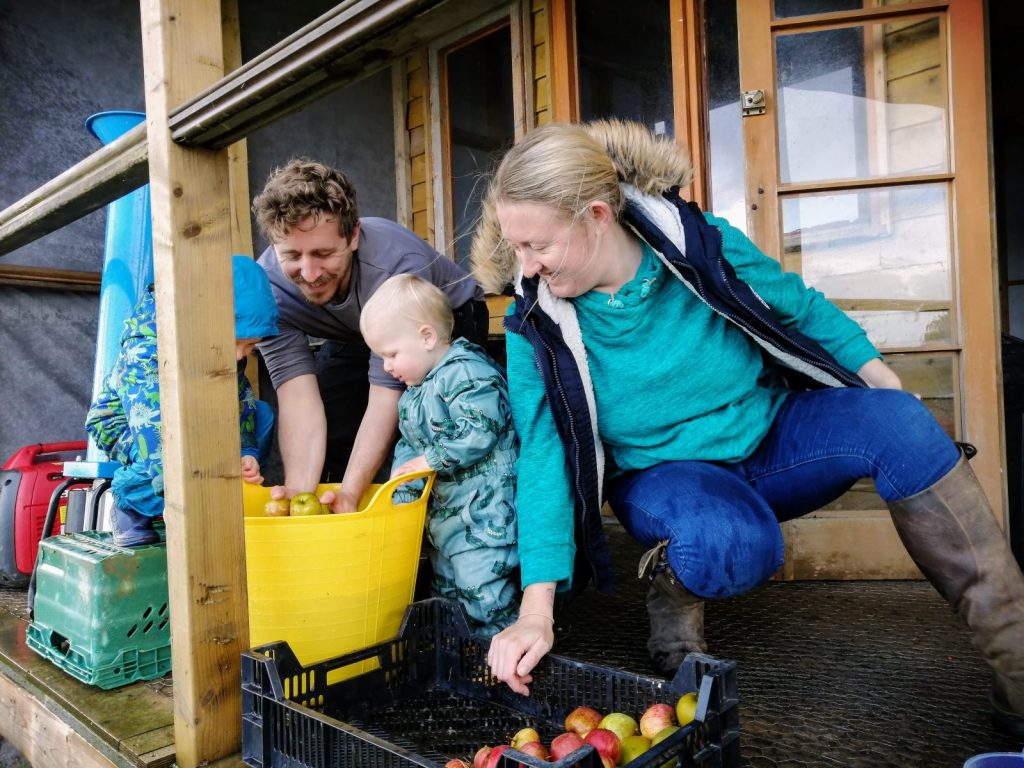
Posted on October 15th, 2011 No commentsCamel CSA’s third annual Apple Day was our best ever – in spite of the Cornish mizzle. All ages pitched in to chop, crush and press around 90 litres of apple juice to share among everyone who took part.
We’ve had an abundance of apples to juice this year. Most were picked from our adopted orchard in St Mabyn, the rest came from members’ gardens.Our team didn’t have the time or energy to press the entire mountain of fruit before the equipment had to go back to our friends at Chyan Community Field.
So we came to an agreement with the St Mabyn “Cider Boys” (don’t ask!) and we now have an extra 50 litres or so of delicious juice to share out.