
February 18, 2026
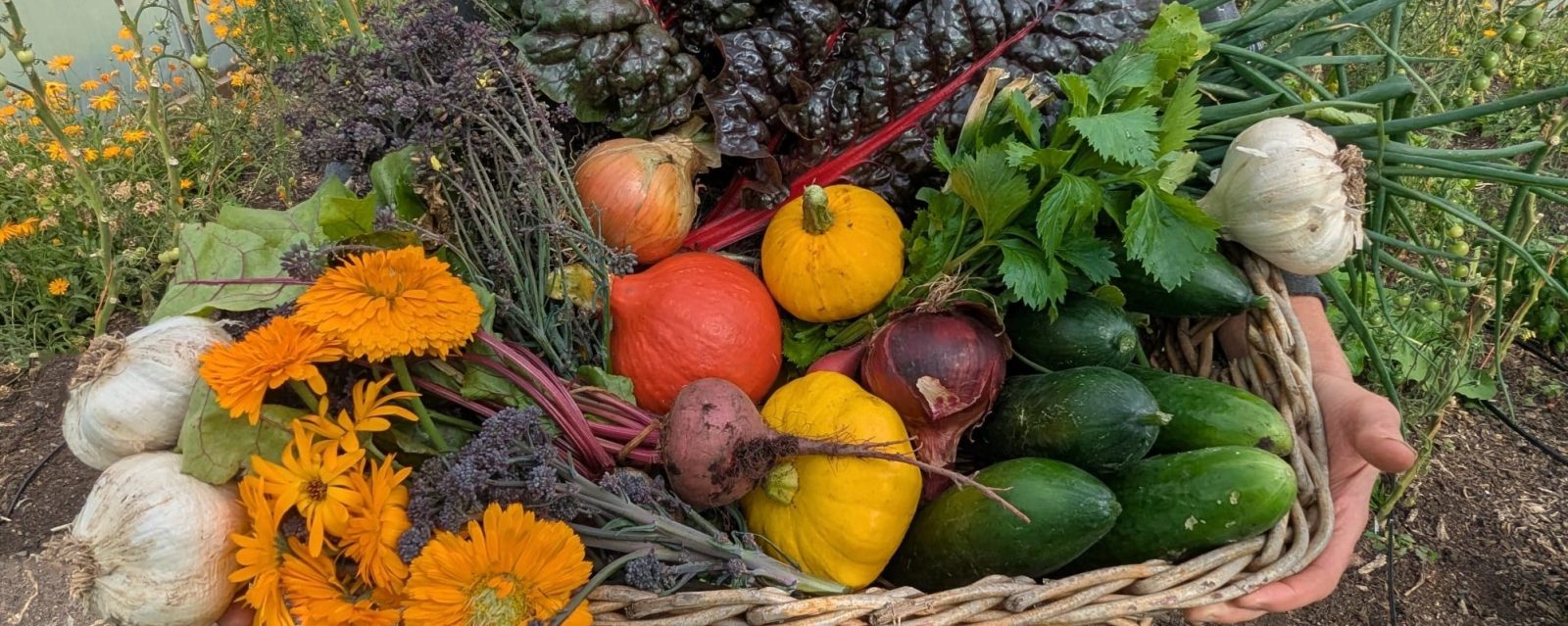
Our weekly veg bags reflect what’s growing on site so you’ll always received fresh, delicious, seasonal veg.
Here are some examples of what you can expect throughout the year.
Spring:
- Purple sprouting broccoli
- Oriental salad leaves
- Celeriac
- Cauliflower
- Onions
- Potatoes
- Chard
Summer:
- Broad beans
- Salad leaves
- Radishes
- Strawberries
- Cabbage
- Tomatoes
- Cucumber
- Courgettes
Autumn:
- Green chillis
- Aubergines
- Tomatoes
- Cucumbers
- Beetroot
- French beans
- Salad leaf mix
Winter:
- Kale
- Squash
- Coriander
- Parsnips
- Potatoes
- Spring onions
- Beetroot
January 6, 2026
Do you have some spare time to help lead our organisation? If so, we’d love to hear from you.
Camel CSA is a friendly, motivated group working to grow healthy, tasty vegetables to organic principles. We supply weekly veg boxes, provide paid work for growers, support other local producers, and offer fantastic volunteering opportunities for people who enjoy being outside and working as part of a welcoming team.
We’re looking for a volunteer chair and vice chair to help lead our organisation.
Chair — what you’ll do
- Chair one management meeting per month, help set direction and track progress on key actions.
- Volunteer about 2–3 hours per week.
- Receive lots of support from our friendly team.
For more information please see the full chair job description here.
Vice Chair — what you’ll do
- Act as the link between the growing site and the management group.
- Be at the farm for a couple of hours on either Thursday or Friday mornings, plus 1–2 hours of offsite work each week.
- A hands‑on, rewarding role working closely with growers and volunteers — you’ll see the results of your work each week and receive lots of support from our team.
For more information please see the full vice chair job description here.
We’ll be holding a drop-in Zoom call on Monday 19th January from 7pm to 8pm. Please join to speak to members of our team directly about the roles and what we do. Join the Zoom call here.
Or, alternatively, please email our volunteer coordinator Ve at enquiries@camel-csa.org.uk
Or, feel free to visit us on a Thursday or Friday morning at Treraven Farm, Treraven Lane, PL27 7JZ.
If you’d like to help steer a warm, practical community project and be part of producing beautiful vegetables for our community, we’d love to hear from you.
January 5, 2026
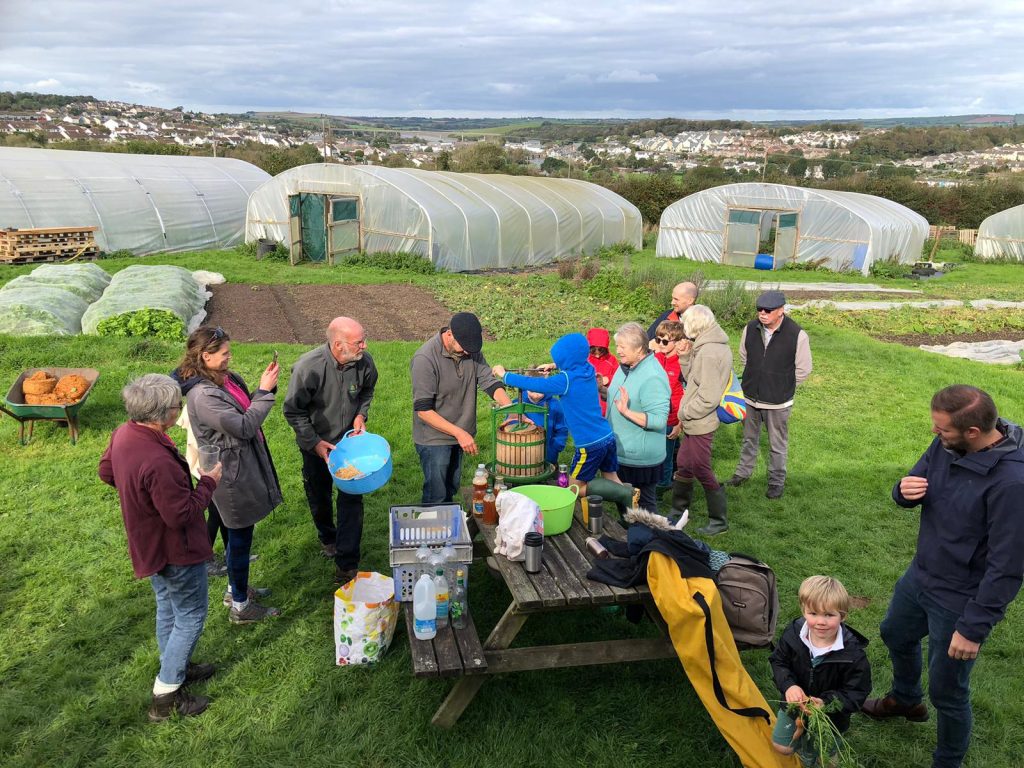
Join us for our traditional annual Wassail at Camel Community Supported Agriculture (Camel CSA). Everyone is welcome.
Come and take part in Cornish music, singing, dancing and merrymaking in our orchard as we awaken and bless the apple trees.
Gather on Saturday 17th January by 11am on our site at Treraven Farm, Wadebridge. Come 10am onwards to make your own wreath (ivy provided).
Bring a small percussion instrument or a selection of pots and pans. Join us in making an “infernal noise” to frighten away evil spirits and ensure a good apple harvest.
Light refreshments and live music will be available afterwards.
Parking is limited so please consider leaving your car in Wadebridge and cycling or walking to the farm. Directions here
November 13, 2025
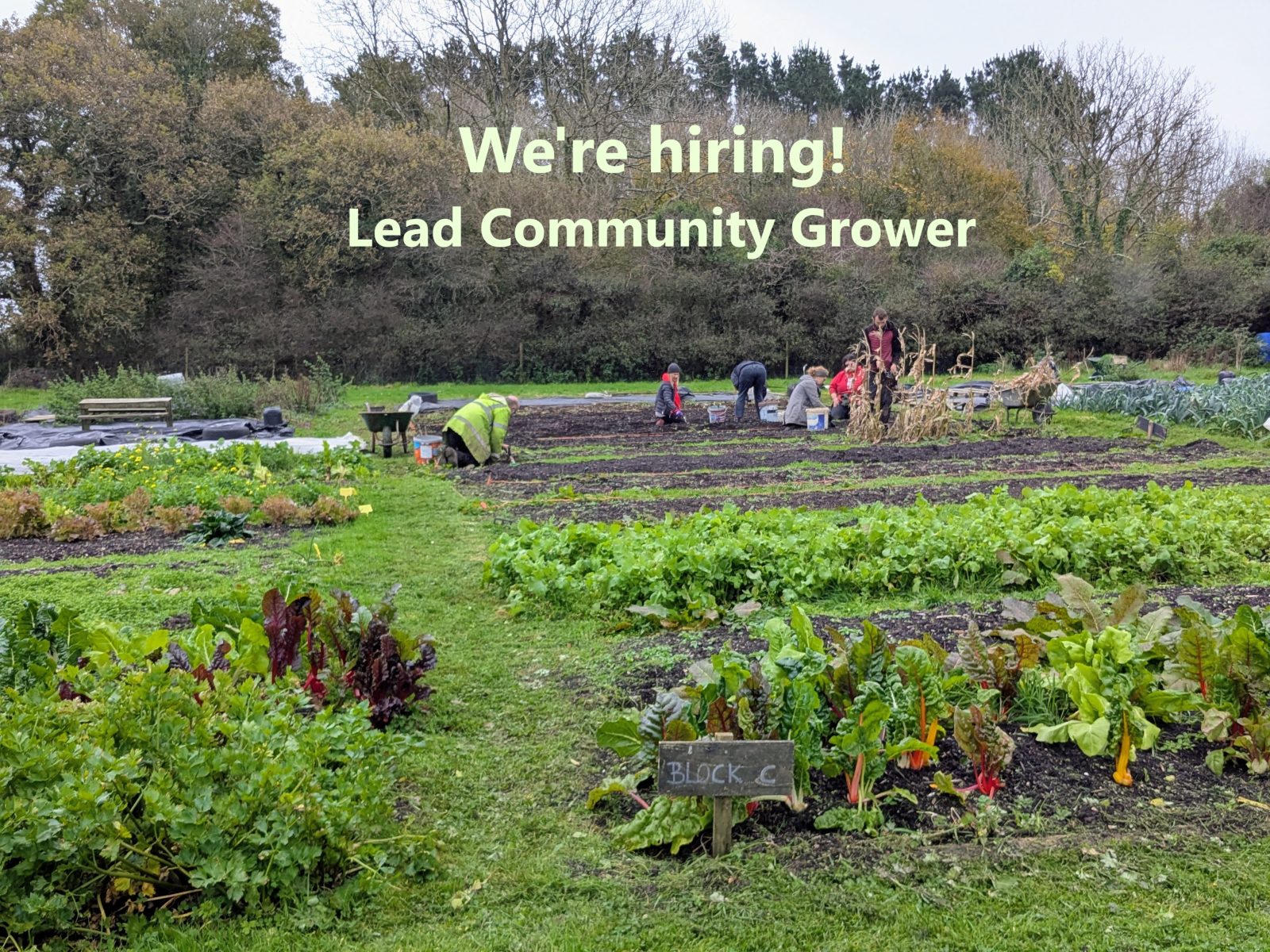
Camel CSA has a paid vacancy for an experienced vegetable grower to lead our dynamic and friendly team at Camel Community Supported Agriculture in Wadebridge, Cornwall.
This is an exciting opportunity for an energetic and committed person who has a passion for producing local food agroecologically, connecting with people, and promoting community values.
Camel CSA supplies a weekly veg share throughout the year to a membership of around 60 local households. We were among the very first few CSAs in the UK and have been running since 2009.
The ideal candidate will be an experienced grower who understands and is committed to organic no-dig and agroecological farming principles and is able to manage the seasonal growers and to support volunteers. You will be a compassionate and professional communicator and have good organisational skills.
The closing date for applications is Saturday 31 January 2026.
May 19, 2025
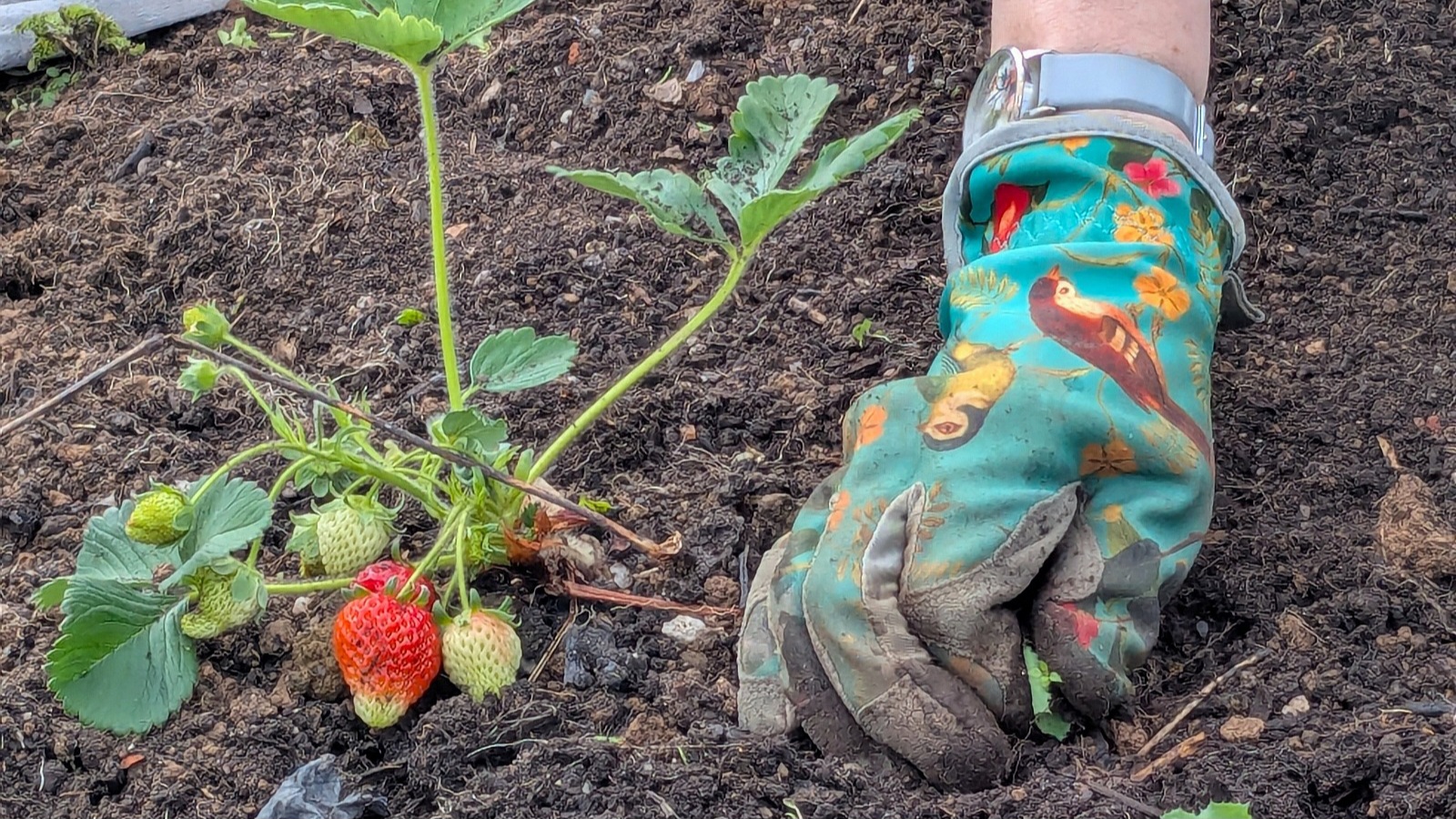
Our own strawberries are not quite ready yet, instead we all have a punnet from Tamara Summer Fruits, near Saltash.
Some of this week’s veg boxes also have a garlic scape – the long stalks with a flower head that grow out of garlic bulbs planted the previous autumn.
The tender green stalks are edible and tasty, with a mild garlic flavour. They’re delicious chopped and fried lightly, then scattered into salads, stirred through pasta dishes, or used to garnish risottos and pizza. More recipe suggestions here.
In this week’s veg shares:
*garlic scape or broad bean tops
*salad leaves ‘Salad Bowl’
*lettuce ‘Little Gem’
*radishes
strawberries (Tamara Summer Fruits, Saltash)
cabbage (Trerair Farm Shop, St Eval)
potatoes ‘Melody White’ (Trerair)
* = grown to organic principles. Please wash all veg thoroughly
Produce grown by Camel CSA, unless otherwise indicated
May 13, 2025
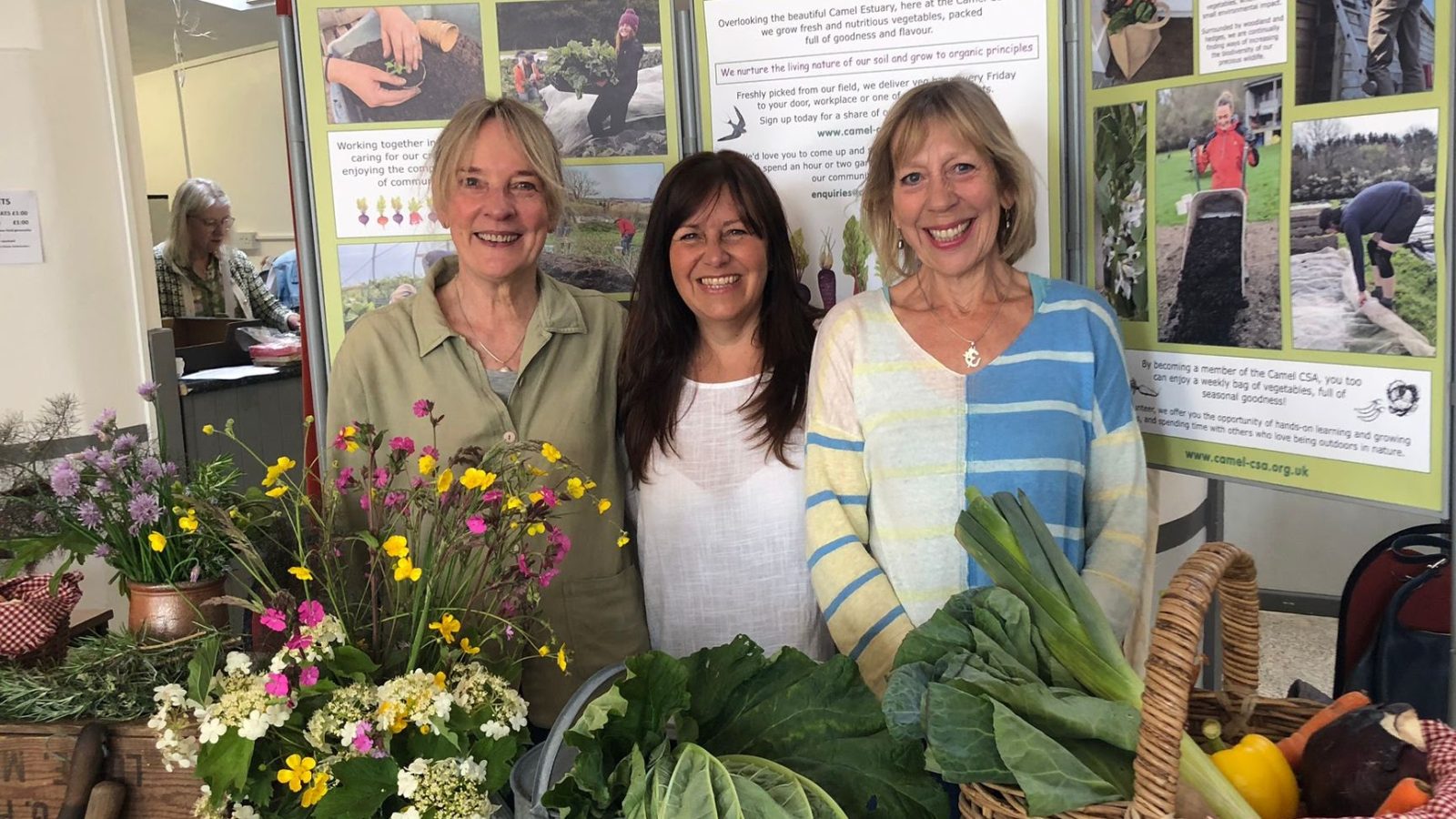
We’re thrilled to be taking part in the Community Day in Wadebridge Town Hall this Saturday 17 May from 10am-3pm.
Come along to find out more about the vegetables we’re growing and how you can get a share of our delicious, healthy, locally-grown produce.
Camel CSA’s promotion team were also at last Saturday’s Troubled Waters event in Wadebridge. Veronica, Debbie and Claire chatted with numerous people wanting to know what we’re doing to support local food, seasonal eating, and nature-friendly farming.
May 11, 2025
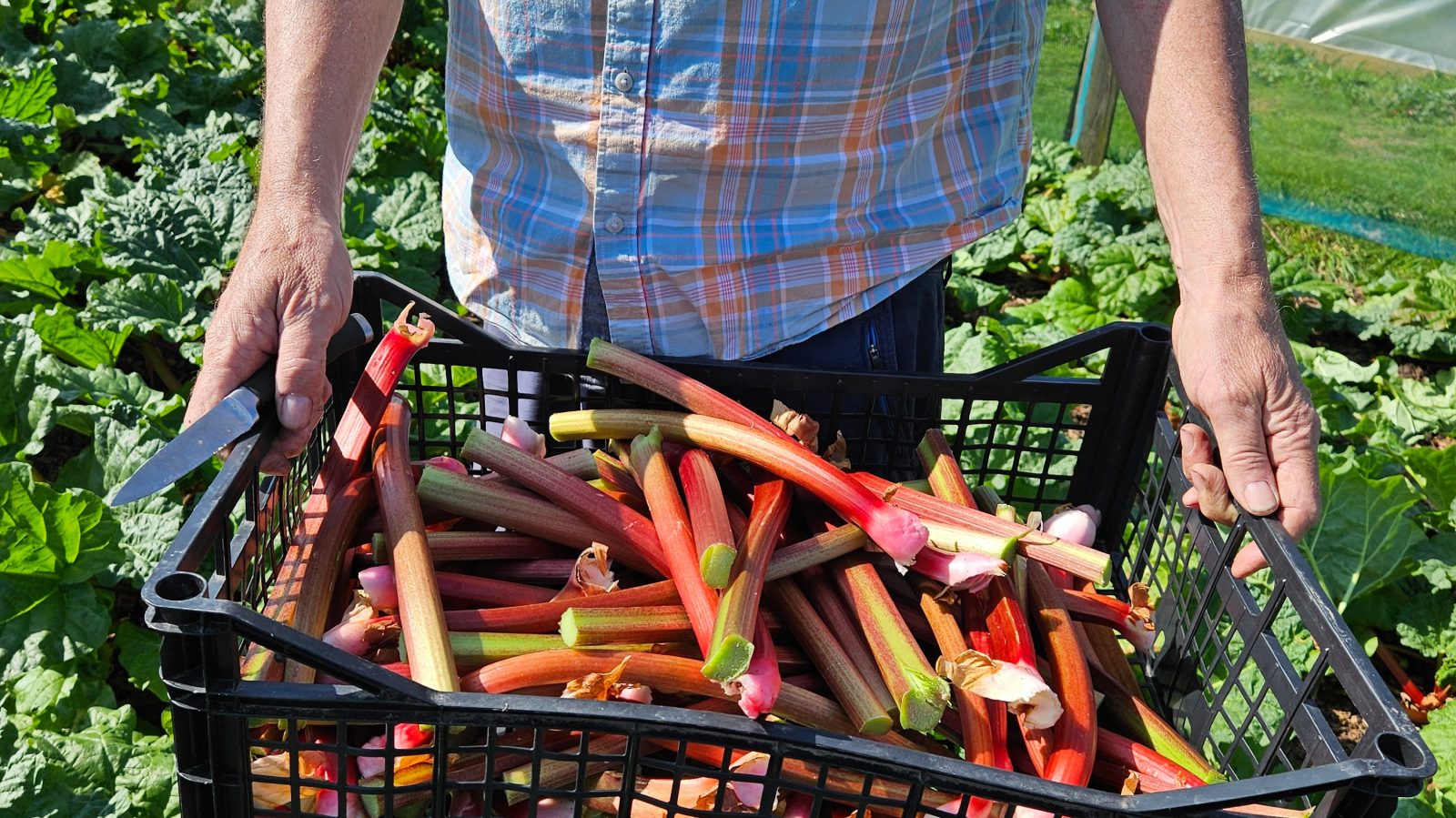
The selection of seasonal produce in our boxes this week reflects the time of year when we go through the annual ‘hungry gap’.
It’s when the winter crops have finished and many of the spring plantings aren’t yet ready to harvest.
But we can always rely on our rhubarb bed for a reliable early crop!
In this week’s veg shares:
*rhubarb
*coriander or parsley / chives
*can of carlin peas (Hodmedod’s)
red cabbage (Trerair Farm Shop, St Eval)
potatoes ‘Manitou’ (Trerair)
spring greens (Continental Wholesale Fruits, Liskeard)
leeks (Continental)
* = grown to organic principles. Please wash all veg thoroughly
Produce grown by Camel CSA, unless otherwise indicated
May 4, 2025
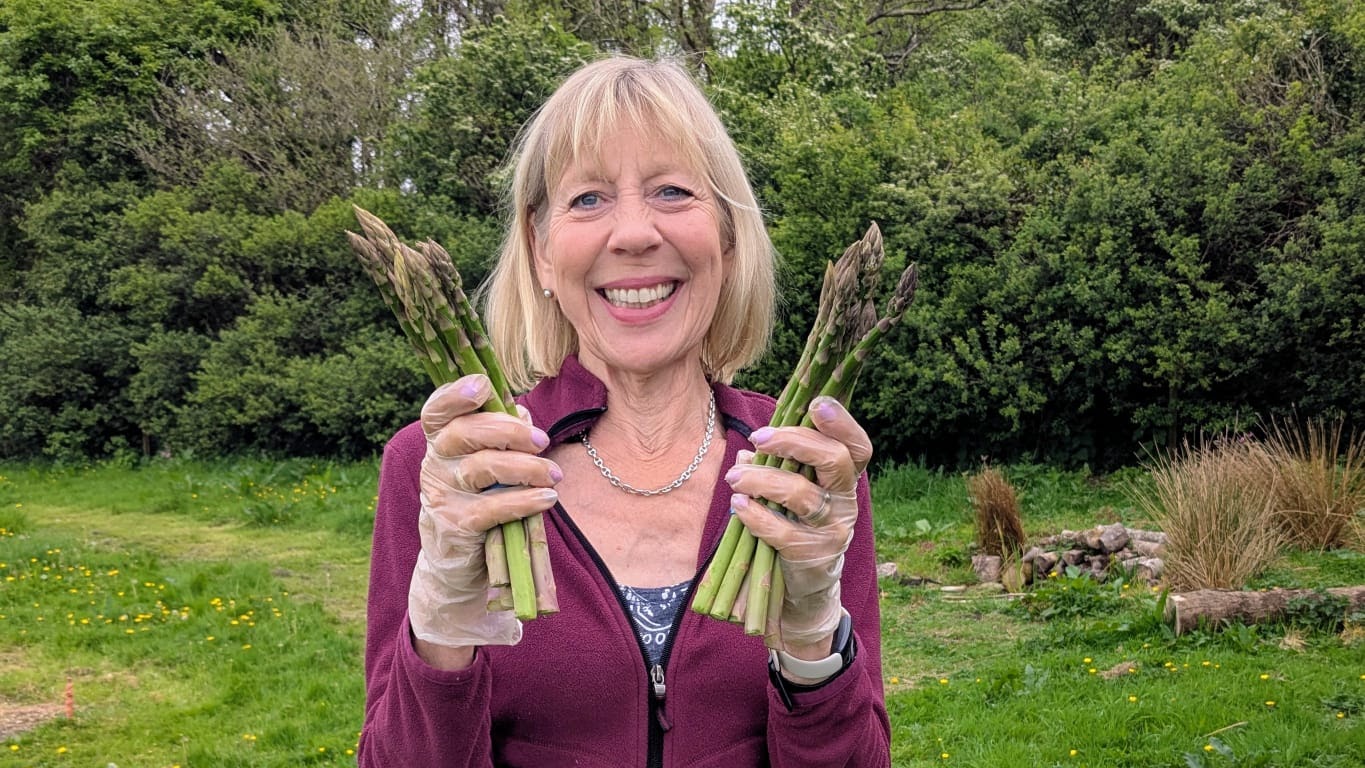
What a treat! These freshly-picked Cornish asparagus spears are absolutely delicious.
They’re grown only four miles away by our friends at St Enodoc Asparagus at Keiro Farm, St Minver.
You can’t get much more local than that.
In this week’s veg shares:
*spinach or rhubarb chard
*sprouted mung beans
*broad bean tops (Camel CSA / Mark Norman, Bodmin)
asparagus (St Enodoc Asparagus, St Minver)
cauliflower (Trerair Farm Shop, St Eval)
potatoes ‘Manitou’ (Trerair)
* = grown to organic principles. Please wash all veg thoroughly
Produce grown by Camel CSA, unless otherwise indicated
April 29, 2025
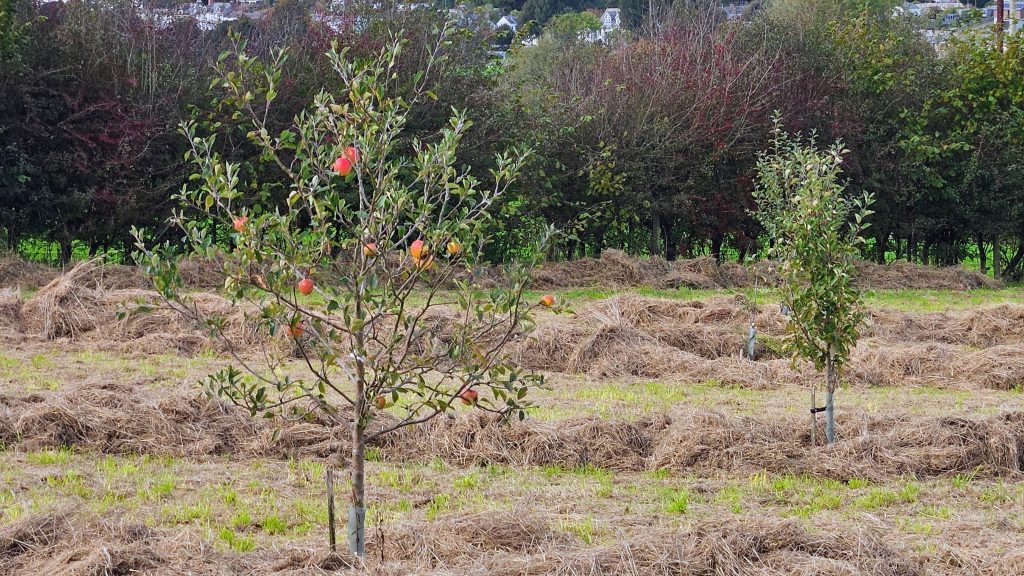
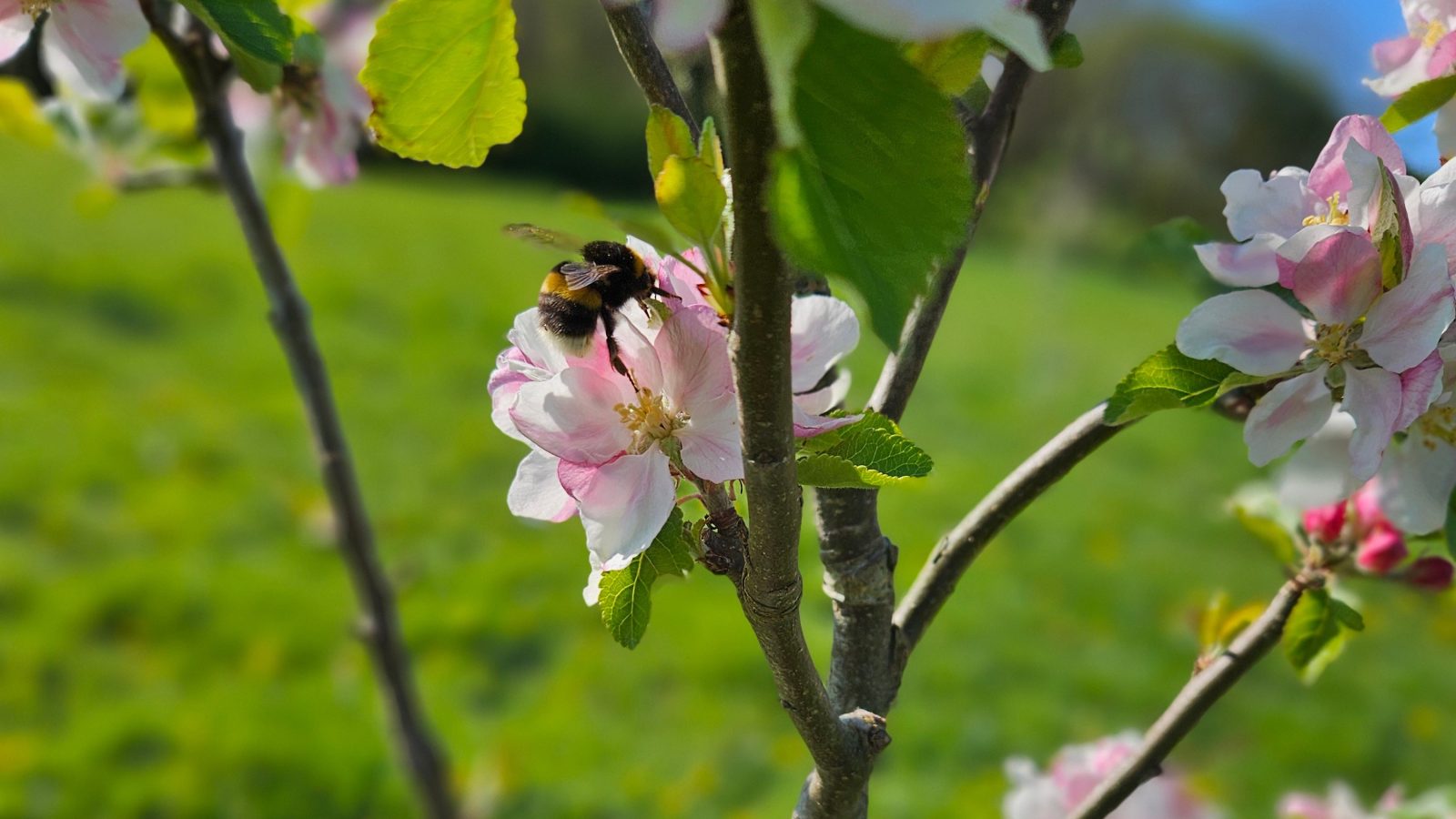
We have very happy bees. Our orchard in the meadow at Treraven Farm, Wadebridge, is only two years old and the blossom this year is amazing.
We’re now crossing our fingers we can harvest the first apples this autumn.
Worcester Pearmain is the traditional variety pictured here in glorious spring sunshine.
In this week’s veg boxes:
*rhubarb
*mixed salad leaves
*chard (Camel CSA) or *radishes (Mark Norman, Bodmin)
*spinach (Camel CSA) or *radishes (Mark Norman, Bodmin)
carrots (Trerair Farm, St Eval)
parsnips (Trerair)
potatoes (Trerair)
* = grown to organic principles. Please wash all veg thoroughly
Produce grown by Camel CSA, unless otherwise indicated
April 21, 2025
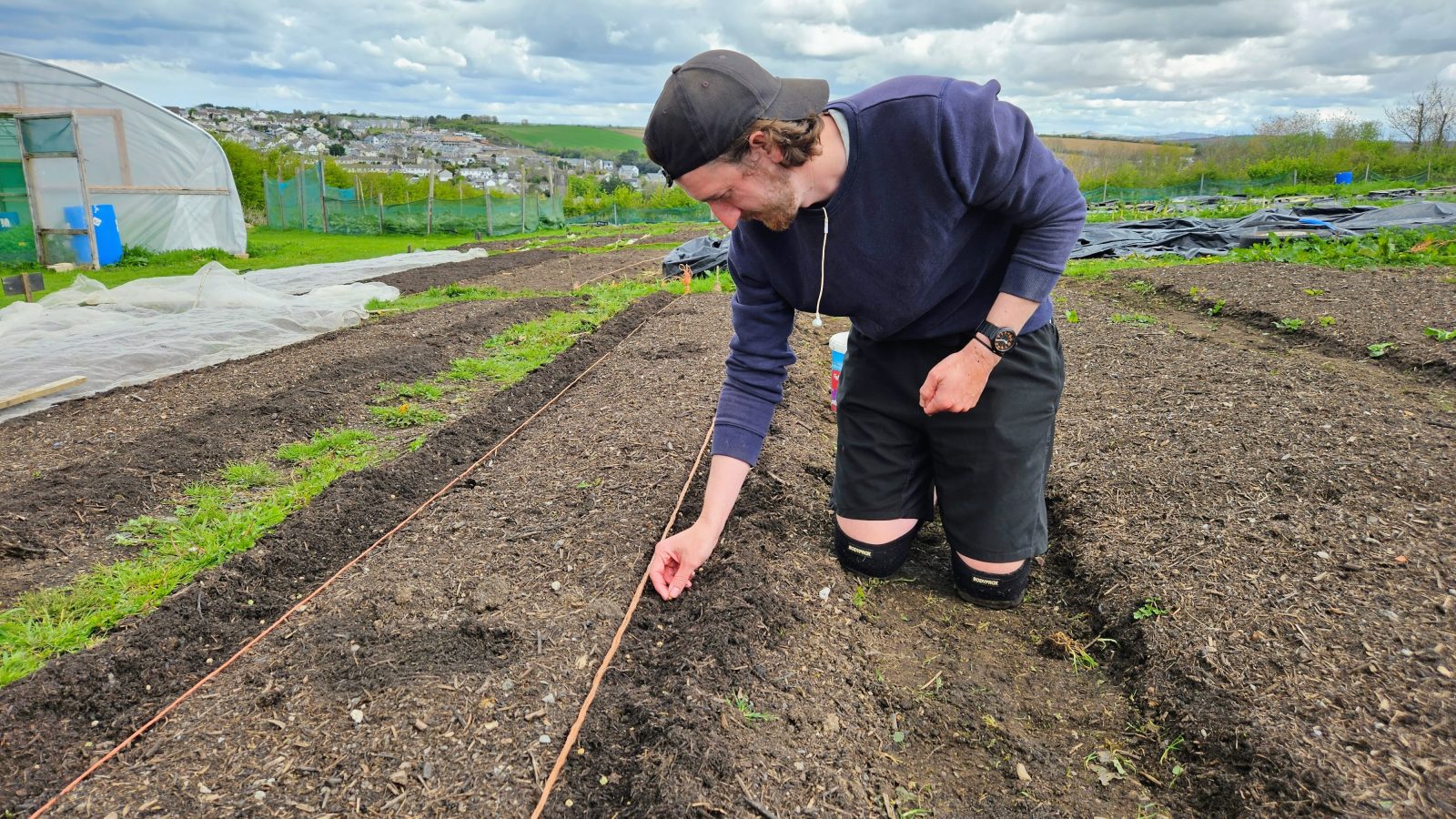
We have so much to do between the spring sunshine and heavy rain! Our vegetable growers and volunteers are working flat out:
- sowing peas (outdoors) and brassicas (in seed trays)
- weeding and mulching
- fixing bird boxes
- signposting crops
- preparing herb and pollinator beds
- transplanting aubergines, peppers, and tomatoes
We welcome volunteers. If you’d like to come and join our team at Treraven Farm, Wadebridge please go to https://camel-csa.org.uk/volunteer/ for more details
In this week’s veg boxes:
*spring onions
*mixed salad leaves
*chard
*spinach (Camel CSA) or *radishes (Mark Norman, Bodmin)
celeriac (Trerair Farm, St Eval)
cauliflower (Trerair)
potatoes (Trerair)
* = grown to organic principles. Please wash all veg thoroughly
Produce grown by Camel CSA, unless otherwise indicated