
June 11, 2011
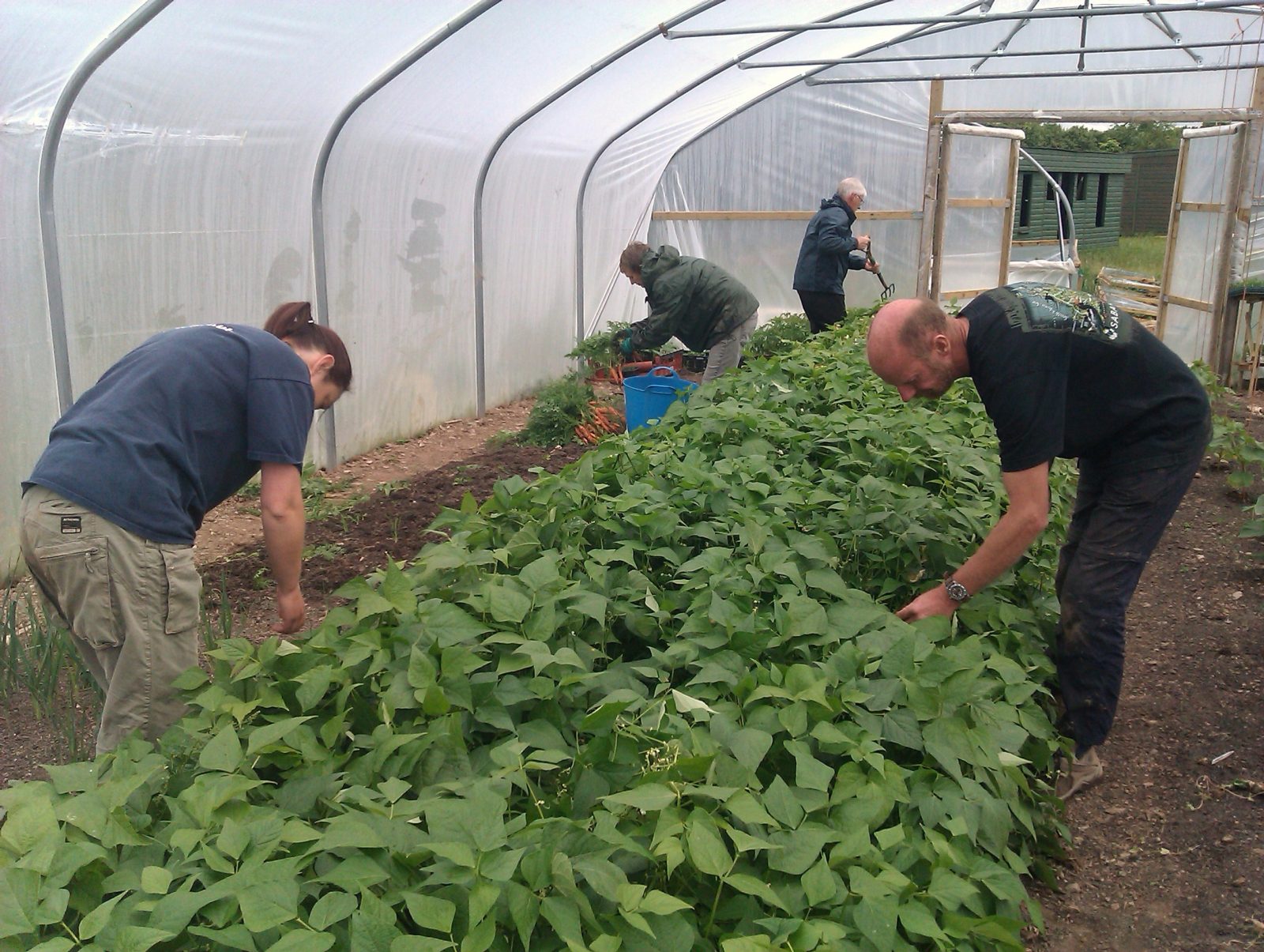
What a difference the new polytunnels are making!
The contents of this week’s seasonal veg boxes came almost exclusively from Camel CSA’s own plot.
Expert grower Mark Norman supplied us with broad beans and green onions from his smallholding in Bodmin. Richard Hore provided Cornish new potatoes grown in his fields above the Camel estuary.
When it comes to making local food work, you can’t get much more local than that.
The volunteer growing team have a variety of jobs to get through this Sunday morning. We need to: –
- Mark out and form the third lasagne bed in the new polytunnel and plant two rows of tomatoes
- Weed the second brassica bed
- Prepare the second sweetcorn bed and move the sweetcorn seedlings to the cold frame
- Dig the remaining holes in the squash beds and fill each one with two shovelfuls of compost (the rest of the pumpkins and squashes will get planted later in the week)
- Plant the dahlias beside the squashes
- Sow a tray of cabbage, half a tray each of calabrese and turnips (six turnip seeds per module)
June 10, 2011
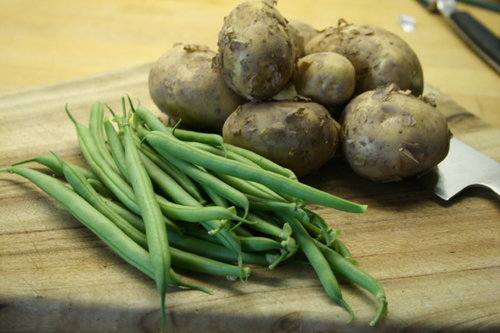
As we get our first taste of French beans from Camel CSA’s own polytunnel in this week’s veg boxes, this recipe from Sarah Raven’s Garden Cookbook seems ideal. “The squeaky texture of fresh French beans combines beautifully with the softness of potatoes,” she says, “and there are many ways of using these two in a salad.”
You can toss them both in a little truffle oil and add a few rocket leaves, or serve them like this with nut oil, toasted almonds and lots of dill.’ Parsley or chives could be substituted for the dill.
Serves 6
Preparation and cooking: 25 minutes
Ingredients
450g new potatoes
450g French beans
1 tbs walnut or hazelnut oil
4 tbsp chopped dill (or parsley, or chives)
1 garlic clove, finely chopped
230ml sour cream
1 tsp caster sugar
salt and black pepper
2 tbsp flaked or halved almonds, toasted
Method
Cook the new potatoes in boiling salted water, then cut them in half and peel if you want to. Next, cook the beans for 4 minutes (they must be crisp).
Drain the beans and potatoes, plunge the beans into cold water and drain again. Pour the oil over both while they are still warm. Toss to coat.
Combine the chopped dill and garlic with the sour cream, sugar and seasoning, and carefully fold into the potatoes and beans. Scatter over the almonds.
Also try Sarah Raven’s Spaghetti with beans and tomatoes
June 9, 2011
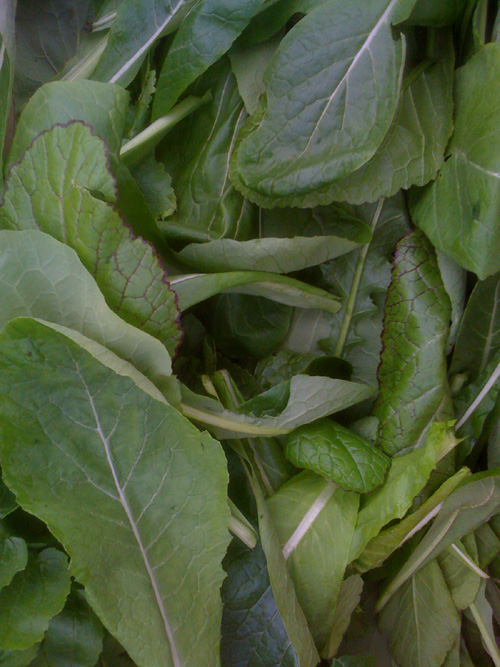
Another good harvest from Camel CSA’s own plot this week – including the first of the french beans and sweet-scented basil from the polytunnel. Everyone will be getting:
* spring cabbage (Camel CSA)
* salad leaves (Camel CSA)
* radish (Camel CSA)
* french beans (Camel CSA)
* broad beans (Mark Norman)
* green onions (Mark)
new potatoes (Restharrow Farm, Trebetherick)
Standard boxes will also have:
* beetroot (Camel CSA)
* carrots (Camel CSA)
* basil (Camel CSA)
* = grown to organic principles
June 8, 2011
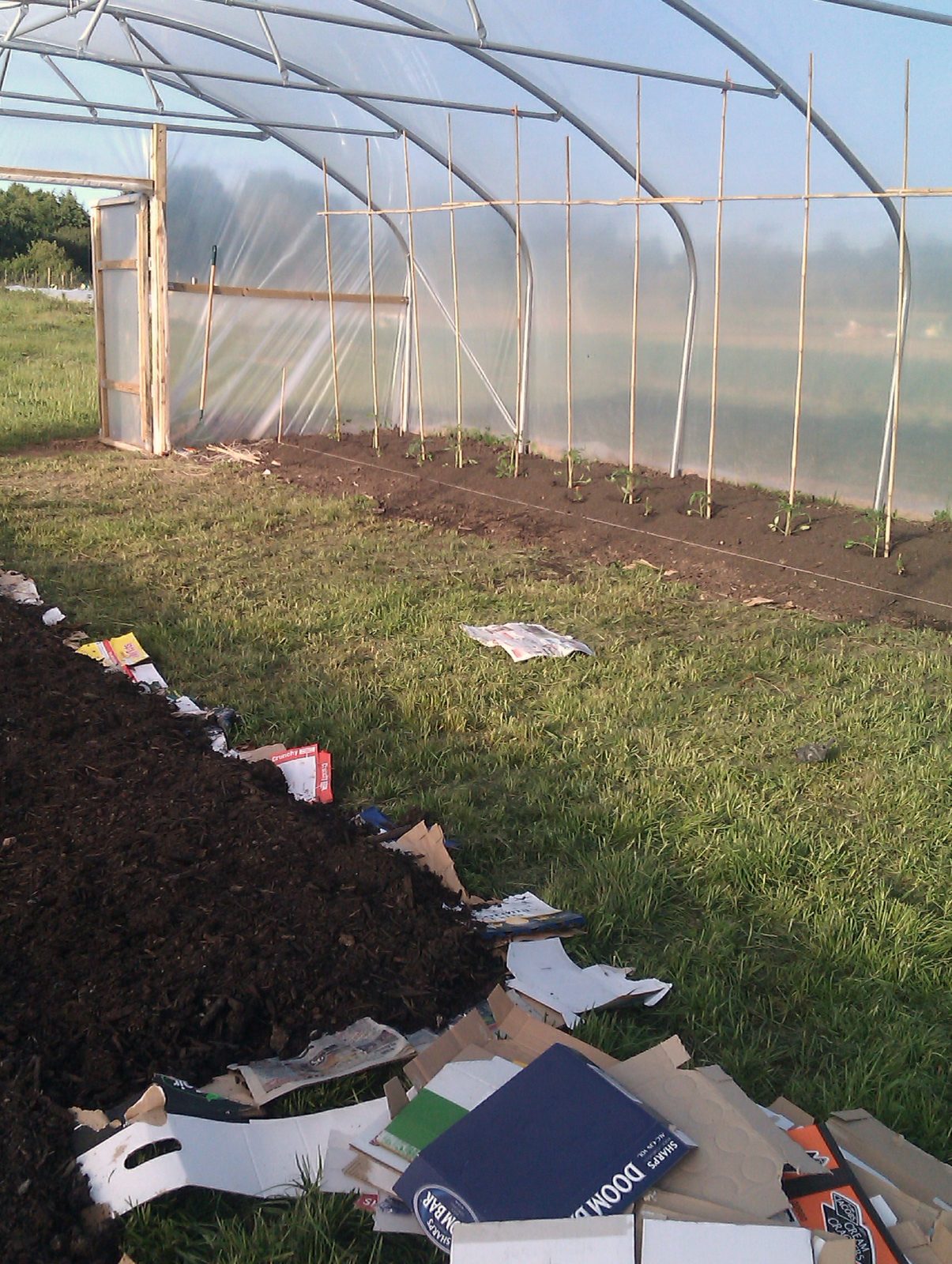
The ground inside our new polytunnel is rock hard as a result of the prolonged dry spell in Cornwall. So it’s proved too difficult to dig deeply by hand to prepare for planting the tomatoes and peppers.
That’s why we’re experimenting with a no-dig method known in the United States as lasagne gardening.
This permaculture approach involves placing cardboard on the ground to suppress the weeds, watering it thoroughly and then covering it with newspaper and thick layers of compost or other organic material.
We’re planting the tomatoes and peppers directly into the compost and a hole is being pierced through the cardboard so the plants’ roots get access to the earth underneath.
All being well, there will be lovely friable soil once the cardboard has rotted down at the end of the season.
So watch this space!
- Special thanks to Joe and Laura Brown at St Mabyn PO & Stores for all their recycled cardboard
June 5, 2011
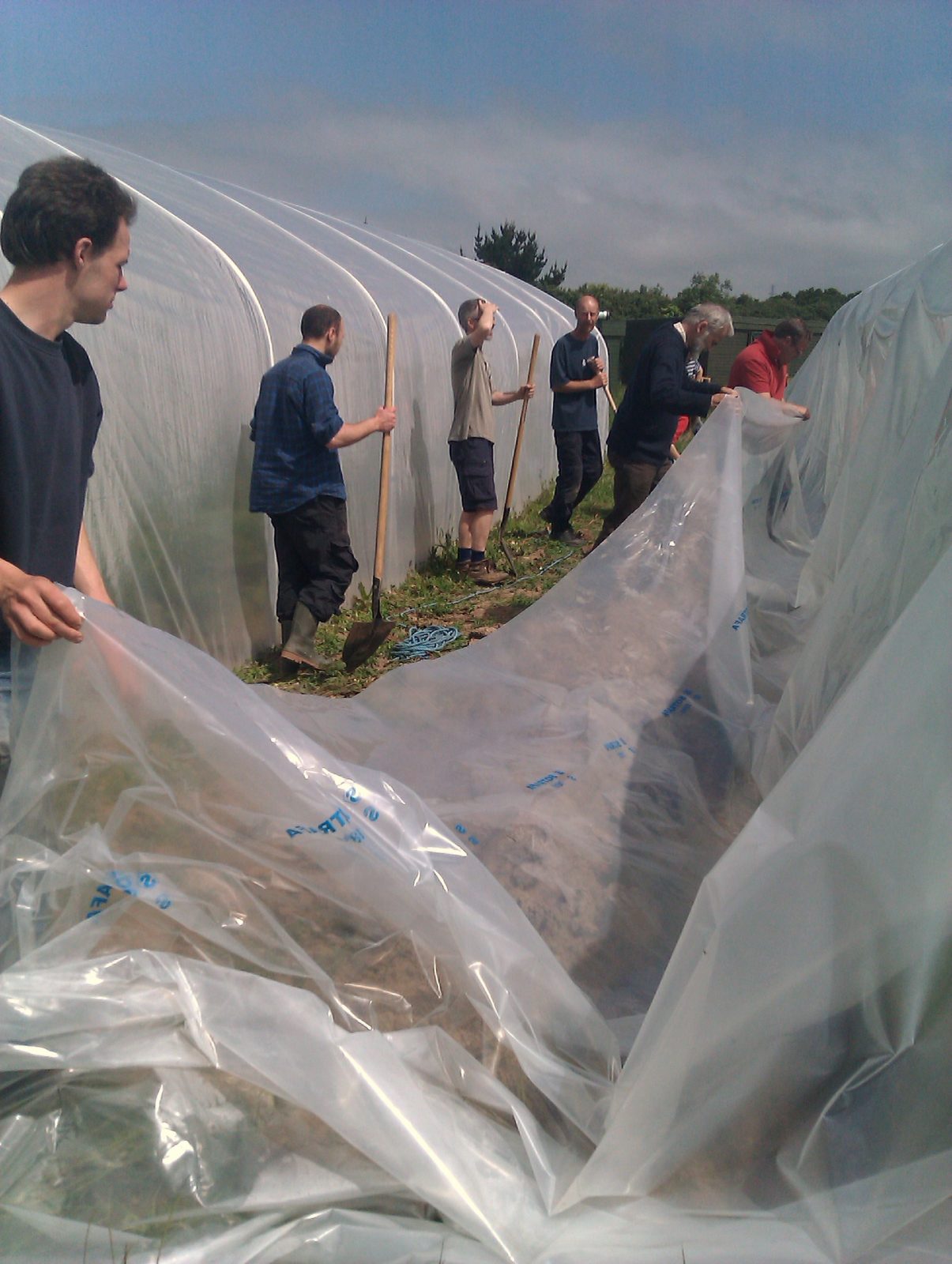
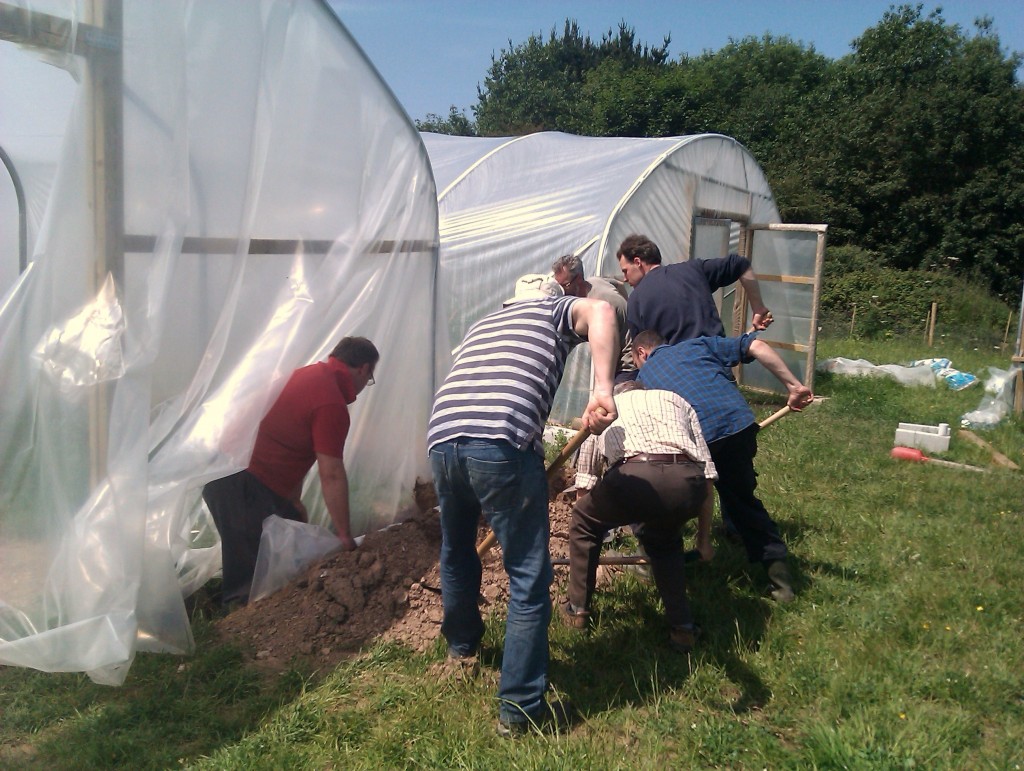
Camel CSA has now got two polytunnels. At long last we have a home for our tomatoes and peppers.
Our first polytunnel went up in March and is already nurturing our early crops of beetroot, basil, salad leaves, carrots, lettuce, French beans and leek seedlings.
We had to wait weeks for a calm, wind-free day (almost unheard of in Cornwall!) to get the cover on the second tunnel. With barely 24 hours notice we raised a team of six volunteers aided by three helpful WWOOFers – Willing Workers On Organic Farms.
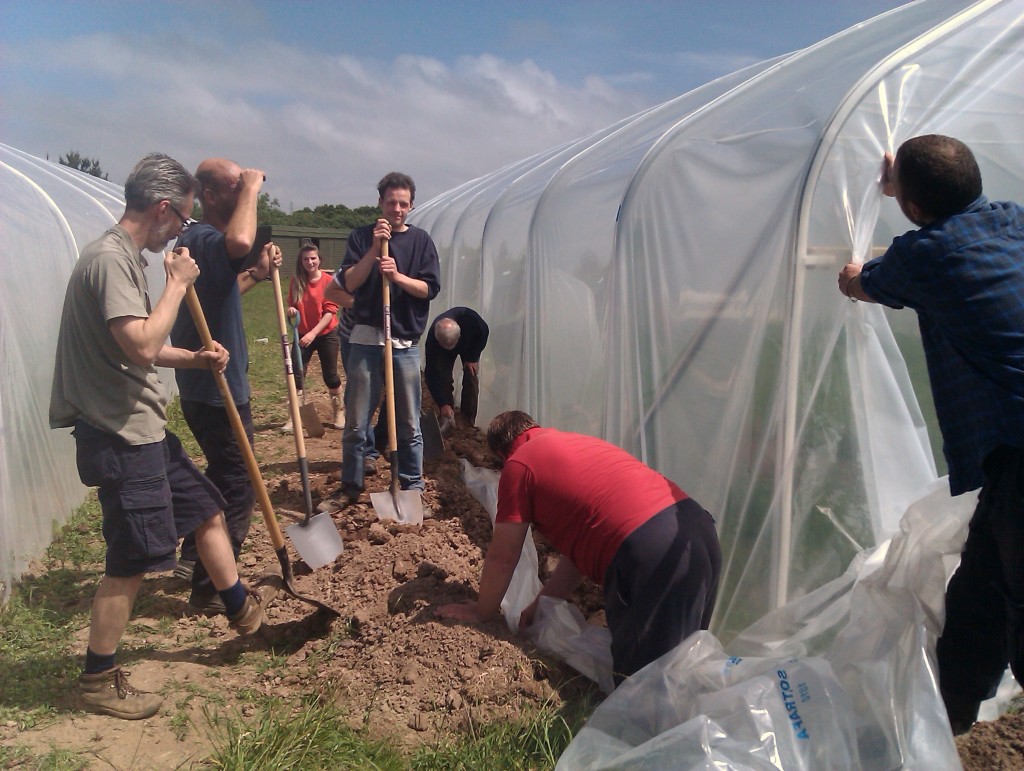
Many thanks to expert grower Mark Norman, ably helped by Bob, Charlotte, Mark M, Mike S, Penny, Robert and an opportune visit by the Rev Dave Matthews (who’s very tall!) The WWOOFers are Matthias from Germany, and Kevin and Martina from Italy.
June 4, 2011
Our growing team are going to be busy this weekend on our community veg plot at St Kew Highway.
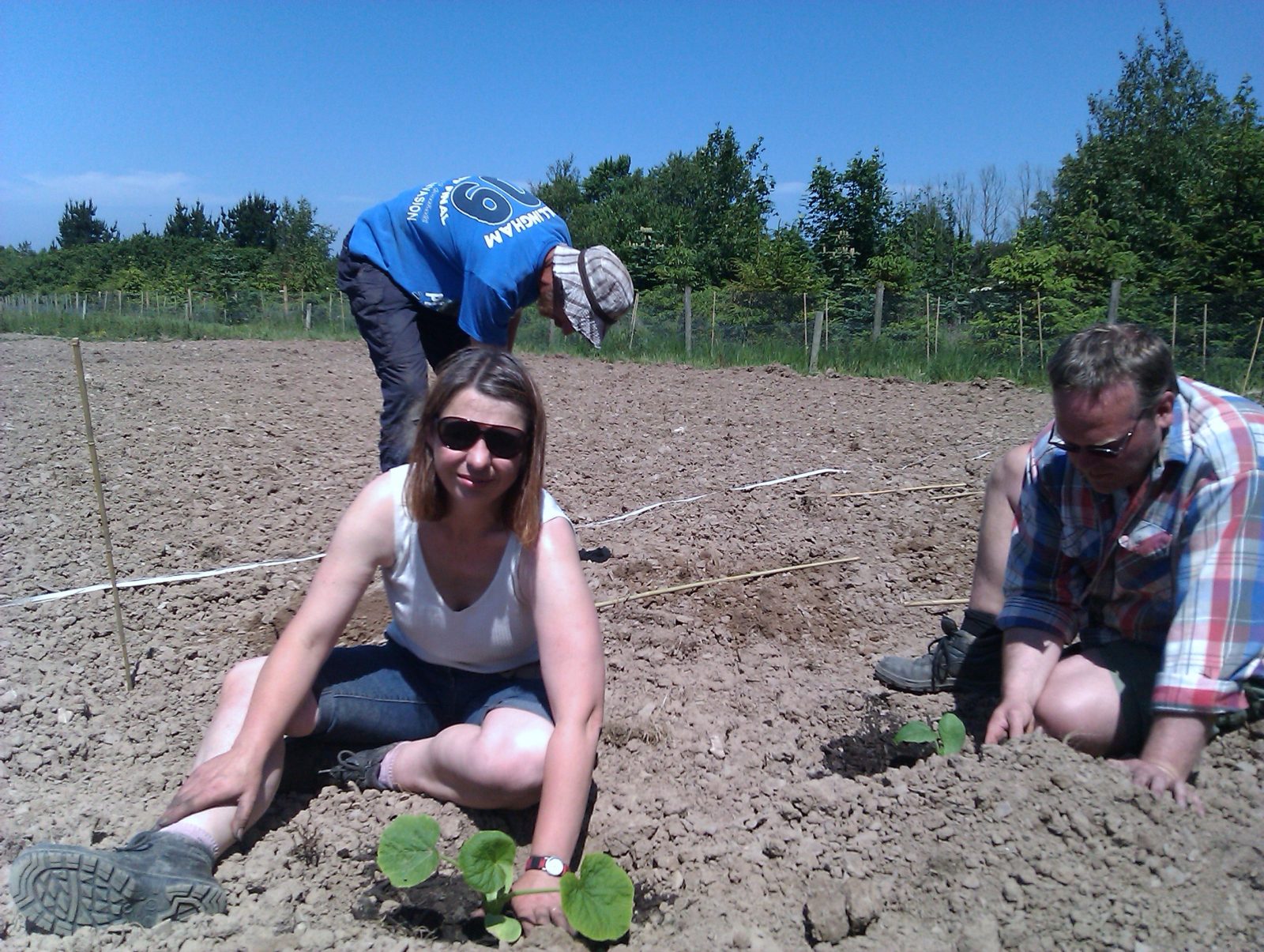
Expert growers Mark N and Bridget, along with Bob and five-year-old Max, planted out hundreds of pumpkins and squashes in hot Cornish sunshine on Friday.
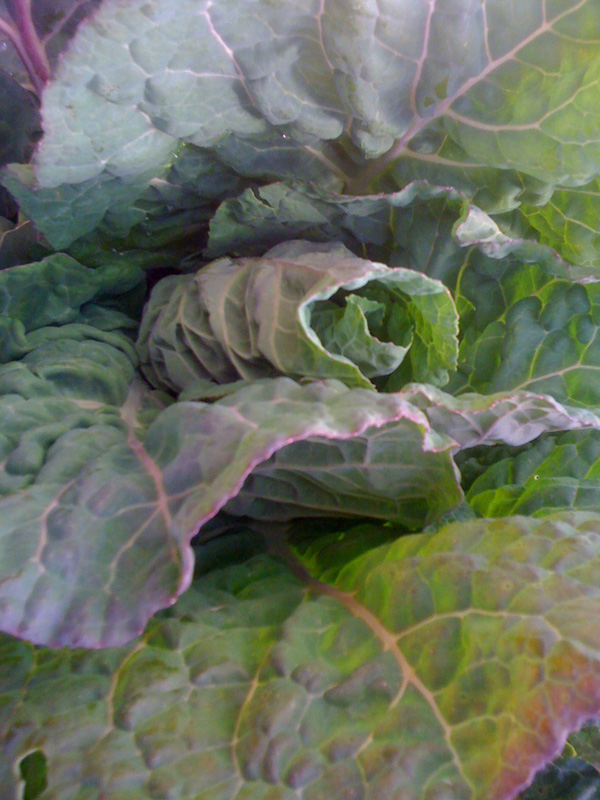
The high temperatures in Cornwall mean we have to keep a close eye on the polytunnel and cold frames. We must keep watering the baby beetroot, carrots, leek seedlings, french beans, cucumbers and basil in the tunnel, along with the seedlings in the cold frames, and the brussel sprouts and kale outside.
Our Sunday volunteers also need to: –
- Plant out spring onions, purple sprouting broccoli (Rudolph) and dahlias
- Feed the calabrese and stonehead cabbage seedlings and move them into the cold frames
- Weed the broad beans, parsley and celeriac
- Compost the next root bed
- Cut the grass
Phew!
June 2, 2011
All boxes will have:
* 600g new potatoes (Mark Norman, Bodmin)
* lettuce (Camel CSA)
* spring greens (Camel CSA)
* beetroot (Camel CSA)
calabrese (Growfair, Cornwall)
broad beans (Growfair)
Standard boxes will also have:
* an extra 400g new potatoes
* baby carrots (Camel CSA)
* sprouting seeds (mung beans) (Mark Norman)
* turnips (Camel CSA/Mark)
* = grown to organic principles
May 31, 2011
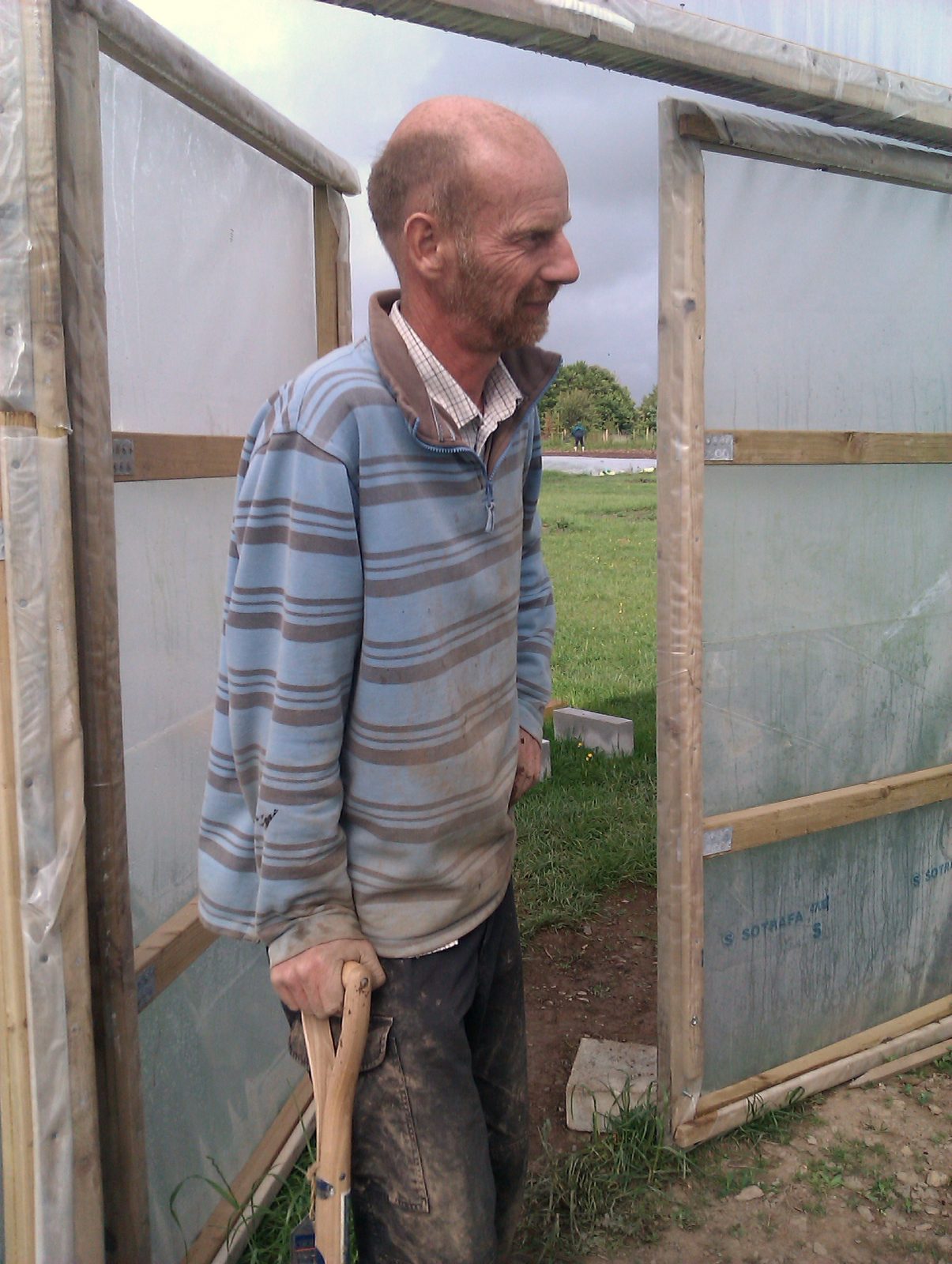
We’ve been working flat out on our site at St Kew Highway to deal with all the vegetable crops. A solid core of volunteers have been picking, planting, sowing, planting, watering and weeding.
Inside the polytunnel the team have harvested salad leaves, spring onions and baby beetroot for the veg boxes and planted out basil and cucumbers.
We’ve sown tray after tray of cabbage, sprouting broccoli, Brussels sprouts, calabrese, swede, kale and sweetcorn in modules.
Team members have sown more french beans, beetroot, peas, parsnips and carrots outside and planted out lettuce and cabbages. We’ve picked spring cabbages and oriental greens.
Hundreds of pumpkin and squash plants are bursting out of the cold frames. As soon as more outside beds are prepared we’ll be planting them out too.
We’re also been busy painting the potting shed, glazing the windows, hanging the door and putting the felt on the roof. As soon as we get a calm, windless day we’ll be getting the covers on the second polytunnel and the small seeding tunnel.
Many thanks to expert growers Bridget, Jane and Mark N plus the current regulars – Anne, Bob, Cath, Charlotte, Danny, Henrietta, Jenny, Mark M, Mike S, Penny, Robert, Trish F.
May 30, 2011
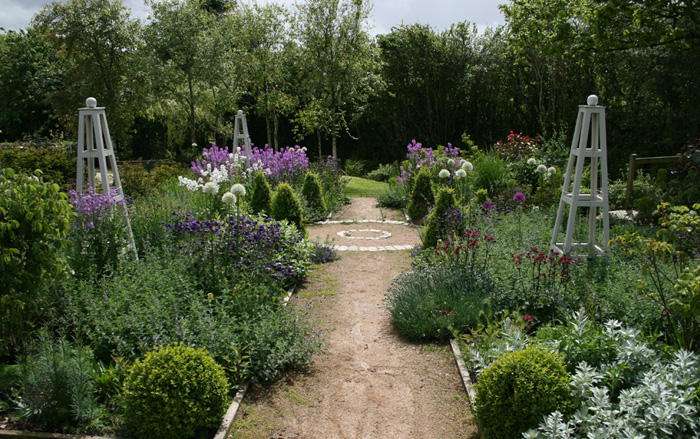
Garden writer Trish Gibson is opening her beautiful garden at Pendoggett in north Cornwall to the public this Sunday 5 June under the National Gardens Scheme.
Trish has taken time off from her weekly veg box preparation duties at Camel CSA to get the garden ready to go on show for the second year running.
She says: –
Once again, after months of sowing and mowing, weeding and clearing, hedging and edging, pruning and fine tuning, we’re almost ready. It would be great if we could beat last year’s visitor numbers and, more importantly, takings (last year around £1,200).
Fingers crossed for sunshine – and warmth – on the day. And looking forward to seeing you if you can possibly make it…
The Mill House, Pendoggett, near St Kew is open from 2-5.30 pm on Sunday. Entry is £3 (children free), all in aid of Cornwall Hospice Care. There will be a well-stocked plant stall and irresistible cream teas.
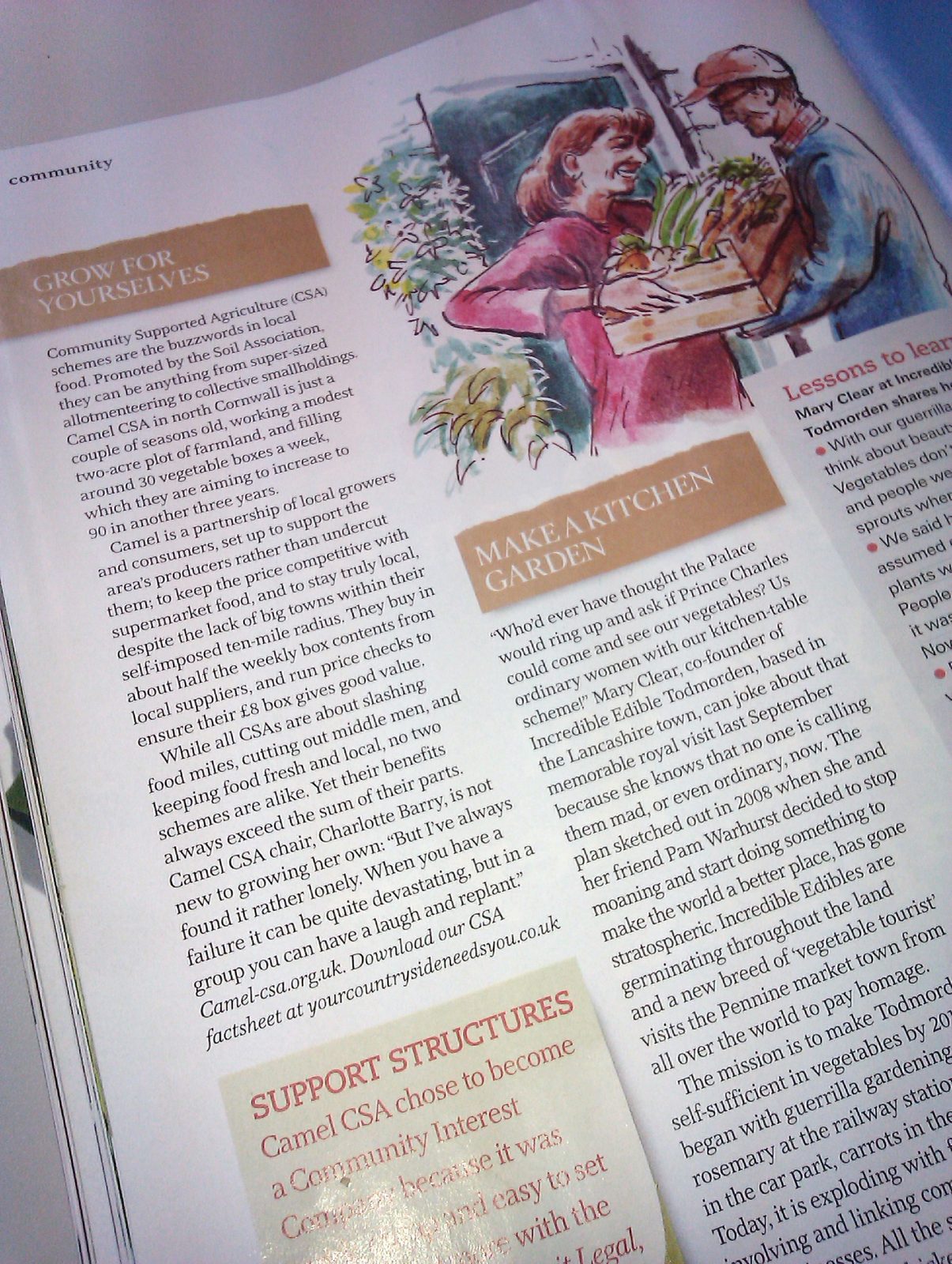
Our growing operation at Camel CSA in Cornwall has a mention in June’s Country Living magazine. Its Tap into local flavours section highlights what we’re up to. Writer Jane Taylor says: –
Community supported agriculture schemes are the buzzword in local food… no two schemes are alike. Yet their benefits always exceed the sum of their parts.
The article explains what Camel CSA does and includes us in its list of useful contacts. It’s all part of the magazine’s Your Community Needs You campaign, which wants to harness the groundswell of support for local food and regional producers.