
April 9, 2010
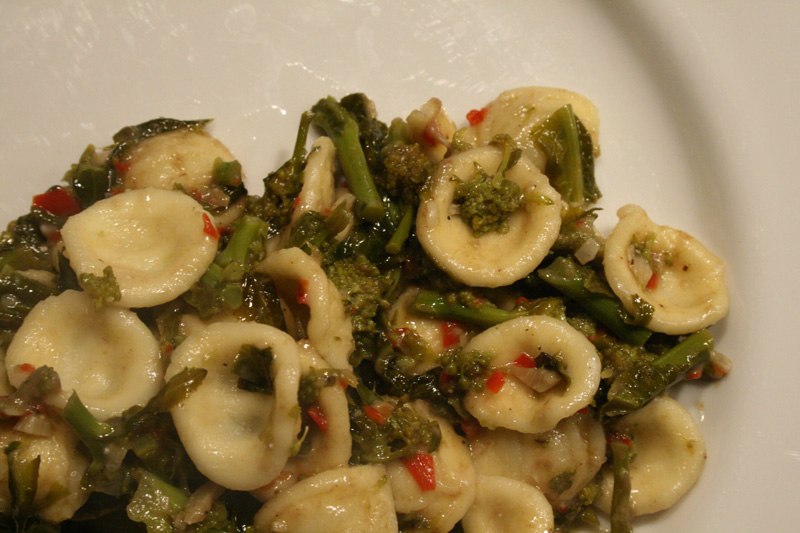
A simple seasonal dish that’s quick to make and very tasty.
Serves 4
Preparation time: less than 30 minutes
Cooking time: 10 to 30 minutes
Ingredients
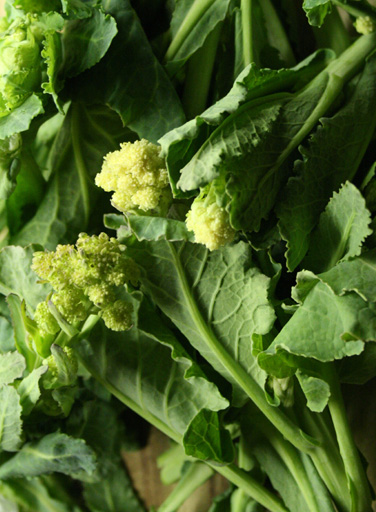
500g sprouting broccoli
1 medium sized fresh red chilli
2 cloves garlic, peeled
1 small tin of anchovy fillets in olive oil, drained (approx 10-12 fillets)
6 tbsp olive oil
350g pasta (fusilli, orecchiette, penne rigate or conchiglie are the best shapes)
4 tbsp grated parmesan
salt and pepper
Method
Put a large pan of water on to boil with a little salt. Trim any woody stalks from the broccoli, wash and chop into 1cm sections. Cut the chilli in half lengthways and remove the seeds and pith. Chop the chilli flesh, garlic and the anchovies finely.
Drop the pasta into the boiling water and stir immediately. Cook until just tender.
In another pan warm 4 tbsp of the olive oil over a medium flame and add the chilli, garlic and anchovies. Sweat these for a minute or so and then add the broccoli, season with a little salt and pepper and continue to cook gently while the pasta cooks.When the pasta’s been cooking for about 5 minutes, transfer a small ladle of its water to the broccoli mix. When the pasta is ready, add the remaining 2 tbsp oil and the cheese to this mixture and stir over a high heat for a couple of minutes. Toss with the drained pasta and serve immediately.
April 8, 2010
… it won’t be around for much longer!
Small boxes will have:
potatoes (Burlerrow Farm, St Mabyn)
onions (Rest Harrow Farm, Trebetherick)
carrots (Rest Harrow Farm)
kale (Rest Harrow Farm)
white sprouting broccoli (Rest Harrow Farm)
swede (Rest Harrow Farm)
Standard boxes will have some extras of the above plus:
cauliflower (Rest Harrow Farm)
parsnips (Rest Harrow Farm)
red cabbage (Rest Harrow Farm)
Large boxes will also have:
* coriander (Jeremy Brown)
* salad leaves (Jeremy)
* spinach (Jeremy)
* = grown to organic principles
April 3, 2010
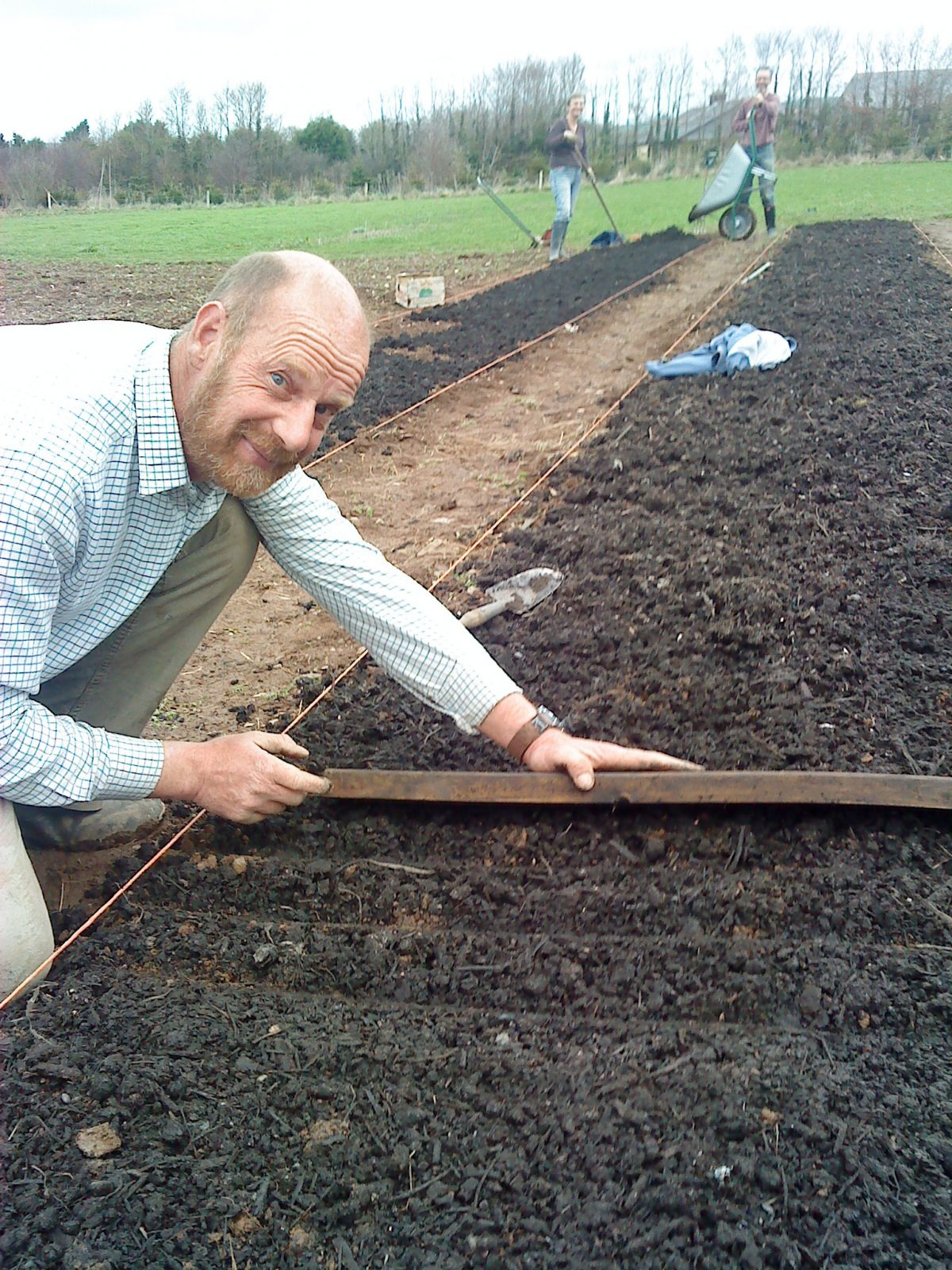
The next volunteer growing session is on Sunday 11 April. We’ve decided to give everyone a rest this Easter Sunday.
We do need all the help we can get to plant veg at this time of year so please consider coming along for a couple of hours next Sunday between 10am and 12 noon.
You’ll be made very welcome. We can guarantee you unlimited fresh air, plenty of exercise and some friendly company… PLUS you’ll come away feeling you’ve achieved something worthwhile.
Expert grower Mark Norman says:
“A small gang of us created a new growing bed, spread compost, and sowed lettuce and beetroot Detroit last week. But we really could have done with some extra assistance.
On Sunday 11 April there’ll be broad beans and celery to plant out, and more beetroot plus parsnip to sow. Also compost to spread and additional growing beds to prepare. Please bring tools – hoes, spades, forks, trowels, rakes, wheelbarrows…”
April 2, 2010
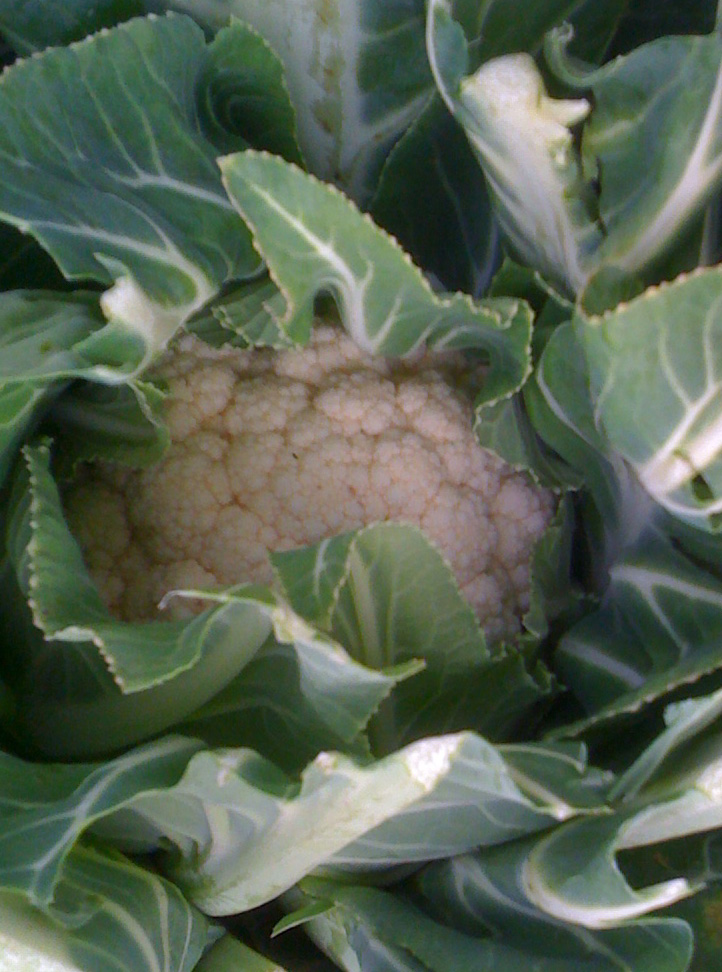
Henrietta recommends this recipe from Sam and Sam Clark’s Moro cookbook. They say that the white cauliflower shows off the saffron’s colour beautifully and turns this “parochial vegetable into quite a glamorous one”.
Serves 4
Preparation: 10 minutes
Cooking: 30 minutes
Ingredients
1 medium cauliflower, broken into small florets (keep the smallest leaves)
3 tbsp olive oil
1 large Spanish onion, thinly sliced
50 strands saffron, infused in 4 tbsp boiling water
3 tbsp pinenuts, lightly toasted
75g raisins, soaked in warm water
sea salt and black pepper
Method
Bring a large saucepan of salted water to the boil. Add the cauliflower, put the lid on and bring to the boil again. Blanch the cauliflower for a minute then drain in a colander and set aside.
Heat the olive oil in a heavy saucepan until hot but not smoking then add the onion with a pinch of salt. Stir well, reduce the heat to low and cook very slowly for about 15-20 minutes until golden in colour and sweet in smell. Be sure to stir the onions every 5 minutes so they cook evenly and do not stick to the bottom of the pan. Remove from the heat, drain the onion and keep the oil.
Set the same saucepan over a high heat and add the olive oil back to the pan. When the oil is hot, add the cauliflower and leaves. Fry until the cauliflower begins to colour, then add the onion, the saffron-infused water, the pinenuts and drained raisins. Give everything a good toss and cook for 5 more minutes until the saffron water has more or less evaporated. Season with salt and pepper and serve.
April 1, 2010
Small boxes will have:
potatoes (Burlerrow Farm, St Mabyn)
onions (Rest Harrow Farm, Trebetherick)
carrots (Rest Harrow Farm)
leeks (Rest Harrow Farm)
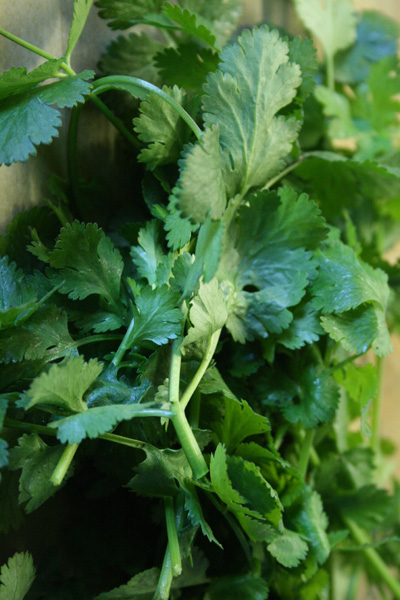
* coriander (Jeremy Brown)
cauliflower (Rest Harrow Farm)
kale (Rest Harrow Farm)
Medium boxes will have larger quantities of some of the above plus
* radishes (Jeremy)
sprouting broccoli (Rest Harrow Farm)
swede (Rest Harrow Farm)
And large boxes will also have:
* salad leaves (Jeremy)
red cabbage (Rest Harrow Farm)
* = grown to organic principles
March 27, 2010
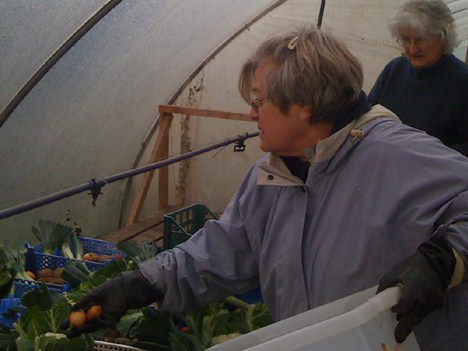
Our picking and packing volunteers urgently need shelter from the Cornish wind and rain.
Each week they prepare around 30 vegetable boxes for Camel CSA members on Friday mornings. Last summer we were blessed with blue skies and warm sunshine nearly every Friday, but come the autumn it was a different story.
Over the winter we’ve been borrowing one end of a polytunnel from Jeremy Brown, one of our expert growers. But now the growing season has begun he needs it to cultivate vegetables for his business at St Kew Harvest Farm Shop.
We’re looking for a second-hand shed that’s at least 4m x5m in size. Ideally it would have a roof overhang or a verandah. We’re also on the look-out for an unwanted polytunnel that’s a minimum of 7m long and 4m wide. Just a frame for a tunnel would be a great help. We’ll pay, of course.
If you know anyone who might be able to help, please get in touch with us.
Members of the volunteer growing team will be flexing their muscles this Sunday morning digging up dockleaves, spreading compost and preparing more vegetable beds. Beetroot and lettuce seeds also need sowing.
March 26, 2010
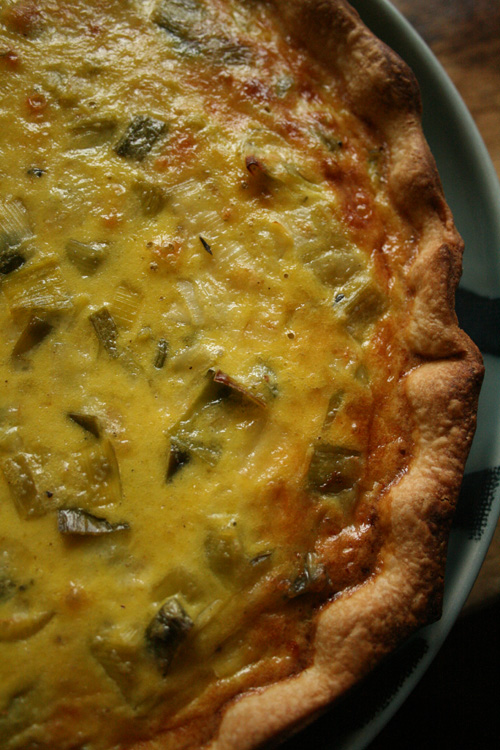
This recipe by Allegra McEvedy was in yesterday’s Guardian. She says it’s “good for three days, during which time I would keep it out of the fridge, but covered, for instant passerby snacks”.
Makes eight fat slices in a fluted tart ring with a push-up base (28cm x 3.5cm). Takes an hour.
Ingredients
1kg leeks
100g butter
bunch of fresh thyme stalks, tied with string
6 eggs
300ml double cream
1 tbsp smooth Dijon mustard
180g of smoked cheddar, grated
1 pkt (500g) shortcrust pastry – or make your own
Method
Pre-heat the oven to 170C/340F/gas 3. Roll out the pastry and line your tart case with it; always keep a little ball of pastry aside for emergency repairs after blind baking, rather than lobbing the trimmings. Stick in the freezer for about five minutes to firm up.
Trim the leeks; if they are thick then quarter them lengthways before slicing roughly 1cm thick, thinner ones can just be halved lengthways before slicing. Then wash them thoroughly – there’s nothing worse than biting on grit.
Melt the butter in a wide pan on a medium heat, then add the leeks. Turn the heat up to high, add the thyme, season and put a lid on.
Take the tart case out of the freezer and bake blind for 10-15 minutes. Once it is beginning to brown, mix the yolk of one of the eggs with a tablespoon of cream, brush this all over the base, sides and crown of the tart and put back in the oven for a couple of minutes until shiny and golden (now is the time to plug any holes with that spare ball of pastry).
Stir the leeks regularly for a further 20 minutes (keeping the lid on between stirs) or until they are well softened and all the water has come out of them. Turn the heat down if they are starting to catch.
Crack the eggs into a big mixing bowl, including the lone white, and whisk in the cream and mustard. Stir in the cheddar and then tip in the hot, softened leeks, discarding the bunch of thyme. Season well, ladle the mix carefully into the tart case and cook for about half an hour, until light golden brown on top, and the egg has set. Let it sit for 10 minutes before tucking in.
This week everyone will have:
cauliflower (Rest Harrow Farm, Trebetherick)
potatoes (Burlerrow Farm, St Mabyn)
carrots (Rest Harrow Farm)
spring greens (Rest Harrow Farm)
white sprouting broccoli (Rest Harrow Farm)
Medium boxes will have larger quantities of some of the above plus:
* rocket (Jeremy Brown)
* coriander (Jeremy)
leeks (Rest Harrow Farm)
And large boxes will also have:
red cabbage (Rest Harrow Farm)
kale (Rest Harrow Farm)
* = grown to organic principles
March 22, 2010
It’s all a bit nerve-racking. We’ll hear soon whether we’re going to get funding to help widen our activities.
A Lottery Food Fund assessor came for a site visit on Sunday. Kate Harris needed to see for herself exactly who we are and what we get up to. She asked our core group members lots of leading questions and met the volunteer growing team.
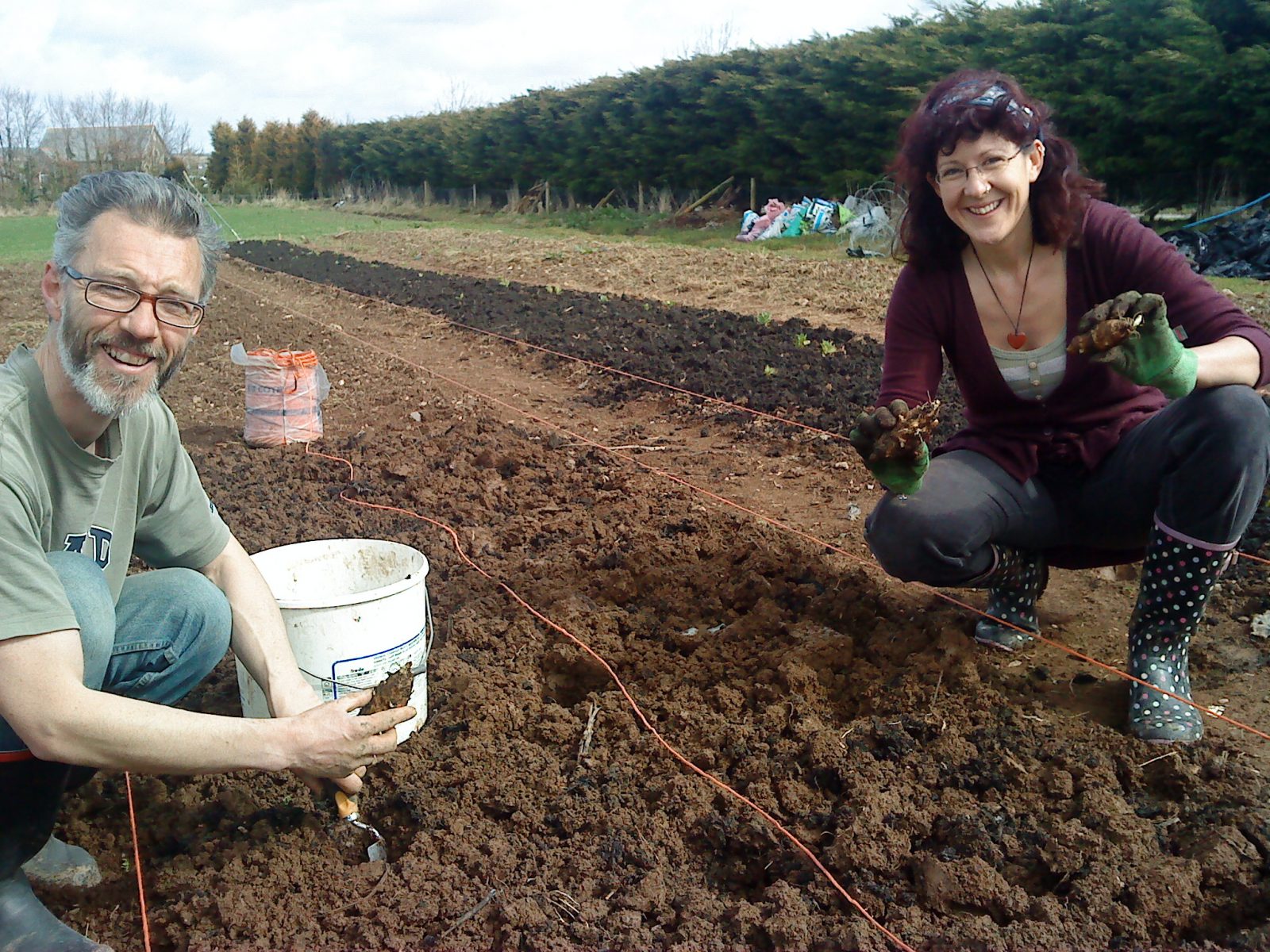
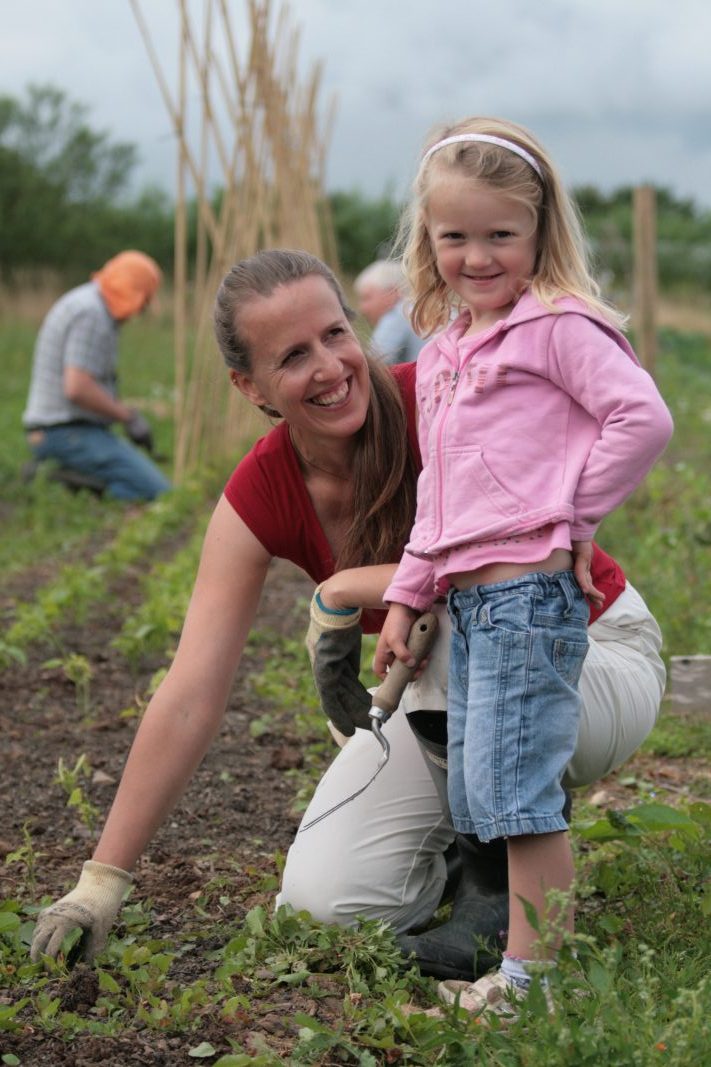
Kate watched the volunteers prepare vegetable beds, spread compost, plant Jerusalem artichokes, sow parsley seed for germination in the polytunnel and renew their attack on the dockleaves which are sprouting everywhere in the mild weather.
It’s her job to report back and make a recommendation on our funding bid. The all-important decision will be made in April. It’s a highly competitive scheme, so we reckon we’ve got about a 50% chance – at best.
In May we’ll hear whether we’ve been successful in our application for funding from the East Cornwall Local Action Group.
Whatever the result, we’ll keep going as a CSA – growing vegetables, working with the seasons and providing our members with a share of the harvest. It’s just that if our bids are unsuccessful, we’ll have to wait before we can invest in much-needed equipment, set up an education and training programme and provide secure employment.
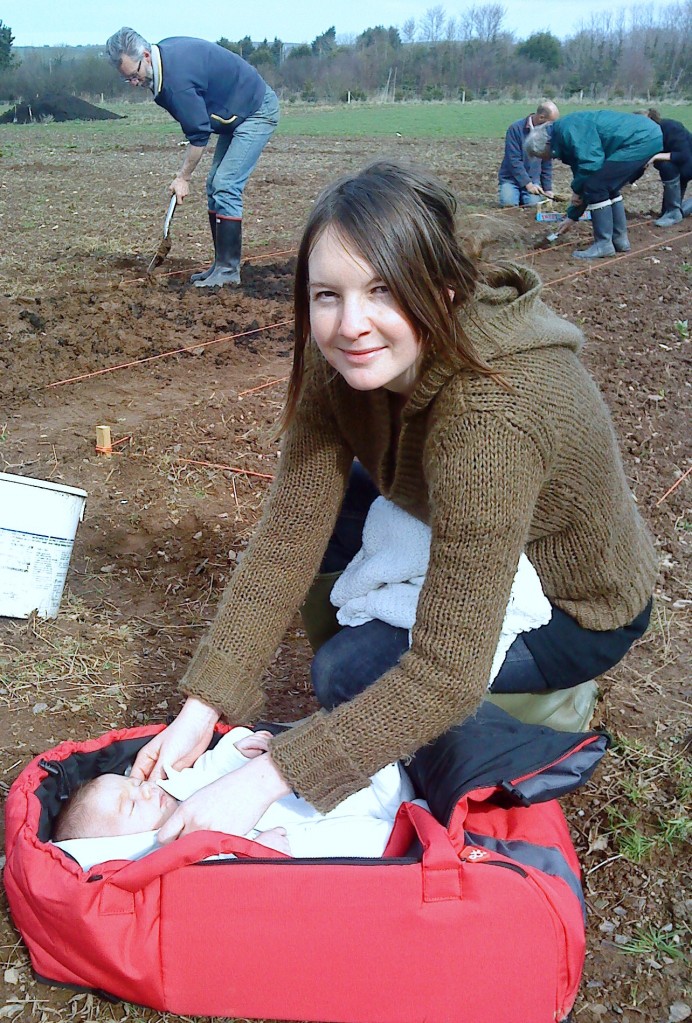
For the first time on Sunday everyone had the chance to meet Daisy, expert grower Jane Mellowship’s five-week-old daughter. She arrived in a waterproof “baby trug” – ideal in the circumstances!
Many thanks to expert grower Mark Norman and volunteers Cath, Charlotte, Danny, Frank, Kitty, Mark M, Mike H, Mike S and Robert.
March 20, 2010
Community supported agriculture… It’s quite a mouthful isn’t it? And even more to get your head round.
I’ve lost count of the number of times I’ve been asked the question: “How are your allotments going?” Or: “What’s the latest on your veg box scheme?”
This sort of remark is kindly meant, of course. But sometimes it makes me want to scream: “That’s not what we’re about. We’re a community supported agriculture project.”
Which means little to 99.9% of the people I come across.
A community supported agriculture (CSA) project has very specific characteristics. It aims to reconnect people with the land where their food is grown. It’s a partnership between farmers and members of the local community. The economic risks and benefits are shared between those who grow the food and those who consume it.
Local food
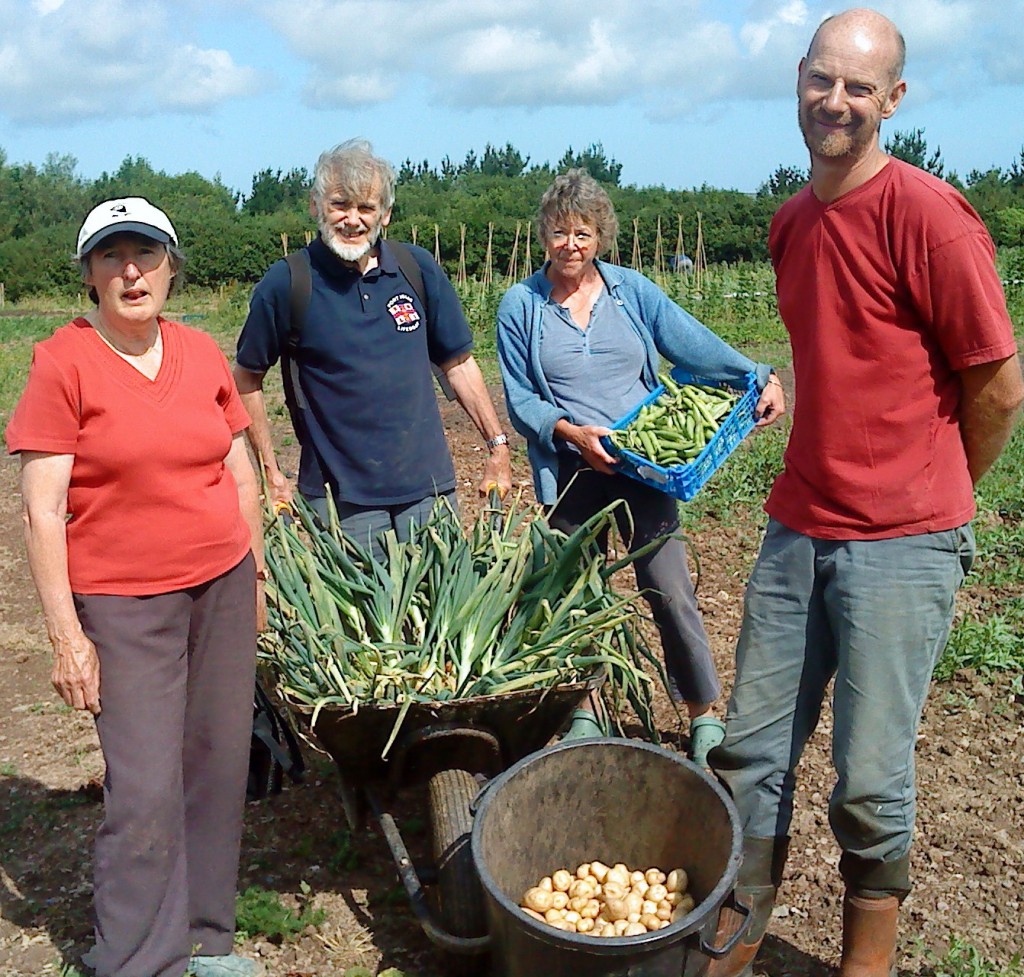
It’s all part of an expanding grassroots movement found across Europe, Japan, the US and Australia. It comes in many different shapes and sizes – from large farms supplying produce to hundreds of regular subscribers to small community food-growing projects like ours at St Kew Highway in north Cornwall.
It can be hard work, as it nearly always requires some voluntary input. But the common thread running through every single initiative is a willingness to co-operate over food production, to connect with the land and to commit to working with the seasons to produce a steady supply of local food.
And that’s why those of us who belong to Camel Community Supported Agriculture are proud to be part of this growing movement.