
March 1, 2010
The days of food rationing may be long over but the need to alter our eating habits is as important as ever. This became clear on my recent visit to – of all places – the Imperial War Museum in London.
Its Ministry of Food exhibition reveals some fascinating parallels between the dig for victory campaign in the Second World War and the enthusiasm that we all now share for growing our own food.
It shows that eating seasonal fruit and vegetables, healthy nutrition, recycling and reducing imports were just as important in 1940 as they are today.
But for very different reasons 70 years ago, of course.
Back then as now, people queued up for allotments and pledged to grow fruit and vegetables at work and in their gardens. They learned all about crop rotation, the value of nutritious green manure and how to create rich, sweet-smelling compost. They clubbed together to raise pigs, poultry and rabbits.

By 1943, more than six million British families were growing their own veg. The number of allotments had doubled to 1.75 million compared to 850,000 in 1939. Potatoes – led by cheery icon Potato Pete – replaced imported wheat as a staple of the wartime diet because they were full of vitamin C, easy to grow, cheap, filling and energy-rich.
A vegetable list to provide “winter meals from a well-planned plot” itemised potatoes, cabbage, sprouting broccoli, carrots, onions, shallots, beetroot, swede, brussels sprouts, parsnips, leeks, kale, savoy cabbage, spinach beet and turnip.
Unsurprisingly, it mirrors the contents of Camel Community Supported Agriculture’s own seasonal weekly veg boxes being handed out to our members during the winter months.
The only difference is, thanks largely to multicultural influences, that our seasonal recipes are much more tasty and adventurous!
The Ministry of Food exhibition runs at the Imperial War Museum in London until 3 January 2011. It’s sponsored by Company of Cooks.
February 26, 2010
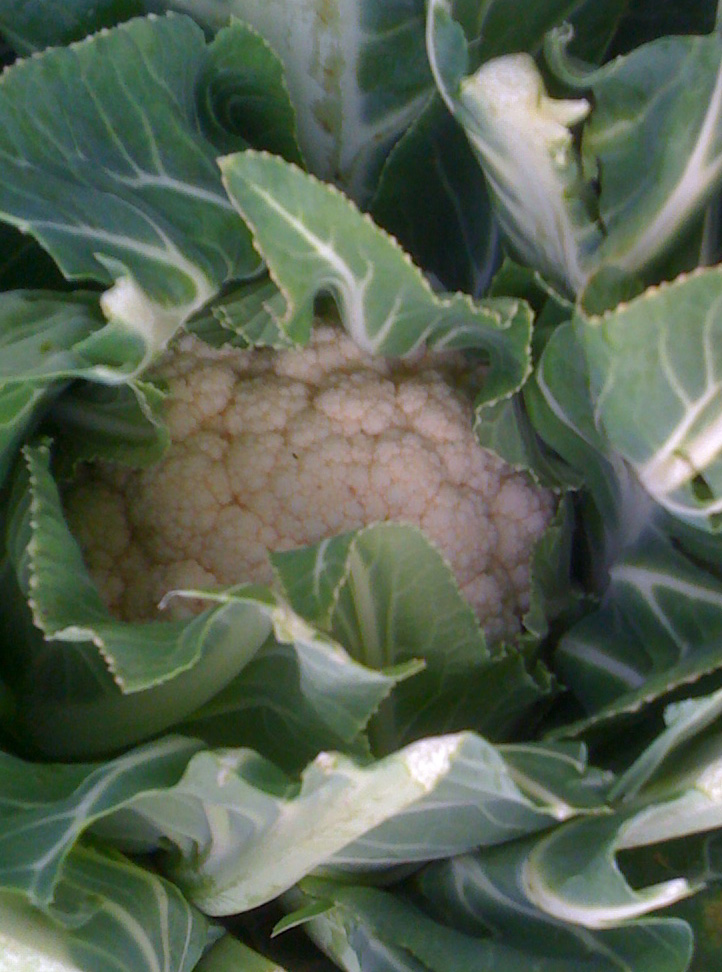
This seasonal recipe for cauliflower served with a salsa verde is from Nigel Slater’s latest book, Tender. He deep fries the cauliflower but, if that’s a problem for you, shallow frying would probably work pretty well.
Serves 2 as a main course
Preparation: 15 minutes
Cooking: max 10 minutes
Ingredients
a medium cauliflower
sunflower or groundnut oil for deep-frying
3 tbsp gram flour
½ tsp paprika
For the salsa verde:
handful parsley leaves
6 bushy sprigs mint
handful basil leaves
2 cloves garlic, crushed
1 tbsp Dijon mustard
2 tbsp capers, rinsed
6 tbsp olive oil
2 tbsp lemon juice
Method
Break the cauliflower into florets. Boil in deep, salted water for a couple of minutes (a little longer if you can only shallow fry), then drain thoroughly.
To make the sauce, chop the herbs quite finely, then stir in the garlic, mustard and capers. Pour in the olive oil slowly, beating with a fork. Stir in the lemon juice and season with sea salt and black pepper. Be generous with the seasoning, tasting as you go. The sauce should be bright tasting and piquant.
Get the oil hot in a deep pan. Toss the cauliflower with the gram flour, a little salt and pepper and the paprika. When the cauliflower is coated, fry in the hot oil until crisp – a matter of three or four minutes or so. Drain on kitchen paper before serving with the sauce.
February 25, 2010
This week’s veg boxes will contain:
potatoes (Burlerrow Farm, St Mabyn)
onions (Rest Harrow Farm, Trebetherick)
carrots (Rest Harrow Farm)
* parsnips (Camel CSA/Jeremy Brown)
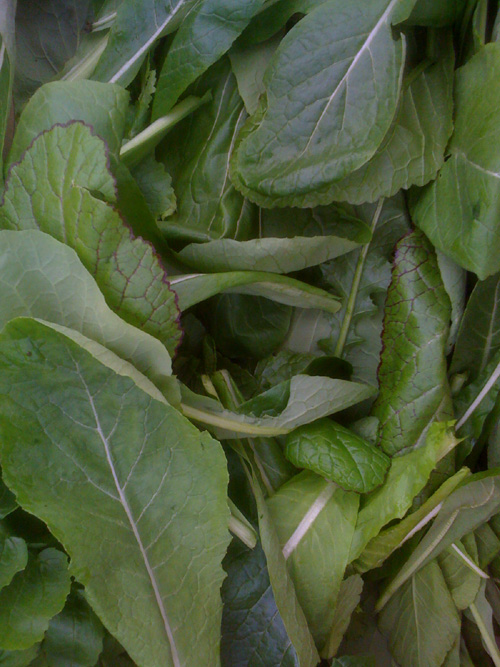
* salad bag (Jeremy)
cauliflower (Rest Harrow Farm)
Standard boxes will have larger quantities of some of the above, plus:
spring greens (Rest Harrow Farm)
curly kale (Rest Harrow Farm)
red cabbage (Rest Harrow Farm)
Large boxes will also have:
* pak choi (Jeremy)
leeks (Rest Harrow Farm)

February 23, 2010
Congratulations to Jane and Gav Mellowship who are the proud parents of Daisy, their new baby daughter.
Jane is one of Camel Camel Supported Agriculture’s three expert growers. Both she and Gav work in farming and horticulture.
Jane says:
“We’re loving having Daisy with us and getting used to being three instead of two.
“It took long enough to get her out and now we’re just enjoying her finally being here!
“She’s brilliant and we’ve already forgotten what life was like without her.”
Daisy is the second baby born to members since Camel CSA was set up. Hollie Goodwin, Dan and Kate’s daughter, is now six months old. And starting to eat lots of vegetables, we hope!

February 19, 2010
A warming soup with a bit of a kick that makes use of the seasonal carrots in our veg boxes – from the Riverford website.
Preparation: 15 Mins
Cooking: 50 Mins
Serves: 4
Ingredients
1 tsp olive oil
1 medium onion, peeled and chopped
2 garlic cloves, peeled and crushed
1 level tsp mustard powder
2.5cm piece fresh ginger, peeled and grated
freshly ground black pepper
pinch of salt
1 litre vegetable or chicken stock
6 medium carrots, peeled and chopped
2 tbsp parsley, roughly chopped
natural yoghurt to serve
Method
Heat the olive oil in a large saucepan and soften the onion and garlic with the mustard powder, ginger, pepper and salt, adding 2 or 3 tbsp stock after a minute or so. After another 2 -3 minutes, add the carrots, stirring well. Pour in the rest of the stock, bring to the boil, then cover and leave to simmer for 40 minutes. When it is ready, whiz the soup until smooth in a blender, or using a hand-held stick blender in the pan. Stir in the chopped parsley, saving a little for garnish and reheat the soup gently if you need to. When serving, swirl a spoonful of yoghurt through each portion. Sprinkle with chopped parsley and serve.

February 18, 2010
All the boxes this week will contain:
potatoes (Burlerrow Farm, St Mabyn)
savoy cabbage (Rest Harrow Farm, Trebetherick)
onions (Rest Harrow Farm)
leeks (Rest Harrow Farm)
carrots (Rest Harrow Farm)
* parsnips (Camel CSA)
The standard boxes will have larger quantities of some of the above plus:
* jerusalem artichokes (Camel CSA)
* braising greens (Jeremy Brown)
small cauliflower (Rest Harrow Farm)
* = grown to organic principles

February 13, 2010
Our picking and packing team prepared a total of 30 seasonal veg boxes for our members this week – an all-time record. Plus the box we’re offering in a prize draw at the St Mabyn Pre-School Valentine Brunch.
A further milestone was reached. For the first time, all the contents of the boxes were bought in from other growers.
The fact that we’re buying in such a high proportion of the weekly vegetable box contents at this time of year may seem like an admission of defeat. But this is far from the case.
In the UK, community supported agriculture comes in many different shapes and sizes. There’s no “right” or “wrong” way of doing it.
As a not-for-profit organisation we rely totally at present on the goodwill of our members, who make up our volunteer workforce. This will change as we expand and if we are successful in our funding bids to the Lottery and the Local Action Group.
As we’re working on less than two acres, we’re not in a position to grow large-scale main crops which need constant rotation like potatoes and winter brassicas. Instead we are concentrating on “high-value” seasonal crops which would be either too expensive to buy in or do not travel well.

Benefits
As a CSA, we’re committed to building up partnerships between farmers and the local community, enabling farmers to sell direct to the public, and providing other mutual benefits. So that’s why we’re happy to include varying proportions of vegetables in our boxes from small-scale, local growers.
The Camel CSA approach is very much community-led. It’s organised democratically. Every member has a say in how our project is run.
The core management group is responsible for all the main decisions. Under the guidance of our three volunteer expert growers, it works out what to grow, how we grow it, what goes in the boxes, what we charge our members and who should supply us.
All our own onions and shallots – in store since last summer – have been used up at long last. The remaining parsnips, artichokes and carrots are again well and truly frozen into the ground.
So the carrots, curly kale, onions, purple sprouting broccoli, swede and Brussels sprouts (complete with sprout top!) in this week’s boxes come from Richard Hore at Rest Harrow Farm, Trebetherick.
Richard and his family, who cultivate 30 acres close to the relatively mild climes of the Camel estuary, have done us proud this winter.
The winter salad bag was supplied by Jeremy Brown, one of Camel CSA’s expert growers. It contains a selection of baby leaves such as pak choi, watercress, mustard, rocket and spinach from his polytunnels behind St Kew Harvest Farm Shop at St Kew Highway.
The potatoes were grown by Colin and James Mutton of Burlerrow Farm, St Mabyn.

February 12, 2010
Cooking sprouts with chestnuts and bacon makes them seriously irresistible.
Serves 4
Preparation time: less than 30 minutes
Cooking time: 10 to 30 minutes
Ingredients
500g Brussels sprouts
vegetable oil
125g streaky bacon, cut into small pieces
1 tbsp butter
125g vacuum-packed chestnuts, roughly chopped
30ml marsala (optional)
handful fresh parsley, chopped
freshly ground pepper
Method
Trim the ends of the sprouts and put them in a large saucepan of salted boiling water. Cook for about 5 minutes, or until they are tender but still retain a bit of bite. Remove from the heat and drain.
Heat about half a tablespoon of oil in a large pan. Add the bacon and cook until it is crisp and golden-brown. Add the butter and chestnuts. If you’re using the marsala, once the chestnuts have warmed through, turn the heat up and add the marsala. Cook until the mixture has reduced and thickened slightly.
Add the sprouts and half the parsley to the pan and mix well. Season with freshly ground black pepper. Serve with the rest of the parsley sprinkled over the top.

February 11, 2010
… and it’s a record number to be filled this Friday: a total of 30 boxes.
All boxes will have:
curly kale (Rest Harrow Farm, Trebetherick)
sprout stalks (Rest Harrow Farm)
carrots (Rest Harrow Farm)
potatoes (Burlerrow Farm, St Mabyn)
onions (Rest Harrow Farm)
swede (Rest Harrow Farm)
Standard boxes will also have:
extra potatoes (Burlerrow Farm)
leeks (Rest Harrow Farm)
sprouting broccoli (Rest Harrow Farm)
* salad bags (Jeremy Brown)
* = grown to organic principles

February 9, 2010
There’s another chance to win one of Camel Community Supported Agriculture’s weekly vegetable boxes – this time at the Valentine Brunch in St Mabyn.
This social event is being held by St Mabyn Pre-School on Sunday 14 February from 10.30 am to 12.30 pm in the village hall.
There will be traditional English breakfast food plus heart-shaped waffles and hot drinks. Also live music, a raffle, love quiz (!) and children’s craft activities.
Come and join us for a fun morning whether single, a pair or a family. It’s all in aid of pre-school funds.