
September 9, 2011
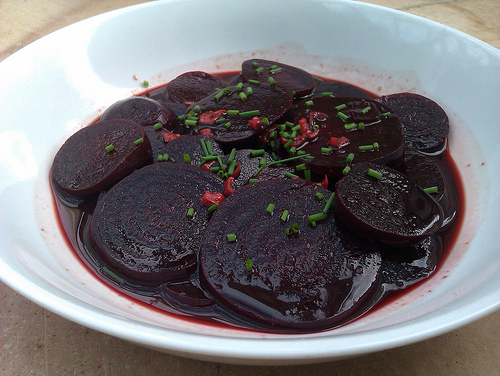
A Nigel Slater salad from the Observer. It goes beautifully with Cornish smoked mackerel and is perfect made with the red chillis in Camel CSA’s veg boxes this week.
Nigel says: “Anyone who likes cooked beetroot, but isn’t fond of it pickled, may like to try this way with them. The salad has some of the crisp, acidic flavour of a good pickle, but is infinitely more mellow. I had intended this to be a side dish, but it is so good, it became the focus of a light lunch with smoked salmon and rye bread. Lovely fresh flavours and a good introduction to beetroot for the uninitiated.”
(I used cider vinegar instead of sherry vinegar.)
Serves 4 as part of a light main course
Preparation / cooking time: 60 minutes
Ingredients
raw beetroot 6 small to medium
oil vegetable, rapeseed or groundnut
For the dressing:
ginger, freshly grated 1 tsp
orange juice 125ml
lemon juice 3 tbsp
dark soy 3 tsp
small, red chilli 1
sherry vinegar 1 tbsp
Scrub the beetroot and trim its leaves, without tearing the skin, then either boil or bake till tender to the point of a knife. To bake, set the oven at 200C/gas mark 6, place the beetroots on a sheet of foil, pour over a glug of mild cooking oil then close the foil loosely over them. Bake for 40 minutes or so, depending on the size of your beets, till you can insert a skewer easily into them. To boil them, drop the beetroots into boiling, unsalted water and simmer, partially covered, for 20-30 minutes till tender.
Remove the skins from the beetroots – they should be easy to push off with your thumb. Slice the beets roughly the same thickness as a pound coin then put them in a serving dish.
Make the dressing: put the grated ginger in a mixing bowl, pour in the orange and lemon juices then add the soy sauce. Halve, seed and finely slice the red chilli, then add a little of it to the dressing with the sherry vinegar, and mix well. Check for balance – it should be sweet, sour and fruity. Add more soy or juice, or chilli as you wish. I find that barely half a small chilli is enough. Spoon the dressing over the sliced beetroot and leave for a few minutes before serving.
September 8, 2011
As Camel CSA expert grower Jane Mellowship says, ‘Lots of lovely veg to harvest this week, making the boxes fit to burst!’ As always at this time of year, contents subject to change.
This week everyone will have:
potatoes (Burlerrow Farm, St Mabyn)
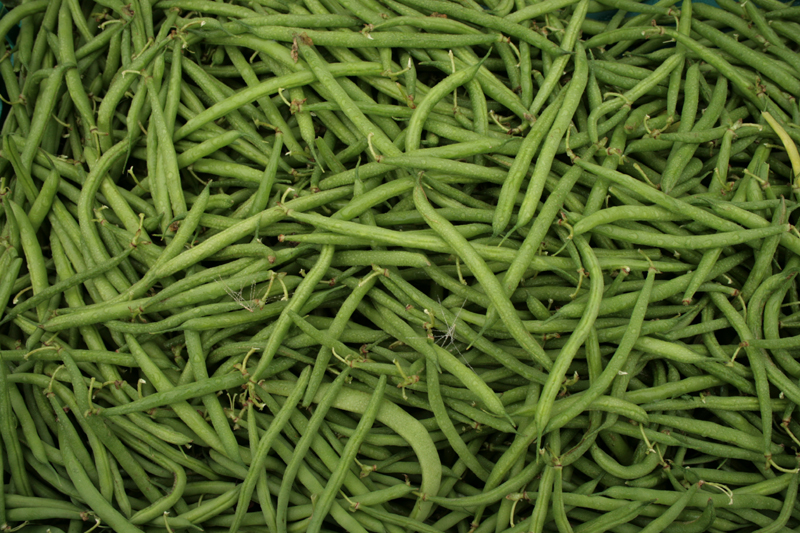
* french beans (Camel CSA)
* spinach (Camel CSA)
* beetroot (Camel CSA)
* cucumber (Camel CSA)
* tomatoes (Camel CSA)
* onions (Camel CSA)
* garlic (Camel CSA)
* chillies (Camel CSA)
Standard boxes will also have:
* peppers (Camel CSA)
* aubergines (Camel CSA)
* turnips (Camel CSA)
* kohlrabi (Camel CSA)
* = grown to organic principles
September 2, 2011
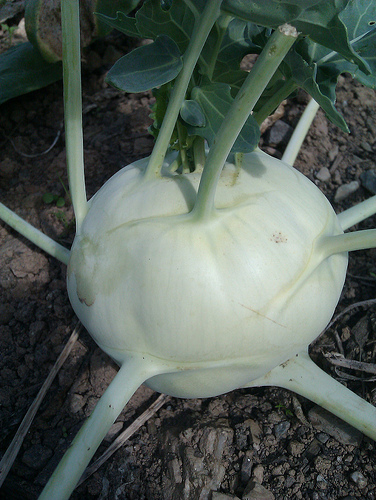
Camel CSA’s weekly veg box members keep asking: “What’s that pale greenish-white sputnik-like vegetable in the veg boxes? And what do I do with it?”
Kohlrabi are easy to grow, not often seen in the shops and highly underrated. They have the combined taste and texture of radishes and turnips – but are milder, crisper and more juicy.
I love to eat smaller ones raw – just peel and slice them into batons or matchsticks. They can be grated as a crunchy addition to salads, made into a kohlrabi remoulade, or cubed and steamed before dressing with oil and lemon juice. Some people even stuff them! (But I think life’s too short for that.)
This recipe comes with some useful tips on cooking with kohlrabi from Hugh Fearnley-Whittingstall in the Guardian. He says: “If your kohlrabi still has its green leaves attached, combine them with the spinach in this tasty gratin.”
The spinach could be replaced with some of the Swiss chard we’re getting in Camel CSA’s weekly veg boxes at the moment. Oh – and I used creme fraiche instead of double cream.
If you have just one kohl rabi, you could make this for two people (or for four as a side dish) simply by dividing the amounts by three.
Serves 6
Preparation: 20 minutes
Cooking: 35 – 40 minutes
Ingredients
1 tbsp sunflower oil
1 knob butter, plus a little more for greasing the dish
2 medium onions (about 600g), halved and finely sliced
Salt and freshly ground black pepper
500g kohlrabi, peeled and cut into 3mm thick rounds
250g potatoes, peeled and cut into 3mm rounds
2 tsp thyme leaves, chopped
200ml double cream
200ml water (or chicken or vegetable stock)
1 big handful baby spinach, or spinach mixed with kohlrabi leaves
1 tbsp parsley, chopped
For the topping
60g fresh breadcrumbs
25g butter, melted
45g cheddar or hard goat’s cheese, grated
Method
Preheat the oven to 190C/375F/gas mark 5. Place a medium-sized frying pan over a medium heat. Add the oil and butter, wait until it foams, then add the sliced onion and a pinch of salt, and sauté for 12 minutes, until soft and starting to take on a little colour.
Throw in the kohlrabi, potatoes and thyme, and season generously with salt and pepper. Cook, tossing the mixture occasionally, for another five minutes.
Pour over the cream and stock, simmer gently until the liquid is reduced by half, stir in the spinach and parsley, then place in a lightly buttered gratin dish, about 30cm x 20cm x 7cm in size, levelling it out with a spatula as you go. Place the gratin dish on a baking tray.
Blitz together the breadcrumbs, butter and cheese in a blender, and sprinkle over the top of the filling. Bake the gratin in a hot oven for about 35-40 minutes, until all golden and bubbling.

September 1, 2011
These are the planned contents for this week’s boxes, but subject to change or, more likely, extras depending on what’s available as we pick and pack tomorrow.
Everyone will have:
potatoes (Burlerrow Farm, St Mabyn)
* runner beans (Mark Norman)
* carrots (Camel CSA)
* calabrese/sprouting broccoli (Camel CSA)
* tomatoes (Camel CSA)
* kohlrabi (Camel CSA)
* radish (Camel CSA)
* onions (Camel CSA)
Standard boxes will also have:
* peas (Camel CSA)
* kale (Camel CSA)
* cucumber (Camel CSA)
* = grown to organic principles
August 27, 2011
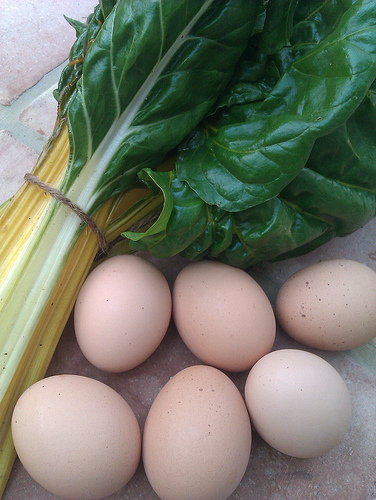
I stumbled across this way of cooking the chard in Camel CSA’s veg boxes this week in The Times. It’s from Lindsay Bareham‘s Dinner Tonight column. And very delicious it is too.
Trouchia is essentially an omelette made with chard, but it’s actually more chard than omelette. Lindsey describes it as “dense with green and just enough egg to bind it together, the spinach-meets-cabbage flavour pointed up brilliantly with garlic and a little Parmesan”.
She adds: “The outside will be lightly crusted and golden, inside will be creamy and soft. It’s more like a frittata than the usual French omelette and is delicious hot, warm or cold.”
As a matter of interest, when most cooks make la trouchia (which is unique to the Nice area of France) they add a thinly-sliced onion when stir-frying the chard.
Serves 2-4
Preparation/cooking: 40 minutes
Ingredients
500g chard
3 fresh eggs
2 tbsp freshly grated Parmesan or Gruyere
5 large garlic cloves
Olive oil
Salt and black pepper
Method
Fold over each leaf and slice off the stalk (use these for another dish). Make a pile of leaves as you go. Using a large chef’s knife, shred the leaves finely. Place in a colander, rinse, then sprinkle with 1tsp salt.
Leave for five minutes while you whisk the eggs in a bowl, seasoning lightly with salt and generously with black pepper. Add the Parmesan.
Crack the garlic, flake away the skin, chop finely then crush to a paste.
Fill a saute pan with water and boil. Rinse the chard and add to the boiling water for 10 seconds. Tip into a colander and hold under running water to cool, then squeeze dry with your hands or against the colander.
Heat 2 tbsp oil in a frying pan over a medium heat. Add the garlic and fry quickly before adding the chard. Stir-fry constantly for about 10 minutes until soft and juicy. Stir thoroughly with a fork into the egg.
Heat a small, non-stick frying pan over a high heat, add 1 tbsp oil , swirling it round the sides. Pour in the omelette mix, stirring and smoothing with a fork without touching the pan. Cook for a couple of minutes, then reduce the heat to very low, cover the pan and cook for about 8 minutes until set.
Using the lid or a plate, quickly invert the pan. Add a little more oil, increase the heat, return the omelette and cook for a couple more minutes. Slide on to a plate and enjoy.
August 25, 2011
As you’ll have been finding over the last few weeks, what’s in your box doesn’t necessarily exactly match Camel CSA’s weekly list published here on the blog.
This is because we’re having to harvest and share out crops, such as peas or beans, before they go over even if they’ve not been listed. Other veg promised for the week might not be quite ready when it comes to picking them on Fridays, so we’ve left them to grow on for another week.
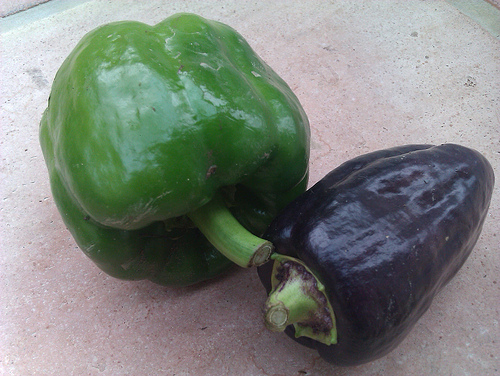
So, here’s this week’s proposed list with the warning that it is subject to change. You might also find the appearance of the occasional sweet pepper (green and dark purple versions), aubergine or chilli.
Rest assured, the picking/packing team will be trying to ensure that the distribution of extras is as fair as it can be. Herbs, too, will be unpredicted extras. So – enjoy the abundance while it lasts!
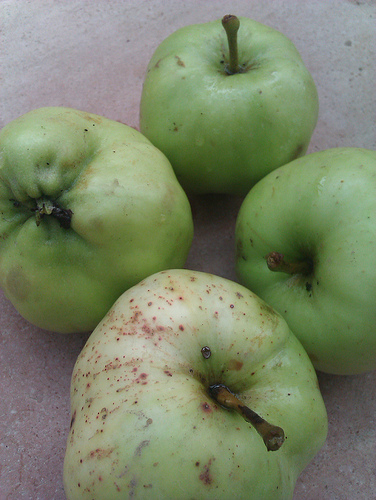
This week expert grower Jane Mellowship says that boxes will be ‘full to the brim’ with the bonus of early cooking apples from Charlotte’s orchard in St Mabyn. Apparently these cook to a fluff and need very little sugar. Lovely with the blackberries growing so abundantly this year in our Cornish hedges.
Everyone can be reasonably sure of getting:
potatoes (Burlerrow Farm, St Mabyn)
* Emneth Early cooking apples, aka Early Victoria (Camel CSA)
* broccoli (Camel CSA)
* spring onions (Camel CSA)
* tomatoes (Camel CSA)
* cucumber (Camel CSA)
* swiss chard (Camel CSA)
* radish (Camel CSA)
* coriander (Camel CSA)
Standard boxes will also have:
* peppers (Camel CSA)
* beetroot (Camel CSA)
* rocket (Camel CSA)
* = grown to organic principles
- Want to bake a Bank Holiday cake? Try our recipe from Cornwall for Westcountry apple cake
August 20, 2011
Cornwall’s mild, humid climate is proving excessively challenging for Camel CSA’s expert growers and volunteers right now.
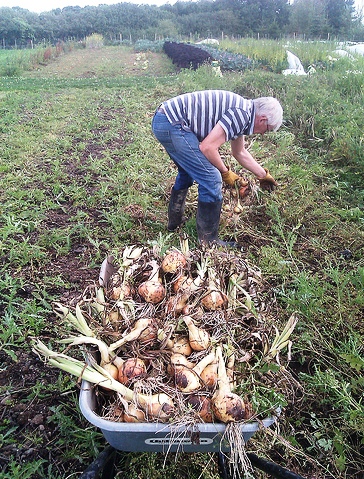
Our large crop of onions had to be raised in a hurry as they faced a sudden threat of downy mildew. The same mildew also attacked our salad onions.
Hundreds of onions were lifted over the space of a few days and laid out to dry in our polytunnel next to the basil, coriander, cucumber and rocket beds.
Much of the back-breaking work was done by our amazing secretary Mike Sadler, who’s since been felled by a nasty bout of shingles. We wish him a hasty recovery.
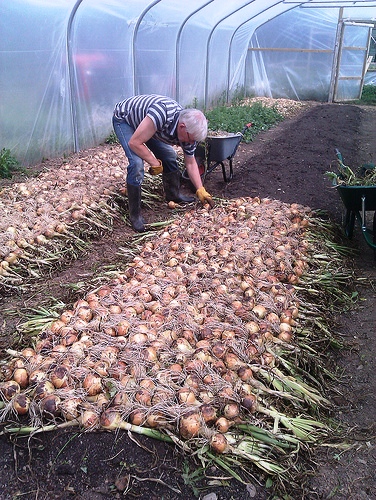
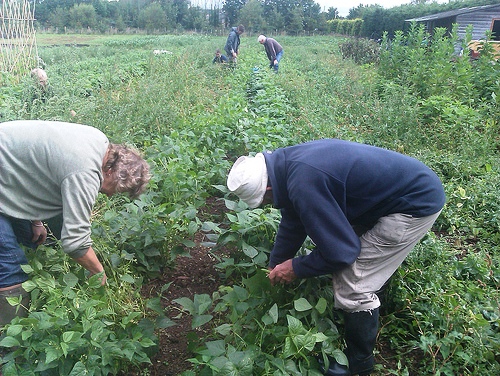
Onion lifting and storing is much more time-consuming than you might think. Luckily we were ably assisted by our bunch of regular volunteers from Hft (the Home Farm Trust) in Wadebridge, which provides support for people with learning disabilities.
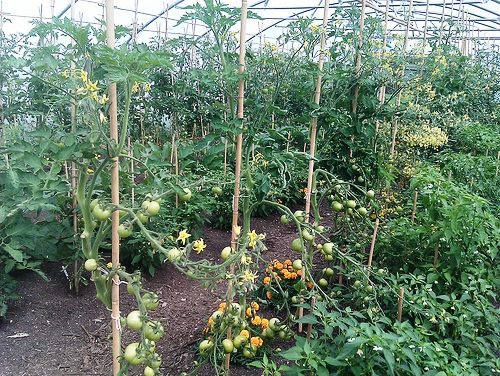
At the same time our expert grower Mark Norman had to contend with an attack of blight on the tomatoes in our other polytunnel. Within minutes of spotting the first signs, he’d stripped off all the blight-stricken leaves and saved the crop from disaster.
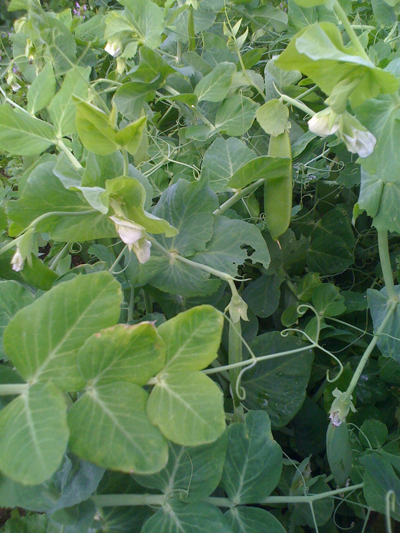
We’re already reaping the benefits of his quick work in our weekly veg boxes – along with the glut of French beans, cucumbers, basil and podding peas.
Only lots more harvesting and the weeds to tackle from now on, we hope. The weeds are running rife in the carrot, beetroot, squash and pumpkin beds…
August 18, 2011
First, a plea from the packers: if you have any of those small plastic containers such as tomatoes, peaches etc are often sold in, it would be great if you could bring them in to the shed. Many thanks.
This week everyone will have:
* potatoes (St Kew Harvest)
* onions (csa)
* french beans (csa)
* kohlrabi (csa)
* tuscan kale (csa)
* sugar snap/podding peas (csa)
* spring onion (csa)
* basil (csa)
Standard boxes will also have:
* tomatoes (csa)
* cucumber (csa)
* sprouting broccoli (csa)
* = grown to organic principles
August 14, 2011
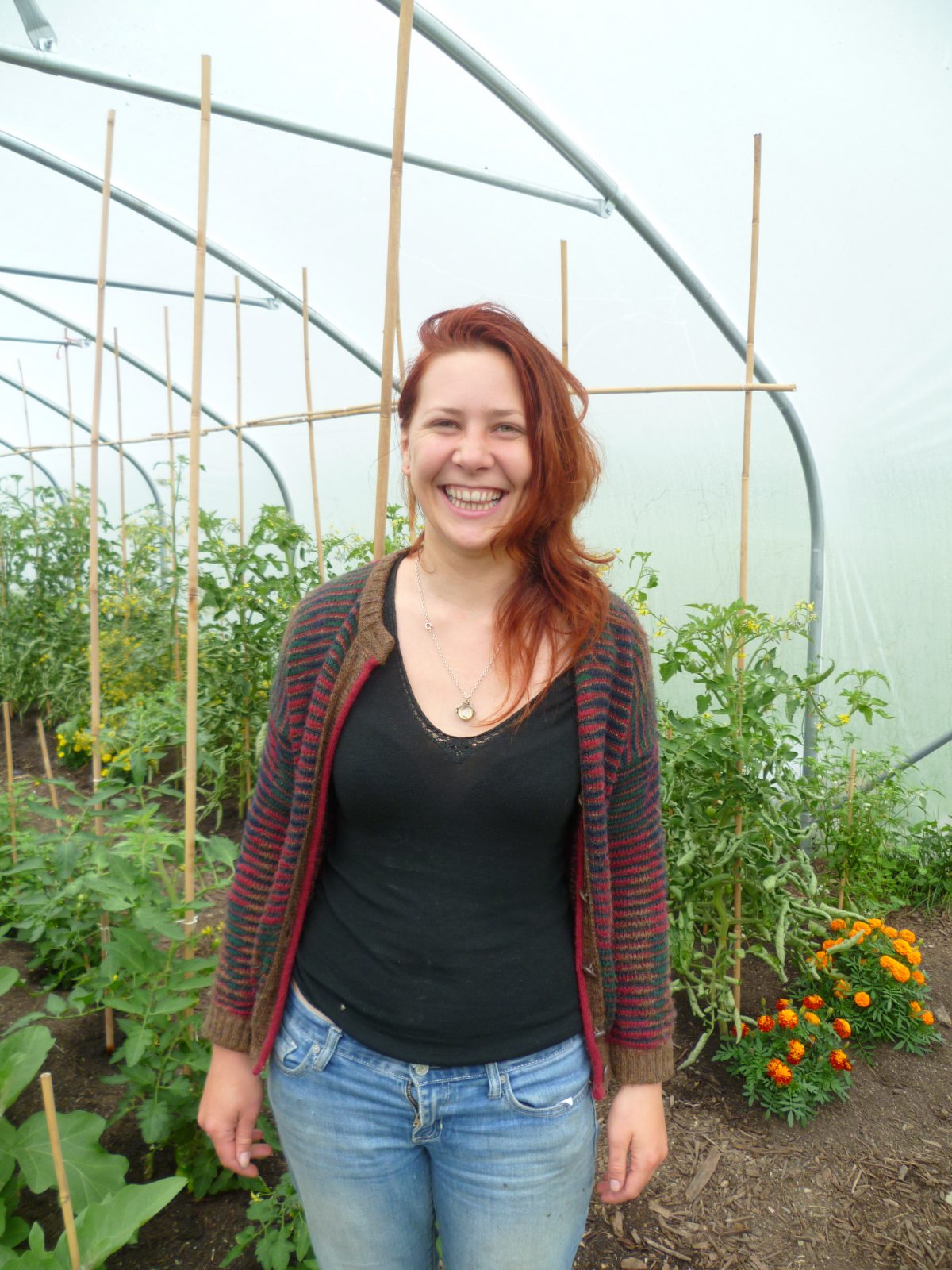
Allison Livingstone, Camel CSA’s partnership development co-ordinator says:
There’s a new face around our veg site asking questions and getting stuck in to some volunteering!
Becky Harrison is an action researcher for the University of Exeter and Volunteer Cornwall. She’s started working with us at Camel CSA to develop an understanding of how community groups work and the effect that they have on volunteers and the wider community.
Becky has an MSc in sustainable development and is now studying for a PhD. Previously she worked with the Turtle Foundation and CRISIS, the charity for single homeless people.
Becky’s particularly interested in how people feel about recording their experiences on camera and film as well as talking informally to her. She’s very friendly and is very happy to talk and work at the same time!
You can contact her directly at beckyh@volunteercornwall.org.uk with any questions or for more information.
August 13, 2011
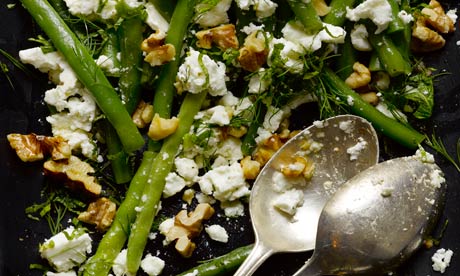
A recipe from a recent Hugh Fearnley-Whittingstall bean recipe round-up – as he says, ‘summer is a time when all of us can be full of beans’. If you’ve got more than you can cope with in your box, why not freeze some for winter use?
This simple, tasty salad works with runner beans, too.
Serves 2-4
Preparation and cooking: 20 minutes
Ingredients
280g french beans, trimmed
3 tbsp extra-virgin olive oil
juice of ½ small lemon
small handful of mint leaves, tough stalks removed, and chopped
small handful dill, tough stalks removed, half the fronds chopped, the rest reserved to garnish the dish
flaky sea salt and freshly ground black pepper
150g feta
50g walnuts, toasted and roughly chopped
Method
Top and tail the beans. Bring a pan of salted water to the boil and cook the beans until just tender, about three to six minutes, then drain and refresh in cold water. Dress the beans in the olive oil, lemon juice, mint, some of the dill, salt and pepper. Serve topped with crumbled feta cheese, walnuts and the remaining dill fronds scattered over the top.
[Photo: Colin Campbell for the Guardian]