
September 10, 2009
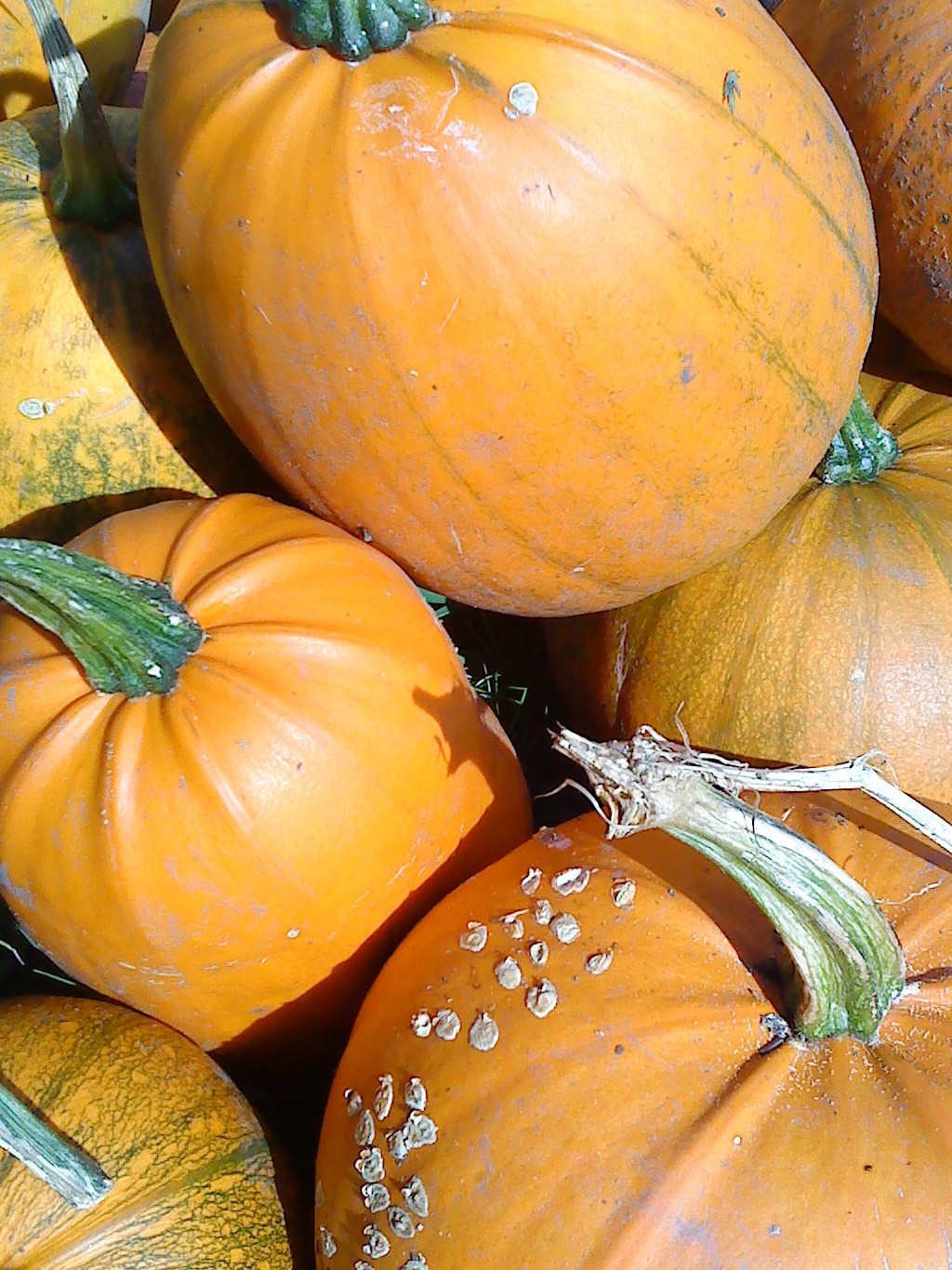
Now we’re entering the season of mellow fruitfulness, we’ve got a beautiful pumpkin in each vegetable box this week. They’re Jack-o’-Lantern variety from Mark Norman, one of Camel Community Supported Agriculture’s expert growers, who runs his own horticultural business on the edge of Bodmin.
Also in the small boxes:
*potatoes (Camel CSA)
*onions (Camel CSA)
*parsnips (Camel CSA)
*curly parsley (Camel CSA)
*100g salad bag (Jane Mellowship)
*pumpkin (Mark Norman)
*1/2 cucumber (Jeremy Brown)
*carrots (Jeremy)
cauliflower (Richard Hore, Rest Harrow Farm, Trebetherick)
tomatoes (Mr & Mrs Sanders, Polmorla Market Gardens)
Standard boxes are the same as above except:
*140g salad bag (Jane)
plus
*whole cucumber (Jeremy)
*runner beans (Jeremy)
* = grown to organic principles
Try Camel CSA’s Recipe No 11 – Squash (or pumpkin) and apple curry
September 7, 2009
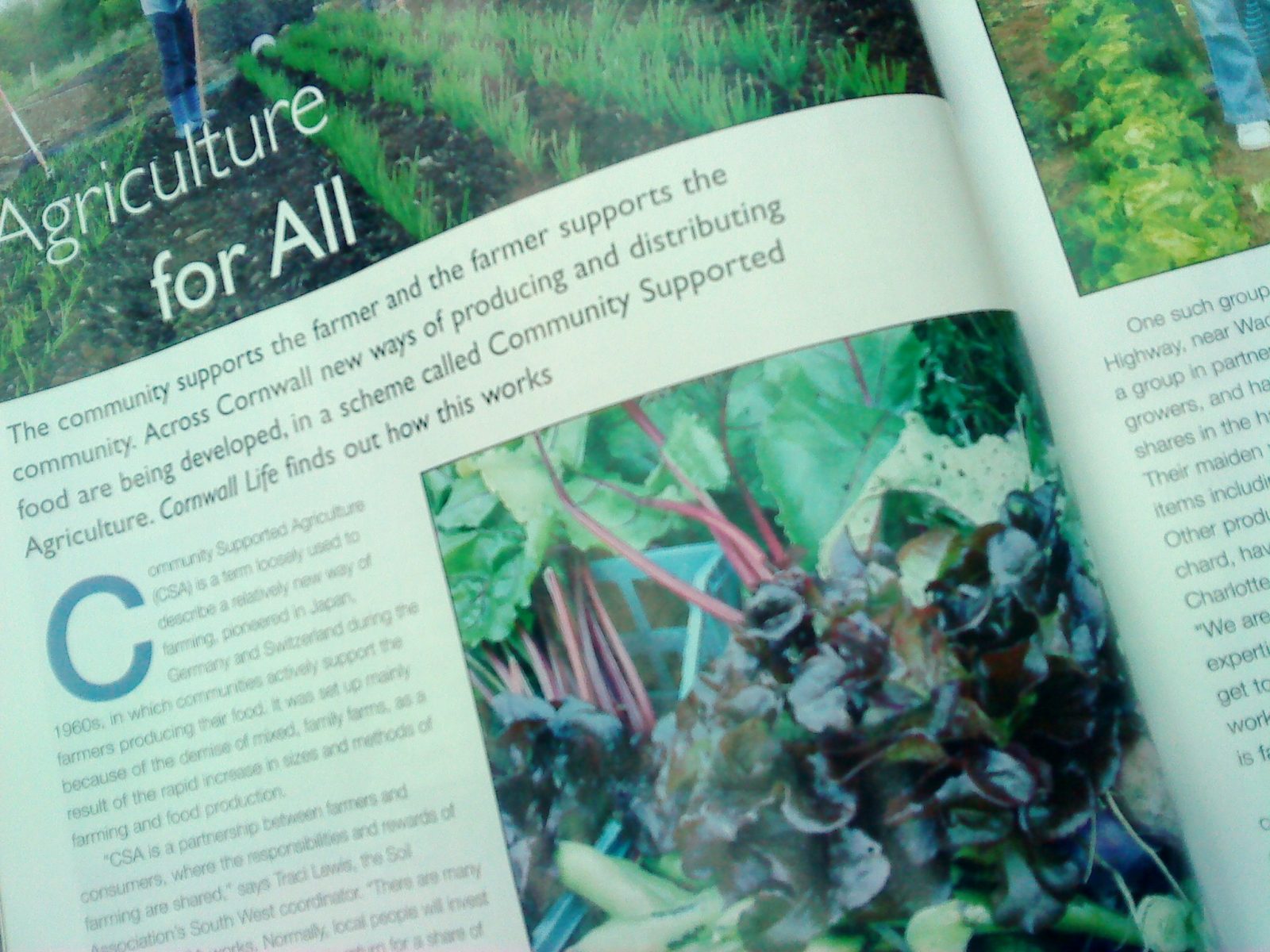
Various pioneering efforts to grow our own food in the far south-west are put under the spotlight in the September issue of the magazine Cornwall Life.
The four-page spread features several pictures of Camel CSA volunteers at work on our two-acre plot at St Kew Highway.
It reveals how our community project is helping Cornwall play a leading role in the Making Local Food Work programme led by the Plunkett Foundation. As Jan Trefusis of the foundation says:
Cornwall really is the star of this programme, with a high proportion of our uptake for the project coming from across the region.
Rewards
The article emphasises how community supported agriculture can offer a sustainable way of producing local and seasonal food where the rewards and risks are shared between grower and consumer.
It describes Cornwall’s other emergent CSAs at Harrowbarrow near Callington and in the Lamorna valley and at Lowarth Brogh near Land’s End. It tells us about plans to set up similar projects at Trevalon Organic Vegetables at Herodsfoot, Liskeard and on a farm near Launceston.
Traci Lewis of the Soil Association adds:
Who knows what can be achieved when we all start supporting each other more? We look forward to working with more landowners, farmers, growers and communities in Cornwall to find out.
September 4, 2009
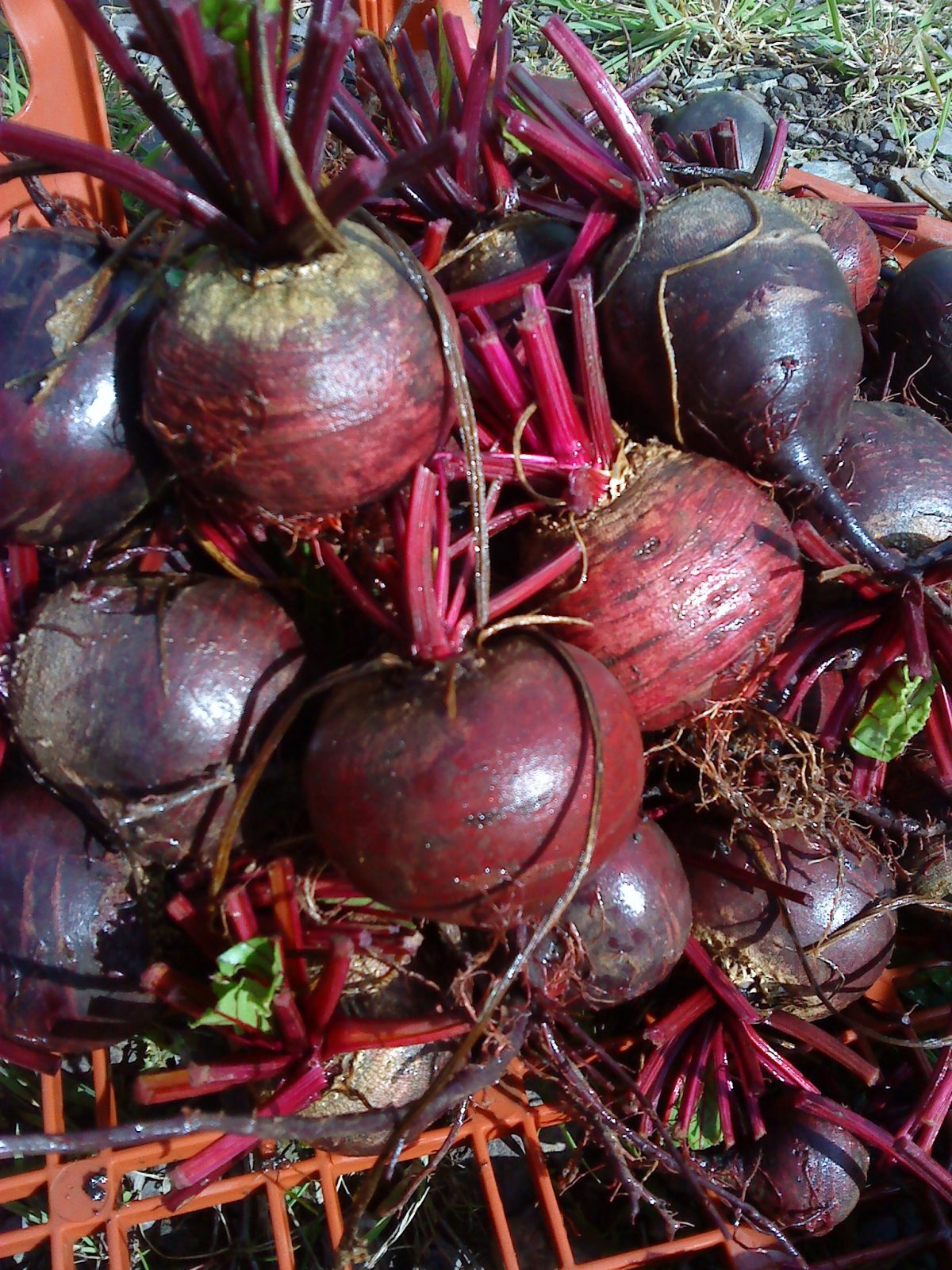
Trish, who is Camel CSA’s veg box packing supremo, recommends this delicious way of cooking beetroot from Jamie Oliver’s Return of the Naked Chef.
Preparation time: 10 minutes
Cooking time: about 1 hour
Serves 4
Ingredients
455g fresh raw beetroots, scrubbed
10 cloves of garlic, unpeeled and squashed
1 handful fresh marjoram or sweet oregano, leaves picked
salt, freshly ground black pepper
10 tbsp balsamic vinegar
6 tbsp olive oil
Method
Preheat the oven to 200°C/gas 6. Tear off a strip of kitchen foil big enough to hold the beets in a parcel. If the beets are large, cut in half to speed up their cooking time; if small, use them whole. Place them in the middle of the foil with the garlic and marjoram, season generously with salt and pepper and then fold the sides of the foil into the middle. Before you seal the parcel, add the vinegar and olive oil. Scrunch or fold the foil together to seal at the top. Place in the preheated oven and cook for around 1 hour, until tender. Serve in the bag at the table.
Click here to browse all the recipes that Camel CSA members have recommended so far.
September 3, 2009
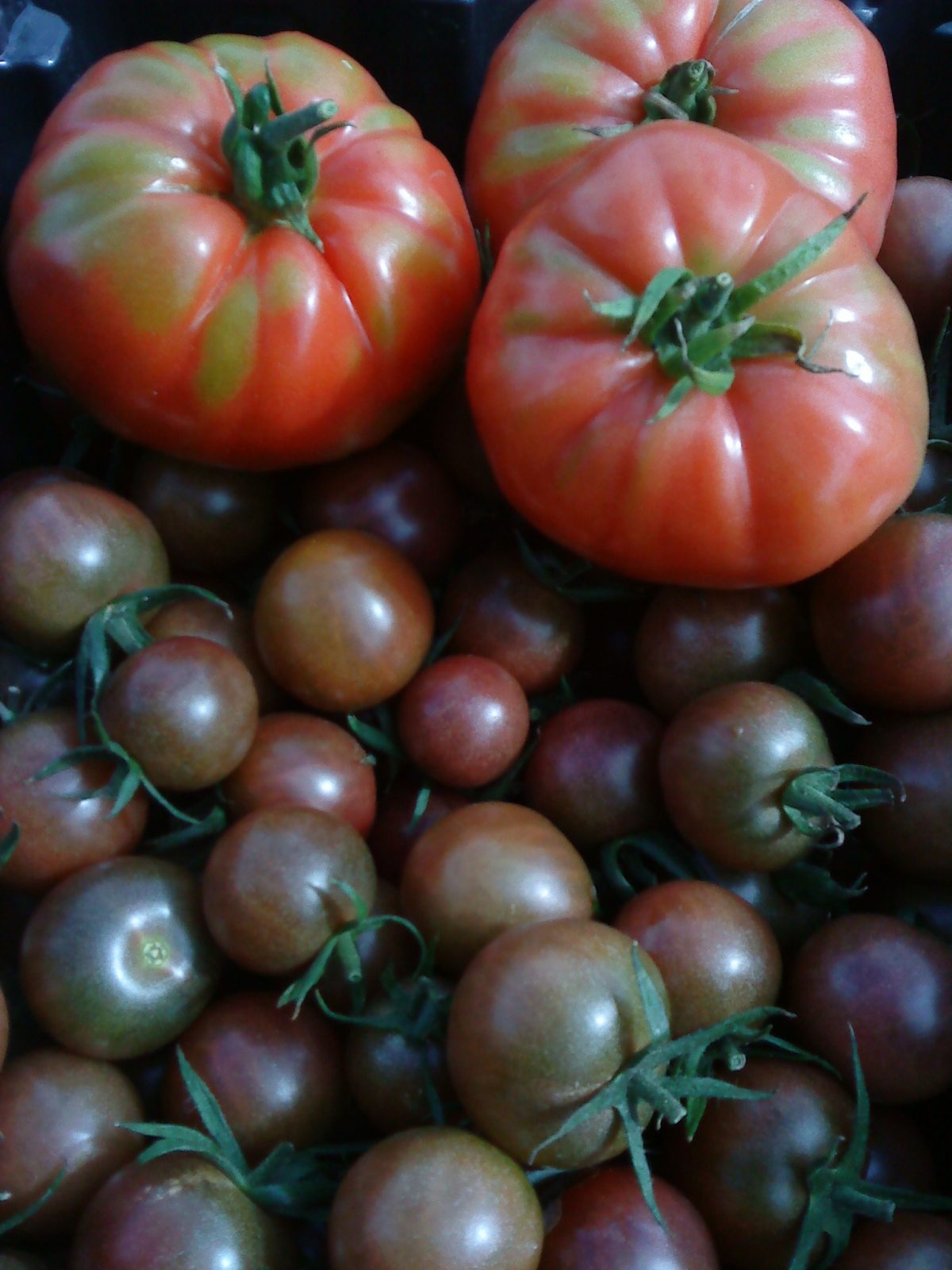
Oh wow! There’s not only plenty of basil in this week’s share of the vegetables from Camel Community Supported Agriculture but also some chocolate cherry tomatoes. Each of the standard veg boxes has a large Pink Caspian beef tomato – not Siberian (!) as I suggested earlier – as well.
So, if you haven’t made last week’s Recipe No 9 – Grilled courgette, tomato and bean salad in basil sauce, why not give it a try? Or have a go at making Nigel Slater’s Courgette, tomato and ricotta bake.
The small boxes contain: –
*potatoes (Camel CSA)
*onions (Camel CSA)
broccoli (Celtic Produce, Bodmin)
*celery (Mark Norman)
plums (a gift from Mark’s Dad)
*basil (Jeremy Brown)
*tomatoes (Jeremy)
*small salad bag (Jane Mellowship)
Standard boxes contain all the above, except:-
*large salad bag (Jane)
plus
*beetroot (Camel CSA)
*courgettes (Mark)
* = grown to organic principles
The broccoli (calabrese) comes from the Bodmin wholesaler Celtic Produce and was grown on a farm at St Merryn, near Padstow. It is not organically produced.
August 30, 2009
More and more young people are getting involved in Camel Community Supported Agriculture’s pioneering efforts to promote local food.
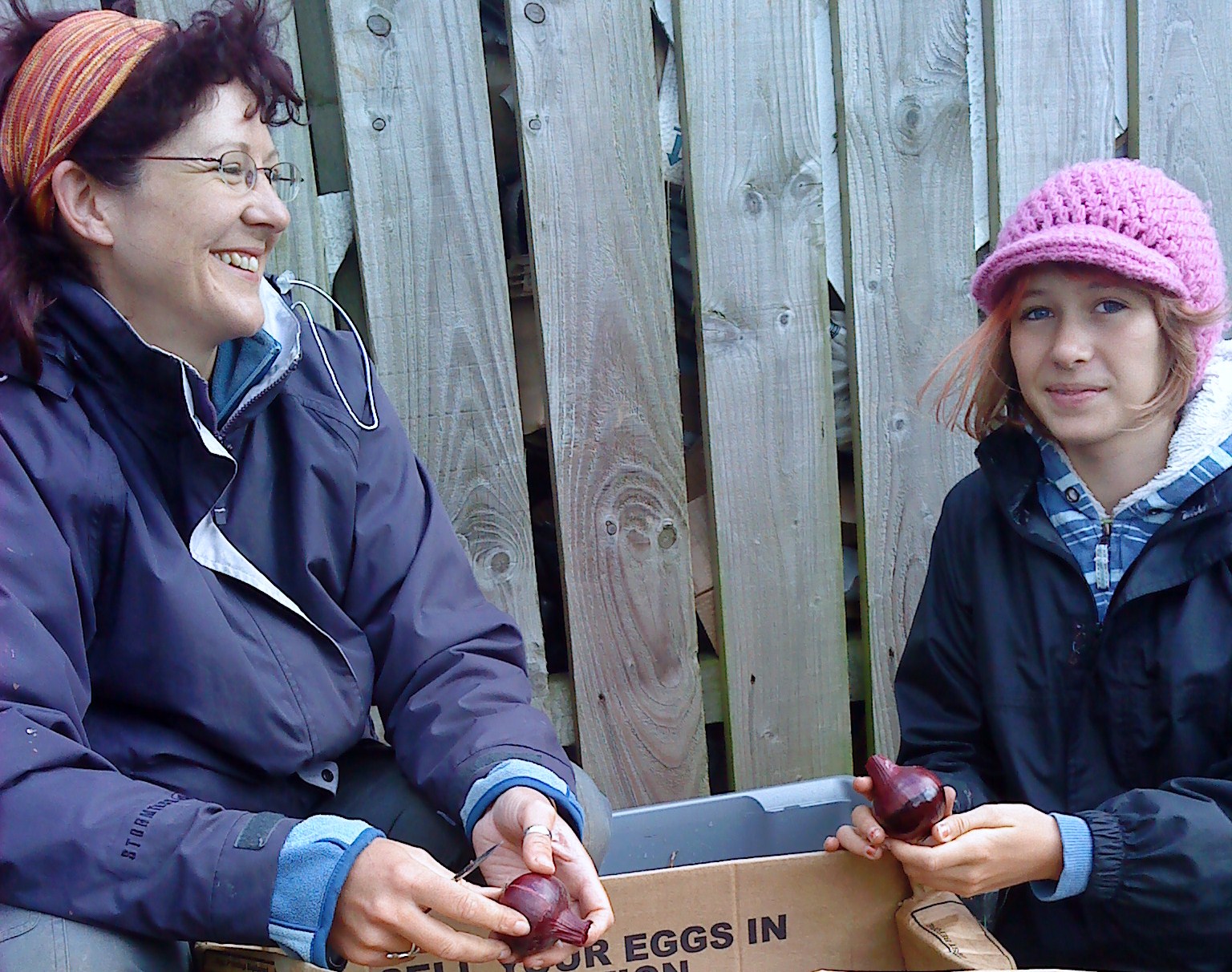
Fourteen-year-old Jenny Simmons, who’s at Wadebridge School, has chosen Camel CSA as the volunteering activity for her Duke of Edinburgh’s bronze award programme.
This gives young people the opportunity to become involved in a project that they really care about.
This week Jenny helped prepare the onions for the boxes. She worked alongside packing supremo Trish and fellow picking and packing team members Cath, Charlotte, Mark M, Mike H, Penny, Robert and Steve.
Marathon
The volunteer growers have at long last completed the marathon task of removing the black plastic mulch from the overgrown strawberry beds.
They also weeded the beetroot and removed the vicious thistles growing among the Brussels sprouts. Mark N strimmed the overgrown edges.
Once all the plastic had been dug up and removed, Jeremy got out the tractor and cut back all the surface weeds.
Now he can go ahead and plough the ground in preparation for sowing a crop of green manure.
This Sunday’s team comprised expert growers Jeremy and Mark N plus Cath, Charlotte, Danny, Mark M and Mike H.

We need you!
A big turnout is requested next Sunday when we’ll peel back the protective fleece and assess the damage to the 1500 brassica plants that were planted out last month.
These are the plants donated by our newest sponsors, Fentongollan Farm at Tresillian.
We must weed the 20 long rows of red cabbage, green cabbage (two varieties), cauliflower, purple sprouting broccoli and kale (both red and green).
So please make an extra special effort to turn up. We need all the help we can get!

It’s time to get those feet tapping and your dancing shoes on. The barn dance in support of Camel Community Supported Agriculture is on Saturday 12 September 7.30 – 11 p.m. in St Mabyn village hall.
All the dances will be called by Howard Burrows, the renowned Cornish caller. So you don’t need to have any experience.
The event’s being organised by demon dancers and Camel CSA members Mike and Yvonne Haywood. They say:
“This is the most fun you can have with your clothes on.”
As the proceedings can get boisterous, they respectfully request no children under the age of seven.
Buy your tickets for £4 in advance from Mike and Yvonne on 07966757318 or from St Mabyn PO & Stores. All the proceeds from this fund-raising event are being donated to to Camel CSA.
Please bring your own drink.
August 29, 2009
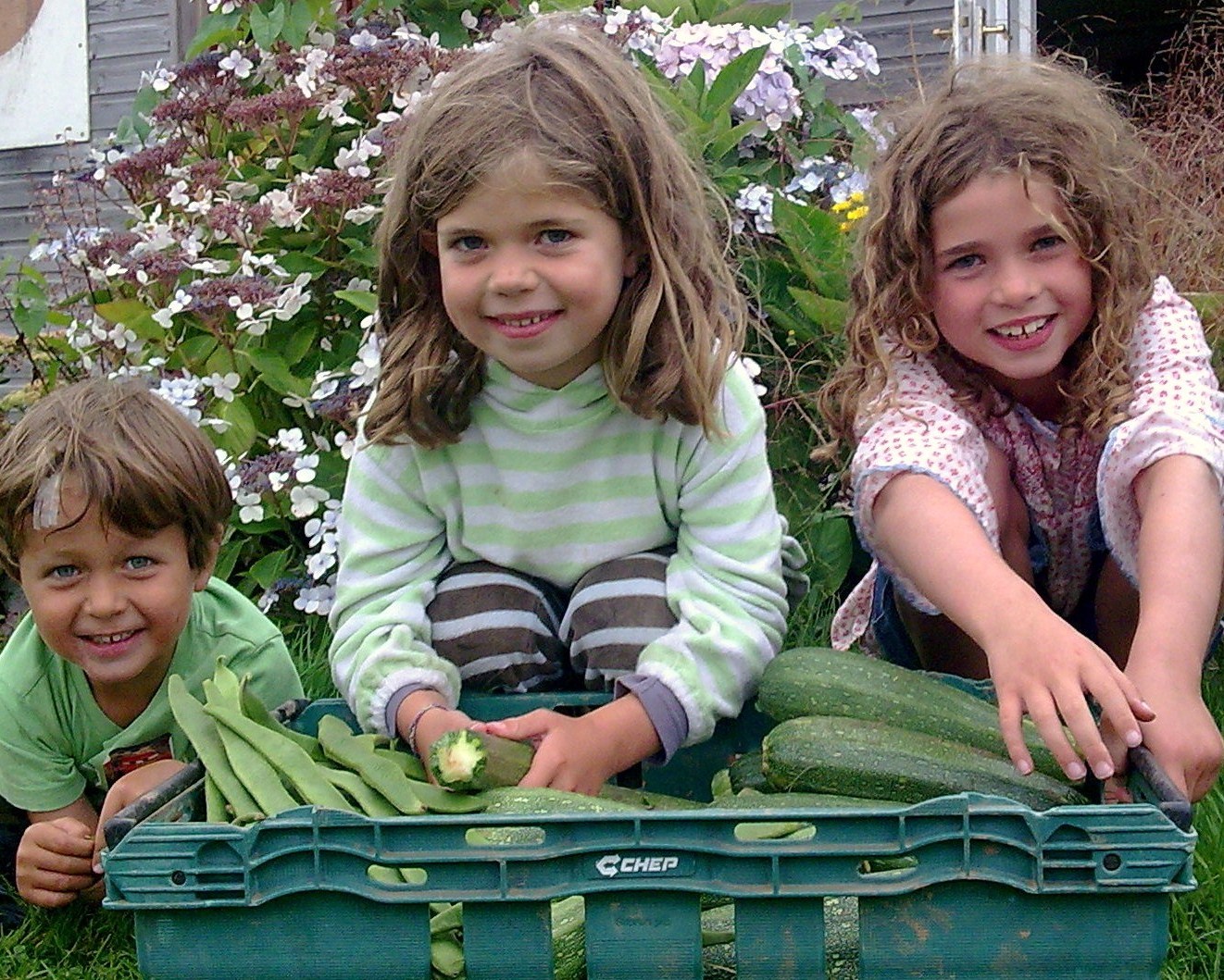
Three of Camel CSA’s youngest members contributed their own homegrown veg to this week’s boxes.
Lilac (8), Willow (7) and four-year-old August grew all the runner beans and some of the courgettes.
Core group member Antonina, co-owner of St Kew Harvest Farm Shop, explains:
“Lilac, Willow and August wanted to share their harvest grown at their home at St Kew.
So I paid them £8.60 for lots of runner beans and courgettes and three large marrows which they have grown from seed all by themselves.
They’ve been following our blog, and got concerned about the beans being eaten!”
August 27, 2009
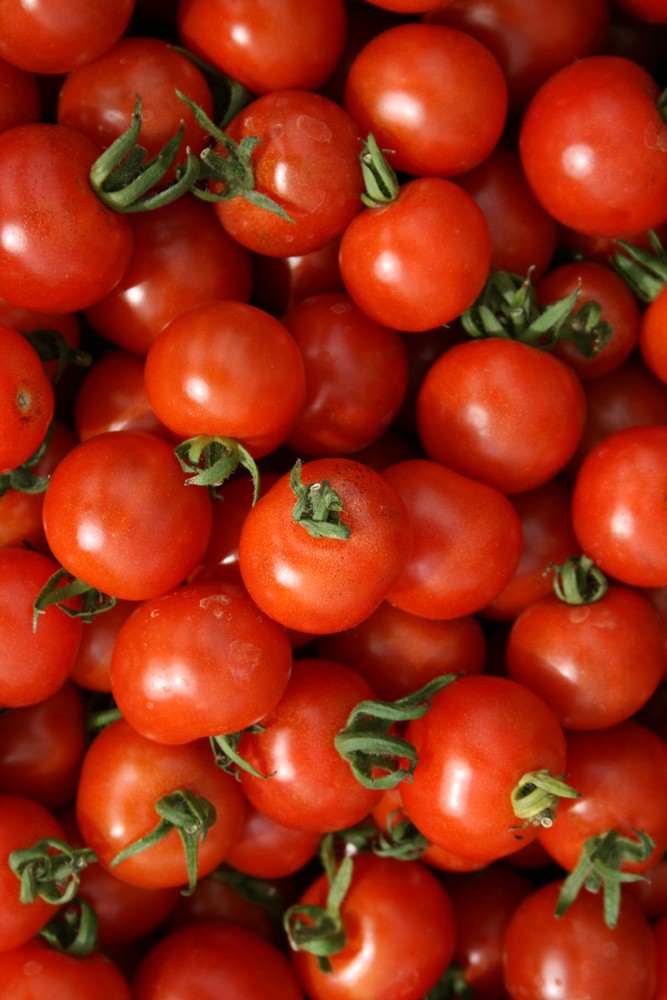
There are plenty of tomatoes and courgettes in Camel CSA’s veg boxes this week. This delicious salad is a firm favourite in my household, especially when we have grown lots of basil. It comes from Jane Baxter at the Riverford Organics field kitchen.
Preparation Time: Overnight
Cooking Time: 15 minutes
Serves: 4
Ingredients
200g dried cannellini or haricot beans, soaked overnight
3 tbsp extra virgin olive oil
4 courgettes, cut into ribbons 5mm thick
a small punnet of cherry tomatoes, cut in half
sea salt and freshly ground black pepper
for the dressing:
1 bunch of basil leaves
1/2 garlic clove, crushed
a pinch of salt
100ml olive oil
Method
1. Put the drained beans in a large pan, cover with fresh water and bring to the boil. Reduce the heat and simmer for an hour or so, until tender. Drain, season to taste and dress with 2 tablespoons of olive oil.
2. Toss the courgettes with the remaining olive oil and grill on a ridged griddle pan (or under a hot grill) until tender and lightly charred.
3. For the dressing, put all the ingredients in a food processor or blender and whiz until smooth.
4. Gently mix the beans, tomatoes and courgettes together in a large bowl and add enough basil dressing to coat. Taste and adjust seasoning.
Notes
If you cheat and use tinned beans which have been rinsed and drained, this salad can be prepared in less than 30 minutes.
Nigel Slater makes a similar Courgette, tomato and ricotta bake, which also uses a generous amount of basil. The first time I made this dish I had a “senior” moment and used mozzarella cheese instead of ricotta. It was still very tasty! He has lots of other ideas on how to use up a bumper crop of courgettes.
Click here to see all the recipes that Camel CSA members have recommended so far.
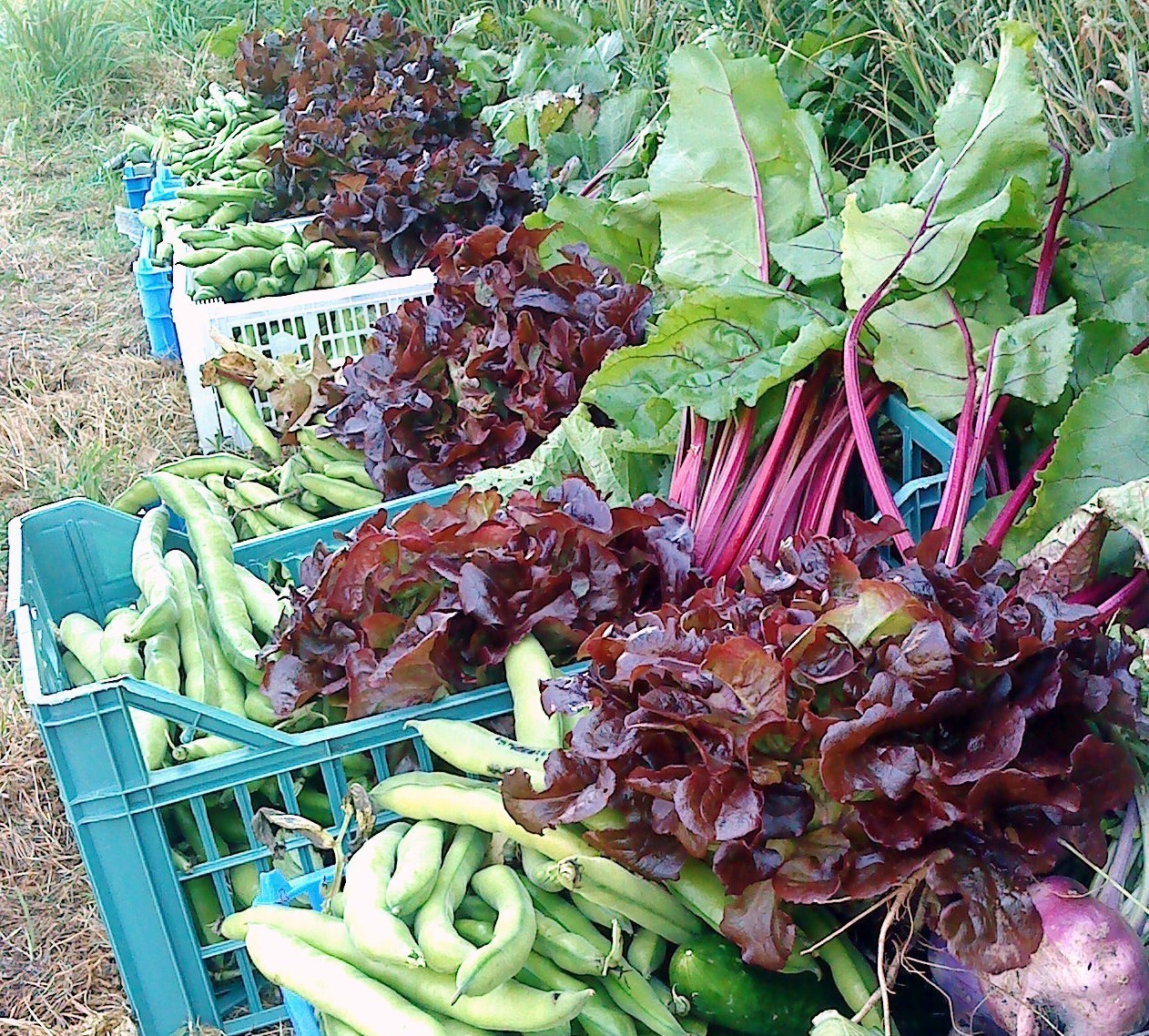
Camel Community Supported Agriculture’s vegetable boxes contain a fantastic selection this week.
Small boxes have an assortment of:
*potatoes (Camel CSA)
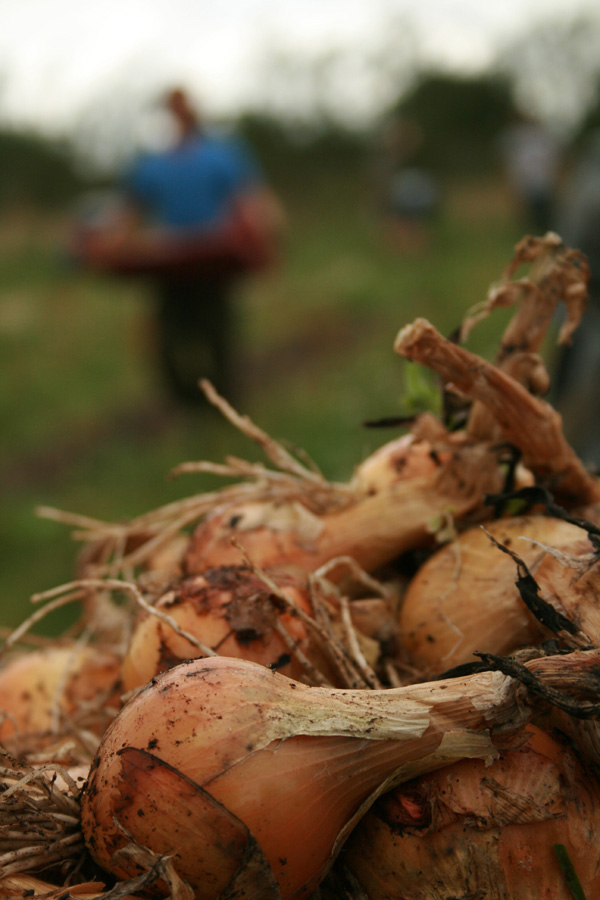
*onions (Camel CSA)
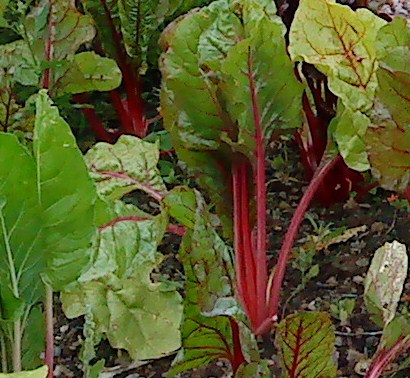
*Swiss chard (Camel CSA)
*courgettes (Mark Norman / Bokelly, St Kew)
*carrots (Jeremy Brown)
*beans (Bokelly, St Kew)
*small salad bag (Jane Mellowship)
& tomatoes (Rest Harrow Farm, Trebetherick)
Standard boxes are filled with the same as above, but not the Swiss chard. They also have:
*large salad bag instead of small (Jane)
plus
*peppers (Jeremy / Jane)
*parsley (Jeremy)
& baby leeks (Rest Harrow Farm, Trebetherick)
AND some plums donated by Mark Norman’s Dad, who lives in Devon!* = grown to organic principles
Once again, the boxes contain freshly-picked vegetables from Camel Community Agriculture’s own plot at St Kew Highway plus high-quality produce from our three expert growers and an outside supplier.
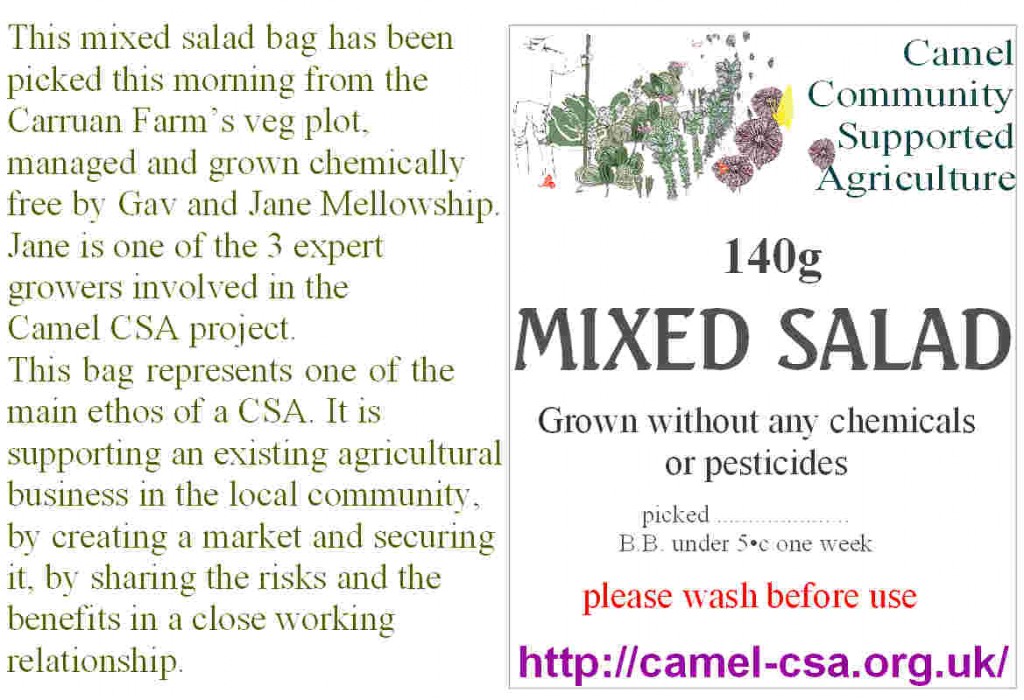
As the label of our mixed salad bag explains:
This mixed salad has been picked this morning from Carruan Farm’s veg plot managed and grown chemically free by Gav and Jane Mellowship…
… This bag represents a main ethos of community supported agriculture. It is supporting an existing agricultural business in the local community by creating a new market and securing it. We’re sharing the risks and benefits in a close working relationship.
See Recipe No 9 – Grilled courgette, tomato and bean salad with basil sauce
August 25, 2009
The media reports constant debates among “experts” as to the true costs and intrinsic benefits of eating organic food. Politicians have effectively copped out on this one. They advocate consumer choice and say buying organic produce should be seen as a “lifestyle” decision.
We have our own way of assessing the value at Camel Community Supported Agriculture.
Each week one of Camel CSA’s expert growers calculates the “worth” of each box size in terms of retail value. So far, both the small and standard veg boxes have been “worth” more than £5 or £8 in retail terms. The problem is, they don’t necessarily look it.
What we have to remember is that our vegetables are absolutely fresh. Our volunteers grew a significant proportion of them. We use organic principles, which means no artificial chemical fertilisers or pesticides.
They may look a little muddy at times (in spite of washing!) but they’ve suffered very few food miles. We can offer smaller, tastier veg, which carry a premium as they have scarcity value.
We can all easily be sidelined by the two-for-one offers in the supermarkets, but these will conceal a price rise somewhere else in the store and the price cut is always met by the grower – not the retailer. We can’t realistically expect to meet the own brand, so-called “Value” products either.
One of our core group members had this anecdote to tell after his family received their first veg box:
“With regard to value, when one of our children took a look at the standard £8 box this week (our first) they thought it looked like poor value, at which they were challenged to compare the cost with produce on Tesco’s website.
“Thirty minutes later, with everything weighed out and the computer consulted, they came back saying the contents would have cost over £11! So no complaints from us.”
Surpluses
Our very first boxes contained an incredibly generous amount of produce and looked wonderful as a result. Since then, we’ve had to be a bit more realistic.
Amounts will always vary from week to week depending on gluts, famines and weather conditions (but not locusts, thank goodness!)
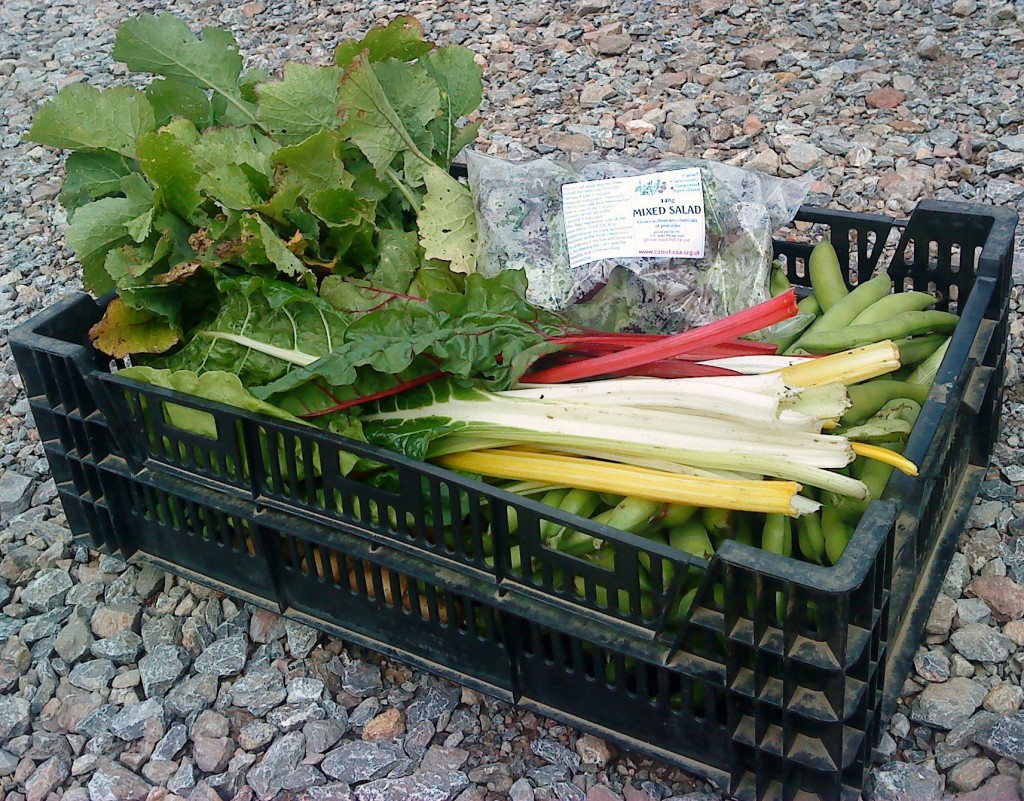
In summer there is likely to be more to share out in terms of surpluses. During the “hungry gap” in late winter, there is likely to be less. But it will even out over 52 weeks of the year. So loyalty pays off.
Box presentation
A lot falls down to how the boxes are presented. In the initial stages of Camel CSA’s vegetable box scheme, this definitely could have done with some improvement. For some of us volunteers it’s been a steep learning curve!
The core management group has discussed at length how to make our weekly share look more attractive. For instance, we are busy sourcing shallower boxes and useful things like paper bags, string and rubber bands so we can bunch up some of the smaller veg like spring onions and parsley. But we do have to be mindful of how much time this can take and we’re reluctant to introduce wasteful packaging.
It’s worth bearing in mind that members of the well-established Stroud Community Agriculture project have to pack (but not pick) their own share – a big saving on time for the growers and volunteers.
Our expert growers, who have their own businesses to run, can’t stand over us all the time. For the moment, they are drawing up some “box presentation guidelines” to help the picking and packing team.