

November 20, 2009
This really tasty recipe comes from Riverford Organic Vegetables. It works just as well without the turnips – just add a bit more of the other roots.
Preparation Time: 20 minutes
Cooking Time: 1 hour
Serves: 4
Ingredients
2 large onions, chopped
2 garlic cloves, crushed
250g puy lentils, rinsed
3 tbsp oil
2 tsp coriander seeds
2 tsp cumin seeds
250g carrots, peeled and cut into 2cm chunks
250g turnips, peeled and chopped
250g swede, peeled and chopped
250g parsnips, peeled and chopped
900ml vegetable stock
1 x 400g tinned chopped tomatoes
salt and pepper
Method
Saute the onion in hot oil with the crushed garlic, until the onion is transparent.
Meanwhile, put the coriander and cumin seeds into a small pan and dry fry for a few minutes, stiring occasionally. Crush with a pestle and mortar. Add the seeds to the onion mixture and cook, stirring for 2 minutes. Add the root vegetables to the onion mixture and cook for a few minutes. Add the lentils and stir well to mix. Pour in the stock and chopped tomatoes. Season with salt and pepper.
Cover and simmer gently for 40 minutes (or cook in a medium oven) until the vegetables are tender and the lentils are soft.
November 19, 2009
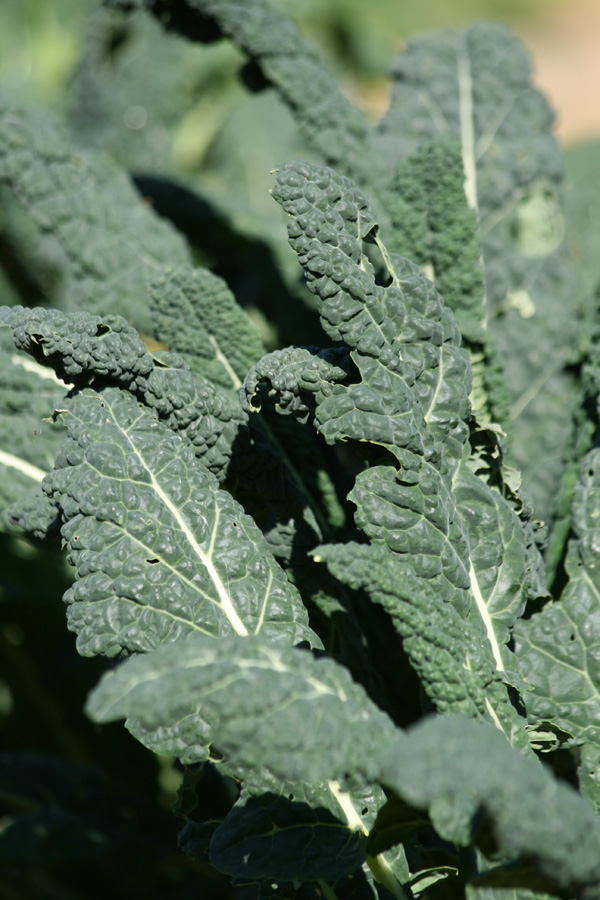
There’s some delicious dark-leafed ‘cavolo nero’ in this week’s veg boxes, along with some of Camel CSA’s own onions, carrots and parsnips. Take any thick stems off the kale and shred the leaves. Cook till tender and then drain and toss with olive oil or butter.
In the small boxes there will be:
* onions (Camel CSA)
* carrots (Camel CSA)
* parsnips (Camel CSA)
potatoes – Wilja variety (Burlerrow, St Mabyn)
* salad bag (Jane Mellowship)
calabrese (Rest Harrow Farm, Trebetherick)
black kale (Rest Harrow Farm)
Standard boxes will have the same plus:
romanesco cauliflower (Rest Harrow Farm)
swede (Rest Harrow Farm)
* brussels sprouts (Camel CSA)
* = grown to organic principles

November 13, 2009
A new short film made in Cornwall questions the sustainability of current food production. It’s the first part of The Price of Cheap Food project.
Kerris Farmers is about four Cornish farmers. It’s been produced by Barry Cooper, lecturer in digital media at University College Falmouth.
The film’s being premiered at the Cornwall Film Festival in Falmouth this Saturday 14 November. Screening will be part of the Cornish Shorts in the Phoenix Cinema, Falmouth starting at 2pm.
Camel Community Supported Agriculture is pleased to hear that The Price of Cheap Food project will also look at experiments in alternative agriculture, local food and allotments.
Barry says:
“In this film four Cornish farmers and family say how things are in an environment where food often costs more to grow than supermarkets eventually pay for it.
“Jeffery was eventually paid 18p per packaged cauliflower even though each one cost him 34p to grow. In the supermarkets they sold at around 78p.

“Adding to the pressure on farmers is the rising cost of fertilizer, fuel and a shortage of labour; farmers are an ageing community. Alan, the beef farmer runs his farm on his own and is totally reliant on a fleet of machines which he has adapted to do all the work by himself.
“East European and other migrant workers did the work in recent years but now that sector seems to be shrinking. So eventually the film leaves us with a question, who will grow the food in the future?”

Further parts of The Price of Cheap Food project seek to explore experiments in alternative agriculture, local food and allotments, along with surviving Chinese and Bulgarian pre-industrial farming cultures and the strategies of the supermarkets to globalize production.
* Find out more here about the LoveWadebridge initiative in Cornwall. It’s arisen out of concerns about the impact of another supermarket on Wadebridge in the north of the county.
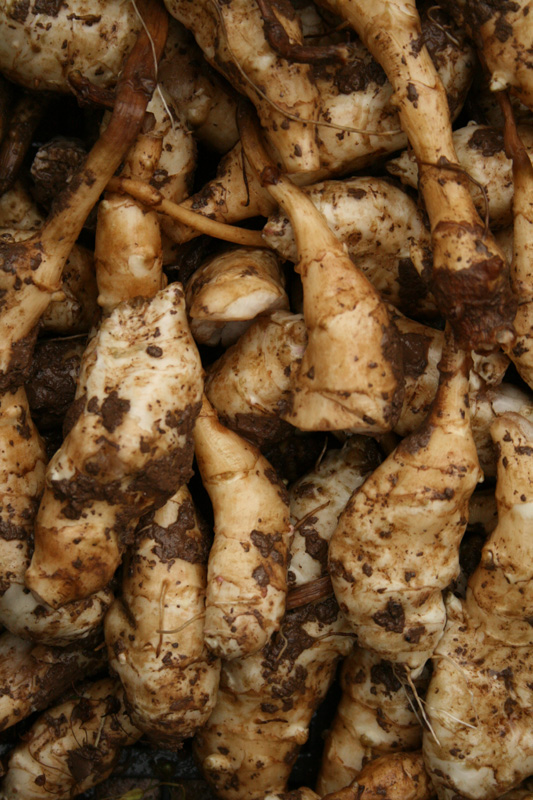
Jane Grigson gives this recipe in both her English Food and Vegetable cookbooks. Ideal for the first appearance in the boxes of our own Camel CSA Jerusalem artichokes.
In general, because they are so knobbly, rather than peeling them raw, it’s best to scrub and parboil Jerusalem artichokes for about five minutes, refresh in cold water and then rub the skins off.
Jerusalem artichokes have a bit of a reputation for causing wind so, as Grigson advises, eat: “A little and not too much, too often.”
Serves 6
Preparation time: 15 minutes
Cooking time: 40 minutes
Ingredients
500g Jerusalem artichokes or 250g each artichokes and potatoes
1 large onion, chopped
1 clove garlic, chopped
½ stick celery, chopped
125g butter
2 rashers unsmoked bacon or 60g ham
1 litre light chicken or vegetable stock
250ml milk (optional)
salt, pepper
6 tbsp cream
chopped parsley and chives
Method
Scrub, parboil and then peel the artichokes as suggested above. Cut up the artichokes and, if you are using potatoes, peel and slice them. Put them with the onion, garlic and celery in a large pan with half the butter. Cover tightly and stew over a low heat for 10 minutes, giving the pan an occasional shake or stir. Now add the bacon or ham and cook a moment or two longer. Pour in the stock and leave to simmer until all the vegetables are soft. Liquidise or sieve, Reheat, adding water or the milk to dilute to taste. Correct the seasoning. Finally stir in the last of the butter, the cream and herbs. Serve with croutons of bread fried in butter.
November 12, 2009
A first appearance for our own Camel CSA Jerusalem artichokes. Contrarily, they’re neither artichoke nor from Jerusalem but a sunflower, originally named girasole after the Italian for sunflower and that name morphed into Jerusalem. Their supposed similarity in taste to artichoke gave them the rest of their name.
In the small boxes:
* onions (Camel CSA)
* Jerusalem artichokes (Camel CSA)
* carrots (Camel CSA)
* swiss chard (Camel CSA)
potatoes (Burlerrow, St Mabyn)
cauliflower (Rest Harrow Farm, Trebetherick)
swede (Rest Harrow Farm)
Medium boxes also have:
* parsnips
ball-headed cabbage (Rest Harrow Farm)
leeks (Rest Harrow Farm)
* = grown to organic principles
November 10, 2009
It’s doing the trick. The new protective mesh is keeping the voracious rabbits off our spring greens.
They’ve been hopping all over it and have left droppings everywhere, but they haven’t been able to find a way underneath.
This expensive mesh is proving to be a worthwhile investment. The rabbits can’t chew holes in it, it doesn’t disintegrate and it lasts for years – unlike fleece.
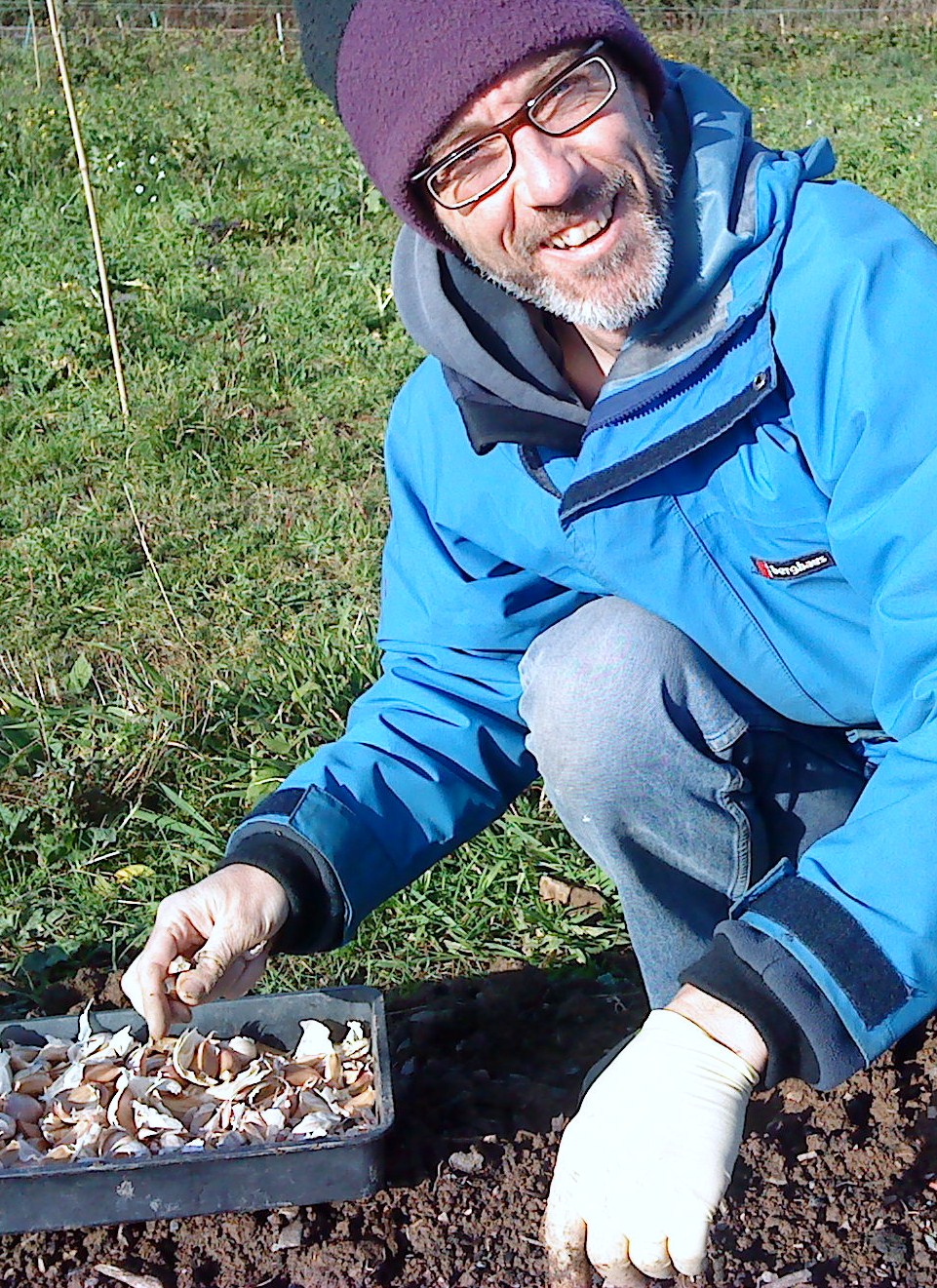
The growing team has managed at long last to plant several rows of garlic sets and sow some broad beans for overwintering. We’re hoping these will give us an early crop next year.
All being well, the rabbits won’t touch the garlic (although earlier in the year they did have a gnaw at some of the onions).
Thanks to expert growers Jane, Jeremy and Mark plus regular Sunday team members Kitty, Mark, Mike H and Mike S.
November 7, 2009
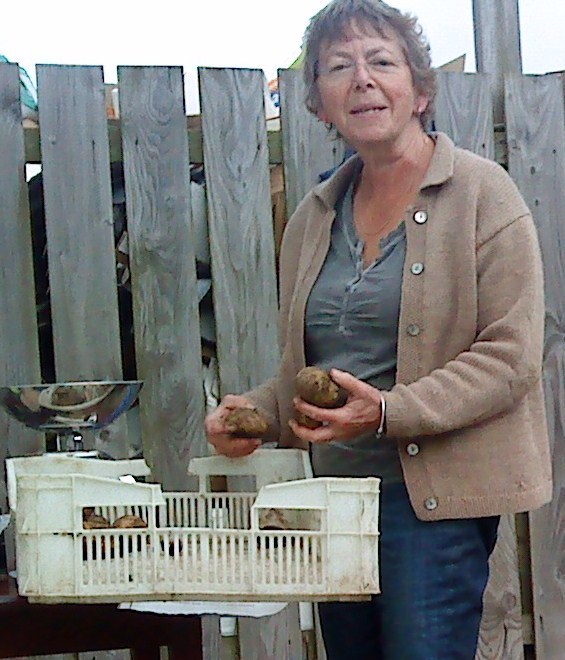
The extra potatoes in our shares are put there in direct response to a plea from Camel CSA members. Standard boxes contain 2.5 kg of Wilja spuds this week and there are 1.5 kg in the small boxes.
Our picking and packing volunteers had to dodge some sharp, heavy showers as they picked, dug, sorted and weighed the veg on Friday. The team’s now rigged up some rudimentary shelter to help them escape the worst of Cornwall’s wild autumn equinoxal weather.
Picking and packing supremo Trish explains:
“We’ve been loaned a gazebo which we put up over the sorting area. We’re hoping it’ll stay put and not take off once we put a couple of ties into the wall.
“It was good to stay reasonably dry while doing the packing and it meant we could leave the boxes under cover at the end.”
Friday’s band of helpers alongside Trish were Penny and Robert, Mike H, Henrietta and Jennie M.
The growing team still have broad beans to sow and garlic sets to plant which we hope (weather permitting!) to get finished this Sunday. See you then.
November 6, 2009
Adapted from Jamie Oliver’s Naked Chef cookbook. Naturally Jamie makes his own pasta – pappardelle (broad, wavy-edged pasta) – but shop-bought tagliatelle or linguine will work just as well for this simple dish.
Serves 4
Preparation: 5 minutes
Cooking: 15 minutes
Ingredients
1 small knob of butter
1 tbsp olive oil
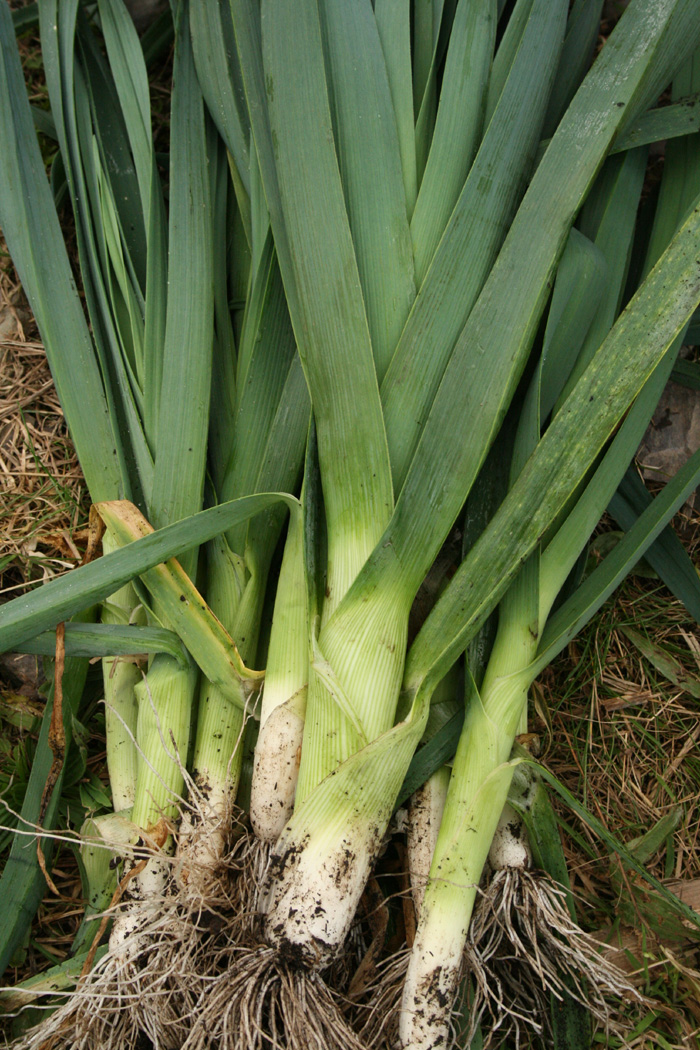
4 medium leeks, trimmed, washed and sliced at an angle
1 clove of garlic, finely chopped
salt and freshly ground pepper
200g mascarpone
455g pasta
1 handful grated parmesan cheese
Method
Put the butter and olive oil into a semi-hot, thick-bottomed pan, add the leeks and gardlic, with a -pinch of salt, and gently sweat, without colouring, for about 5-10 minutes with a lid on, until the leeks are soft and sweet. Add the mascarpone. Let this gently melt into the leeks, creating a semi-thick sauce. Taste for seasoning.
Meanwhile cook the pasta in boiling, salted water until al dente. Toss gently in the sauce (if it seems slightly thick, add a little of the cooking water from the pasta). The sauce should perfectly coat the pasta. Serve sprinkled generously with parmesan.
November 5, 2009
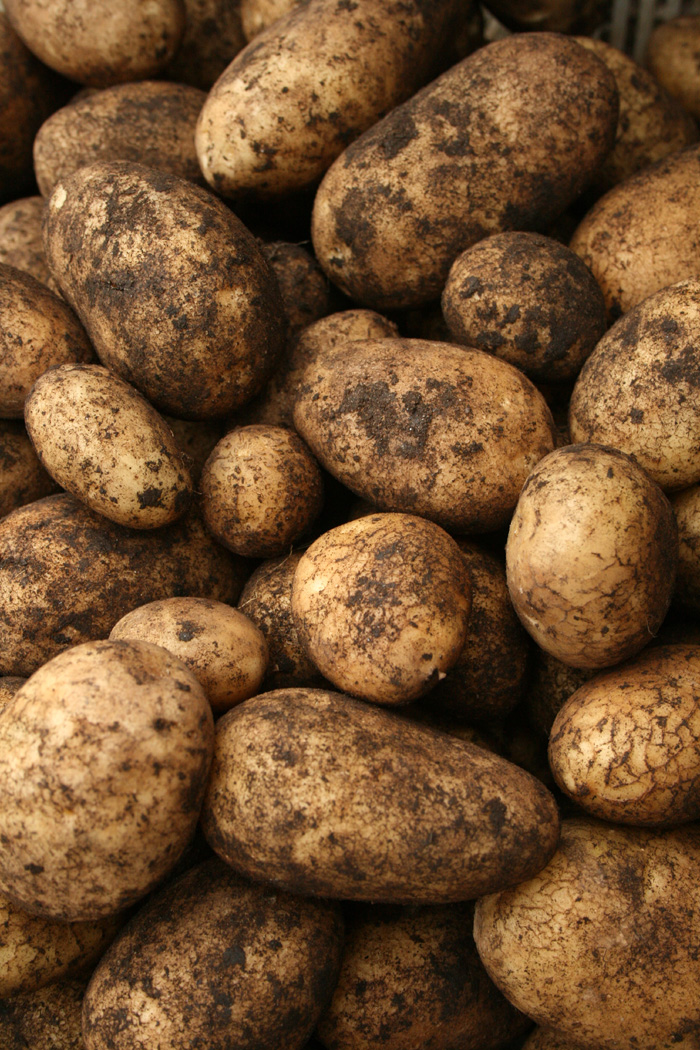
We’re increasing the quantity of potatoes in this week’s veg boxes. Find out more about the different varieties – this week’s are Wilja – and what to do with them at the Potato Council website.
In the small boxes this week there’ll be:
* onions (Camel CSA)
* carrots (Camel CSA)
* parsnips (Camel CSA)
Wilja potatoes (Burlerrow, St Mabyn)
* hot and spicy salad bag (Jane Mellowship)
broccoli (Rest Harrow Farm, Trebetherick)
leeks (Rest Harrow Farm)
Medium boxes also have:
kale (Rest Harrow Farm)
* mixed peppers (small ones hot, larger ones sweet) (Jeremy Brown)
* sprouts (Camel CSA)
* = grown to organic principles
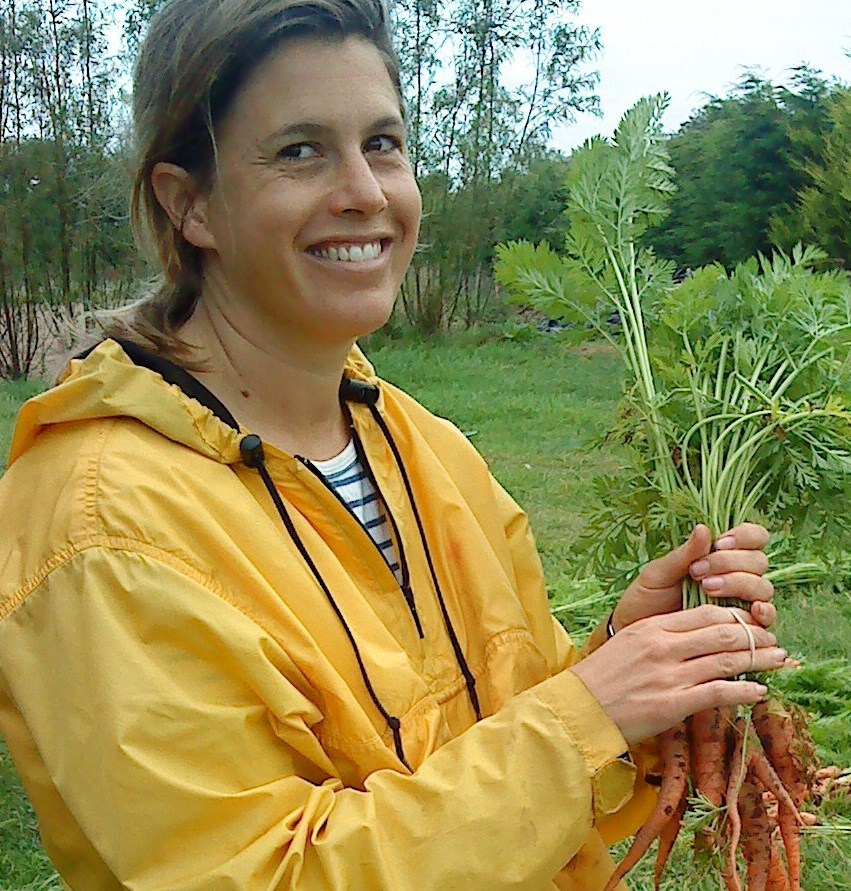
November 4, 2009
We’ve had another mention in the Western Morning News – this time in its Woman section.
WMN Woman’s editor Gillian Molesworth, herself an active Camel CSA member, reveals how she tried to grow vegetables on her own and lost heart. So she fully appreciates what we do:
“I highly recommend it. You get the gardener’s satisfaction of digging and weeding and picking … and you get to take home a weekly vegetable box that you didn’t have to grow all yourself.
You get to eat seasonally and locally, and even if there’s a permanent cloud sitting overhead waiting to rain on you when you start digging up carrots, at least you can complain about it to some fellow volunteers, instead of suffering in lonesome silence.
Finding the fun in vegetables – Western Morning News – WMN2 – Woman 30-10-09