
November 2, 2009
The temperatures may be falling and the nights drawing in, but Camel Community Supported Agriculture is already looking forward to next year’s seasonal vegetable boxes.
Expert grower Jane Mellowship says:
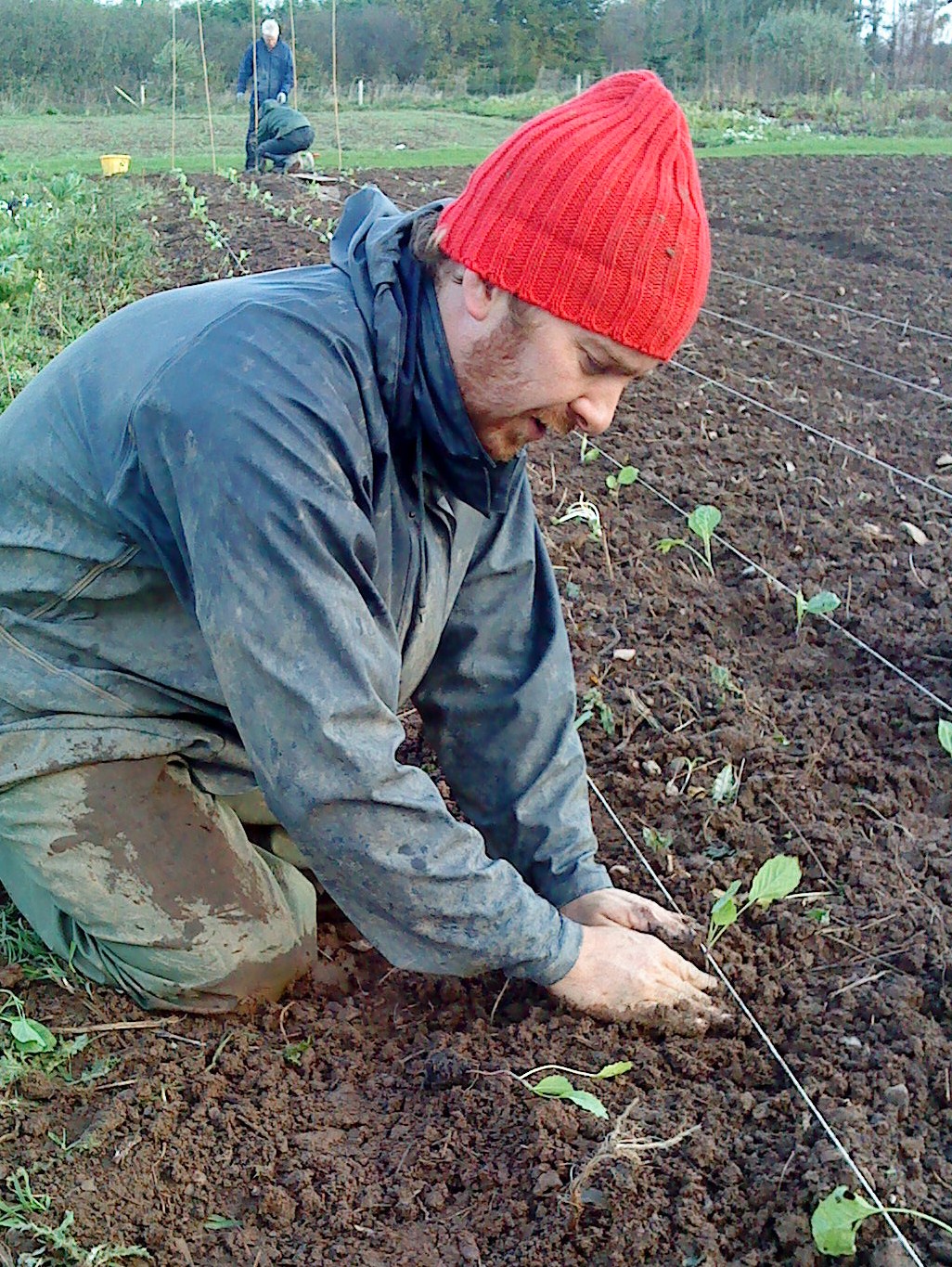
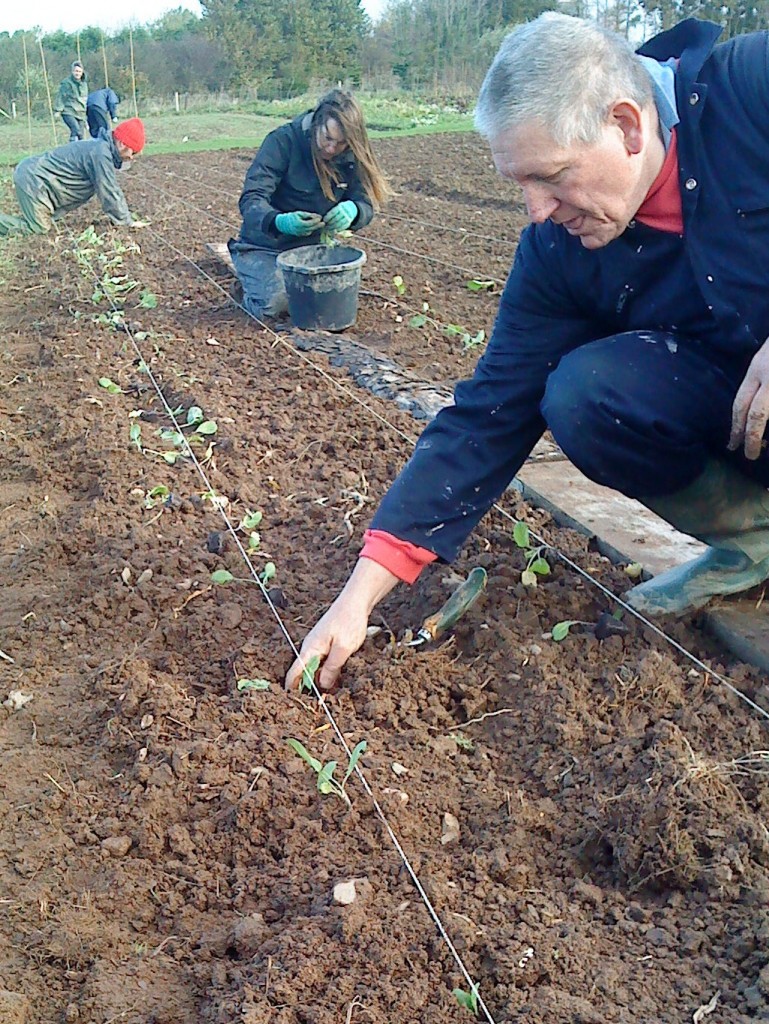
“On Sunday we were very happy to get our spring greens finally in the ground and covered with a special new protective mesh, safe from any would-be nibblers!
“Conditions were far from perfect, very muddy and windy, so we were content to weed creeping thistle from the onion bed and leave it at that.”
Thanks to expert growers Jeremy Brown and Jane Mellowship. aided by Kitty, Mike H and Mike S.
The heavy overnight rain and galeforce winds made the ground too wet to plant the garlic sets and broad bean seeds that we intend to overwinter for an early crop next year. That’ll be done this coming Sunday, weather permitting.
Supplies
Our packing team continue to do wonders on Friday mornings digging and picking and weighing produce. They fill more than 20 veg boxes each week in the short space of two hours.
Grateful thanks to stalwarts Trish, Caroline, Penny, Robert, and Gillian and her two children Sophie and Freddie.
Camel CSA’s own supplies continue to be supplemented by a wide variety of organic veg from our expert growers Jeremy Brown, Jane Mellowship and Mark Norman.
Some high-quality, non-organically grown vegetables are coming from local suppliers. James Mutton at Burlerrow Farm, St Mabyn is providing potatoes. We’re also buying in regular supplies of freshly-harvested brassicas and leeks from Richard Hore at Rest Harrow Farm, Trebetherick.
.
October 29, 2009
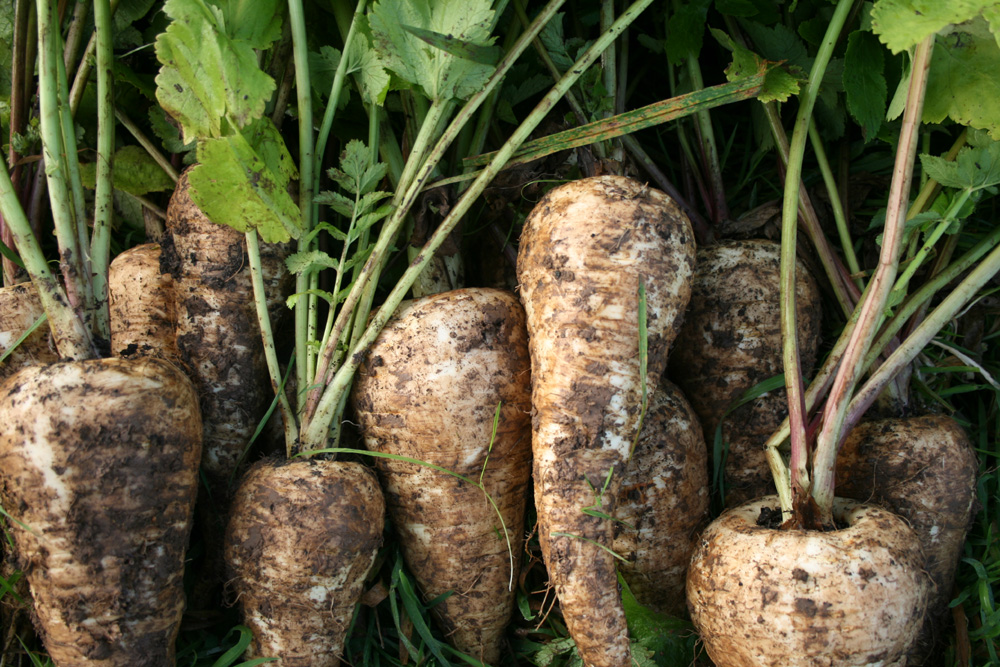
More of our own sweet carrots in this week’s veg boxes, plus onions, parsnips and chard, all grown at St Kew Highway.
In the small boxes:
* onions (Camel CSA)
* carrots (Camel CSA)
* parsnips (Camel CSA)
* chard (Camel CSA
potatoes (Burlerrow, St Mabyn)
cauliflower (Rest Harrow Farm, Trebetherick)
red cabbage (Rest Harrow Farm)
Medium boxes also have
* beetroot (Camel CSA)
* borlotti beans – these need a good 20 minutes’ cooking (Jeremy Brown)
leeks (Rest Harrow Farm)
* = grown to organic principles
October 27, 2009
Hope you’re going to the Lovewadebridge public meeting this Friday 30 October. Wadebridge: Options for the Future, chaired by Dan Rogerson MP for North Cornwall, is at 7pm in Wadebridge Town Hall.
The initiative arises out of concerns about the impact of another supermarket on the town. Sainsbury’s wants to develop the former North Cornwall District Council offices at the eastern edge of Wadebridge into a superstore.
From our perspective as a community vegetable growing enterprise, Camel Community Supported Agriculture wants to make local food work.
We support the retention of a range of independent retail outlets that sell seasonal, locally-produced food.
Supermarkets have a stranglehold on food supply chains in this country. They also rely on international markets to import out-of-season produce. (Like rhubarb from New Zealand!)
This is detrimental to local food producers and the environment and is definitely not sustainable.

Needs
The timely Lovewadebridge campaign is encouraging people to really think about what our town needs, rather than what corporate business and big supermarkets want.
As Jeremy Rowe, Cornwall councillor for Egloshayle, St Breock, St Ervan, St Eval, St Issey, St Mabyn & St Tudy, points out on his blog (and on Twitter):
“If a new supermarket was to be built…Would Wadebridge still be able to support two butchers, a greengrocers, two bakeries, two newsagents and all the other ‘niche’ businesses in town?”
October 26, 2009
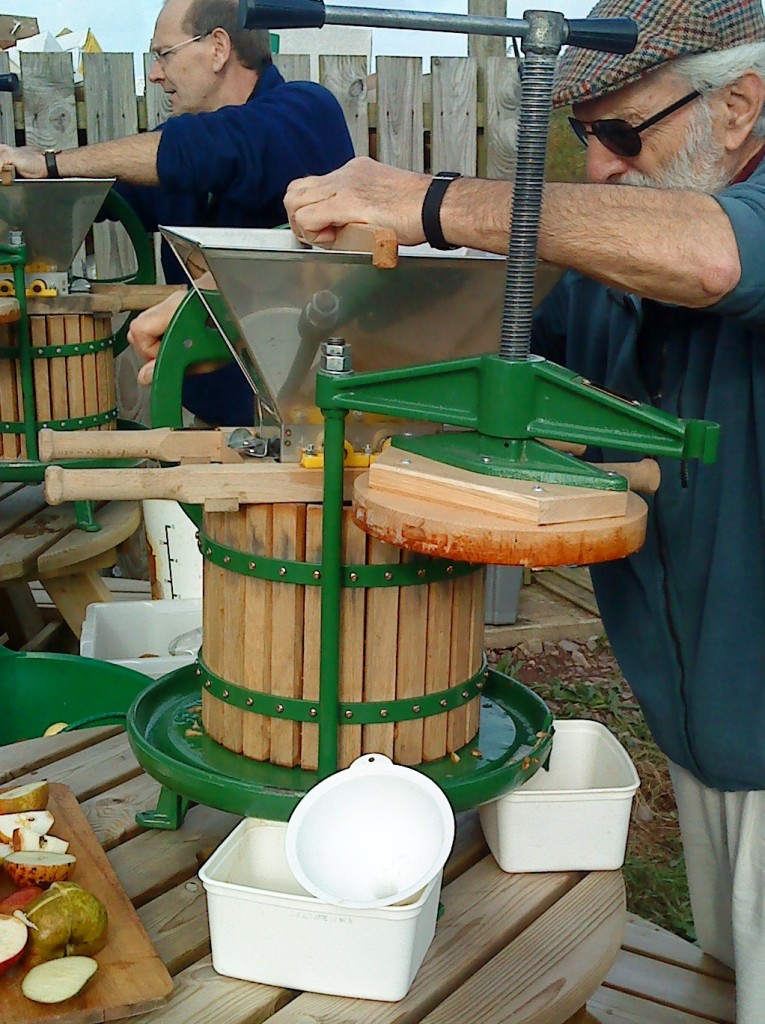
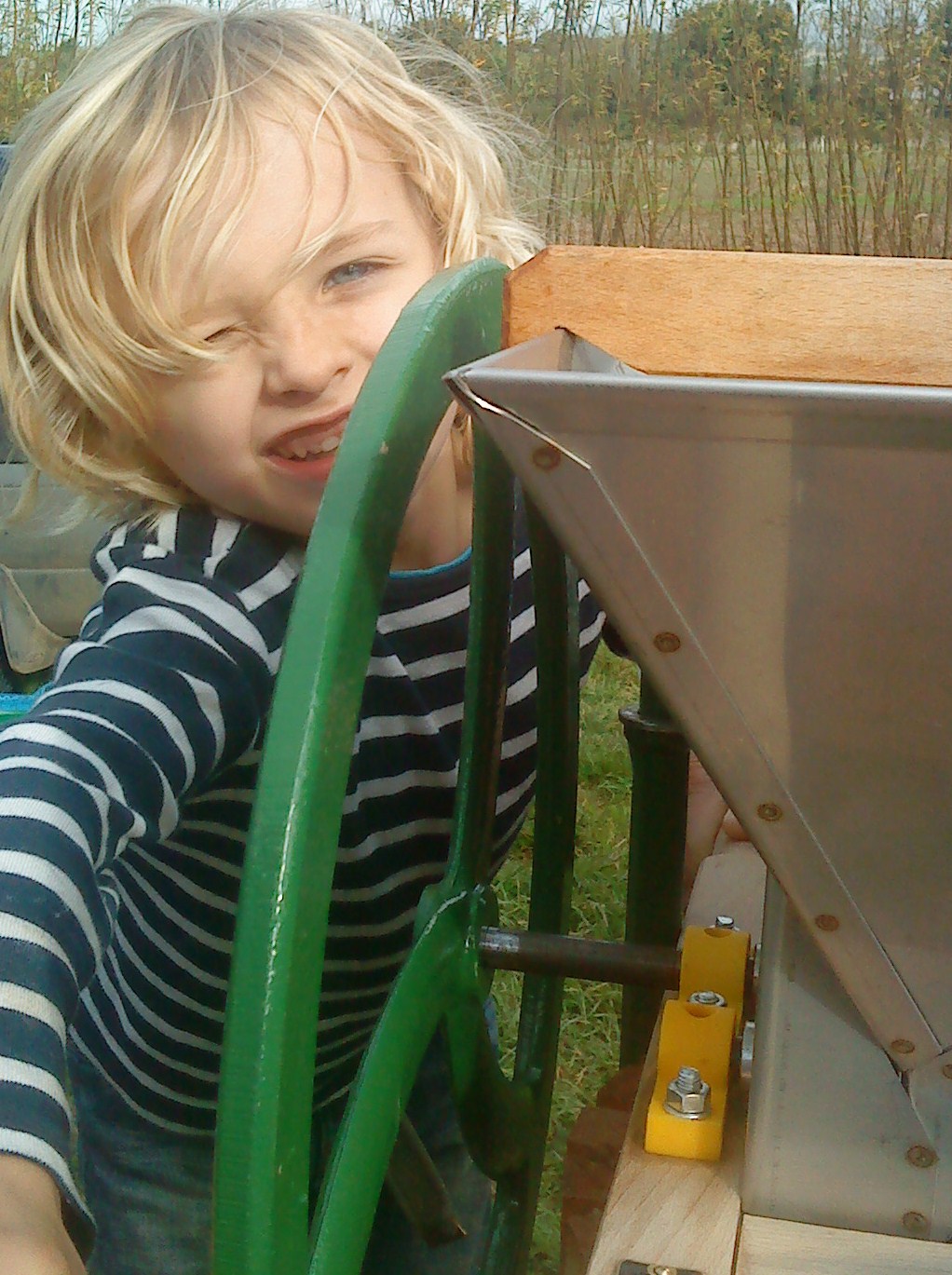
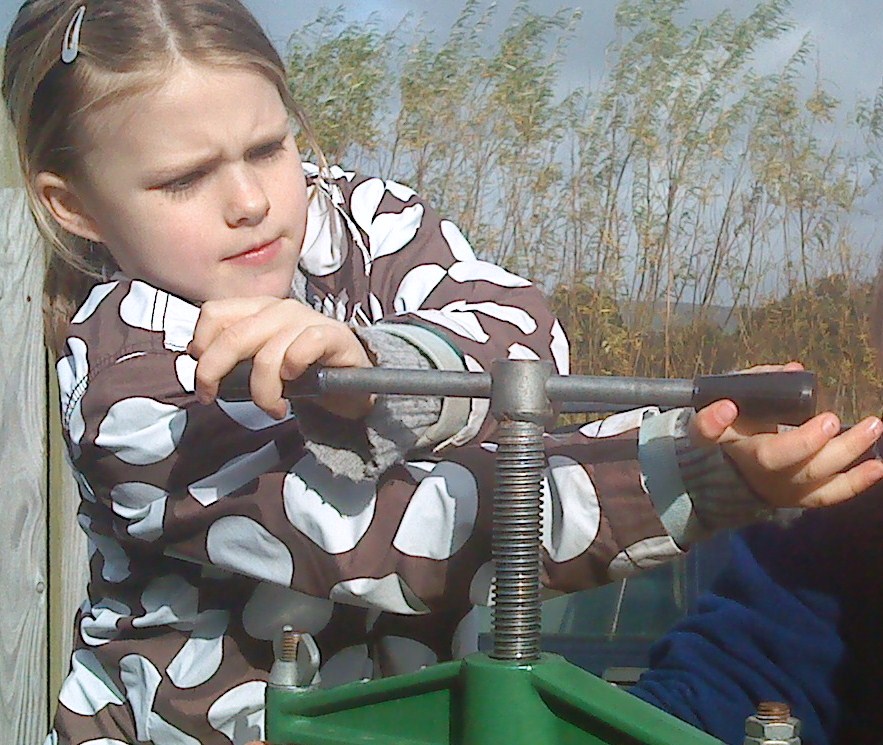
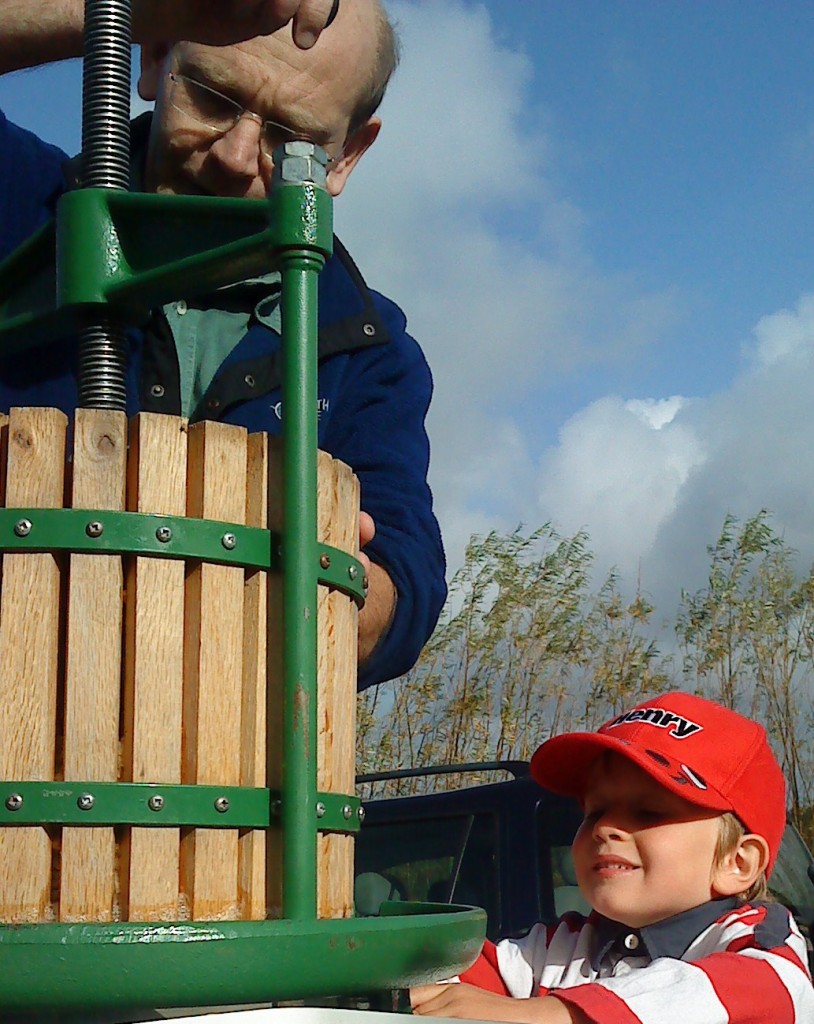
Young and old alike – great fun was had by all at Camel Community Supported Agriculture’s first apple juicing fest on Sunday.
We managed to produce more than 20 litres of delicious juice. It was shared out among our volunteer team, who diligently washed, cut up, crushed and pressed a harvest of local apples.
Grateful thanks to Camel CSA members Peter and Jane, and to the National Trust, for loaning their traditional wooden Vigo apple crushers and presses. CSA core (!) group member Ian remarked later:
“It was a great morning and the fruits (or should that be juices?) of our labour have certainly gone down well with my family – so much so that our bottles are already nearly empty!”
Antonina, Claire, Charlotte, Danny, Ian, Jane I, Jane M, Jeremy B, Mark N, Mike H, Mike S, Paul
& Peter
were the volunteers. We were aided and abetted by our young press gang – Carla, Charlie, Clementine, Finn, Keira and Seth.

October 25, 2009
Some CSAs in the US grow their own pomegranates. Even with global warming, I don’t think it’ll ever come to that here in Cornwall.
Compare Camel CSA’s share this week with the harvest from Beneficial Farms CSA in New Mexico: – Salad Mix, Radishes, Scallions, Turnips, Onions, Acorn Squash, Tomatoes, Red Delicious Apples, Sweet Pomegranates.
Pomegranate recipes from Beneficial Farms CSA include ginger and pomegranate muffins as well as pomegranate guacamole. (What next, you ask.)
See Poms for more intriguing recipes and pomegranate health tips.
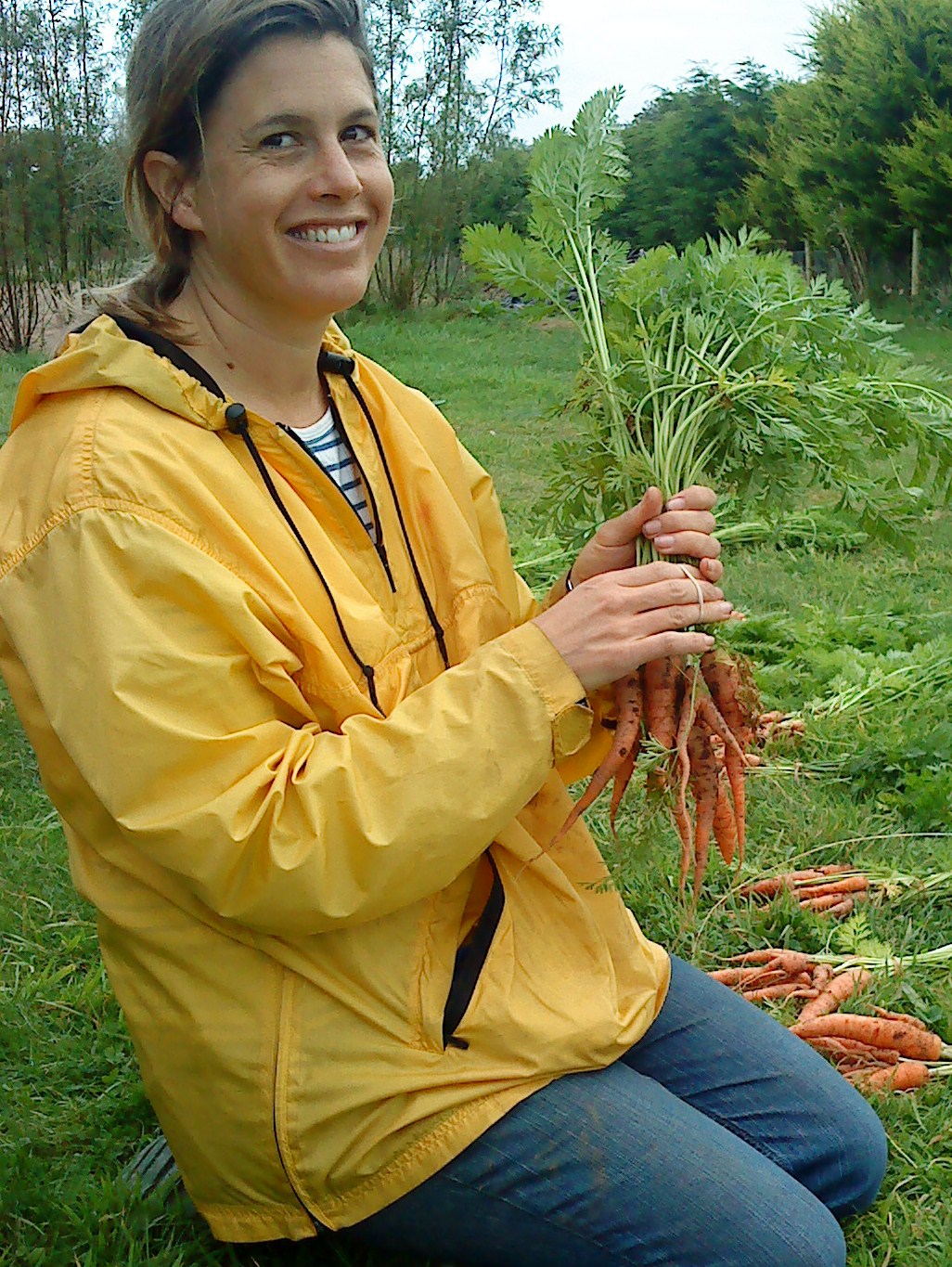
We can enjoy our very own carrots in Camel CSA’s veg boxes this week. We also have the apples we picked last Sunday in St Mabyn.
All that tender loving care has paid off! All those painstaking hours spent handweeding carrot beds suddenly seem worthwhile.
We’ve already taken delivery of our share of the harvest. So, as they say, this list is just for the record…
In the small boxes: –
*carrots (Camel CSA)
*onions (Camel CSA)
*leeks (Mark Norman)
*peppers (Jeremy Brown)
*salad bag (Jane Mellowship)
*apples – Lord Hindlip (Charlotte Barry)
potatoes (Burlerrow, St Mabyn)
kale (Rest Harrow, Trebetherick)
Medium boxes also have:
*parsnips (Camel CSA)
calabrese or tenderstem broccoli (Rest Harrow, Trebetherick)
* = grown to organic principles
October 23, 2009
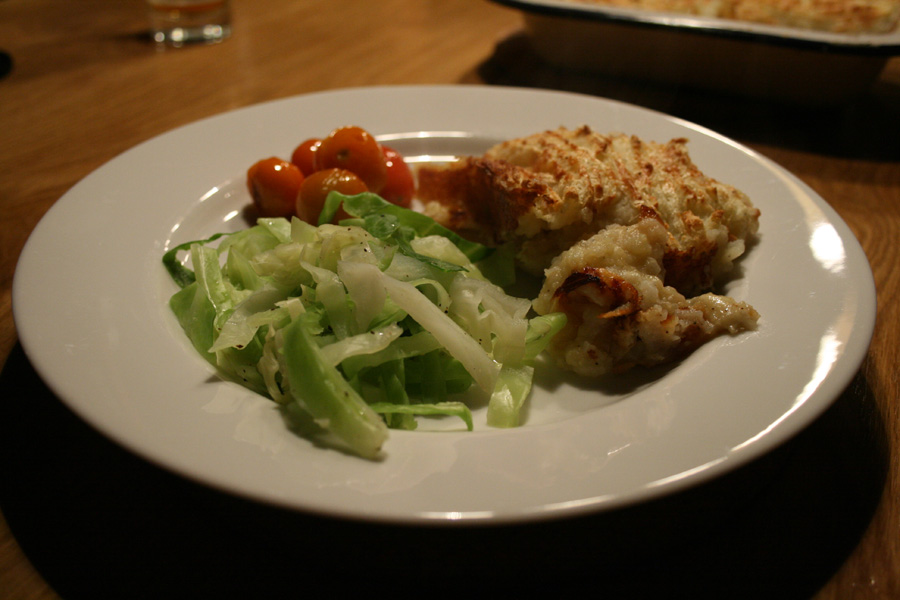
Nigel Slater calls it ‘a cheesy pie to warm the soul’. It’s from his Kitchen Diaries book. And it doesn’t have to be Stilton – Cornish blue, Sue’s Trelawney – any fairly strong cheese will work just as well.
Serves: 6
Preparation time: 30 minutes
Cooking time: 25-30 minutes
Ingredients
1.5kg floury potatoes
4 medium onions
80g butter
150ml milk
225g Stilton or other cheese
25g grated Parmesan
Method
Peel the potatoes, cut into halves or quarters and cook in boiling salted water until tender – about 15 minutes.
While the potatoes cook, peel the onions and cut them in half, then cut each into five or six segments. Put them in a heavy-based frying pan with 40g of the butter and let them cook over a moderate to low heat, stirring from time to time. They will need 20-25 minutes to become thoroughly soft and sticky.
Bring the milk to the boil and turn off the heat. Drain the potatoes, then tip them into the bowl of a food mixer, or mash them in the pan with a hand-held beater. Slowly add the milk and the remaining butter. Beat to a smooth mash.
Set the oven to 200C/Gas 6. Butter the base and sides of a 28cm baking dish. Spoon in half the potato, smooth it a little, then add the onions and a grinding of black pepper. Crumble the cheese over the onions. Pile the rest of the mash over the top and smooth lightly with the back of a spoon.
Dust over the grated Parmesan, then bake for 25-30 minutes, by which time the top will be pale gold and the filling will be bubbling up around the edges.
Enough for 6 as a main dish with greens or a salad.
Sweden turning stray rabbits into biofuel Could this be the solution to Camel CSA’s rabbit problem?
(Thanks to Mike H for sharing this with us)
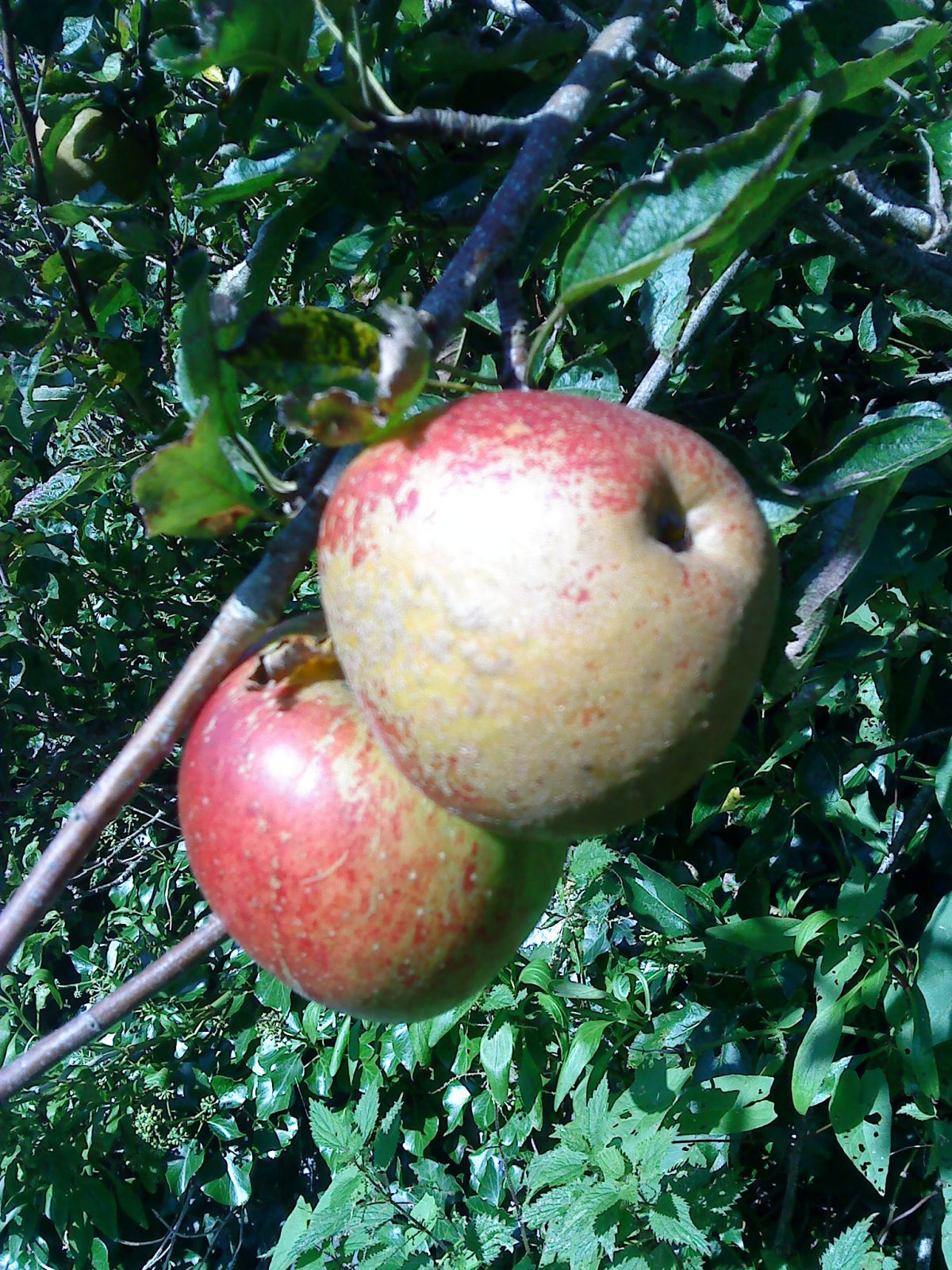
The dessert apples in Camel CSA’s vegetable boxes this week are a delicious old English variety called Lord Hindlip. They were planted in our garden at St Mabyn some 40 or more years ago by Percy Dunstan, a smallholder. His daughter, who still lives in the village, says they were his favourite.
Pomona Publications, which specialises in fine botanical art prints, describes this attractive-looking apple:
“A seedling from the Worcester estate of Lord Hindlip, introduced by the Watkins nurseries of Hereford in 1896. Lord Hindlip has beautifully coloured skin and a fine physique, broad shoulders tapering to a narrow base, with juicy flesh and a refreshing, tangy aromatic flavour.”
Rosanne Sanders, in her classic book The English Apple, admires its particular taste:
“The fruit is a very late dessert type, with rich and distinctive vinous flavour. Picking time is early to mid October and its season is December to March.”
Storage
Lord Hindlip is a late variety that benefits from being kept for a couple of weeks before eating. (But I suggest you try one and decide for yourself.)
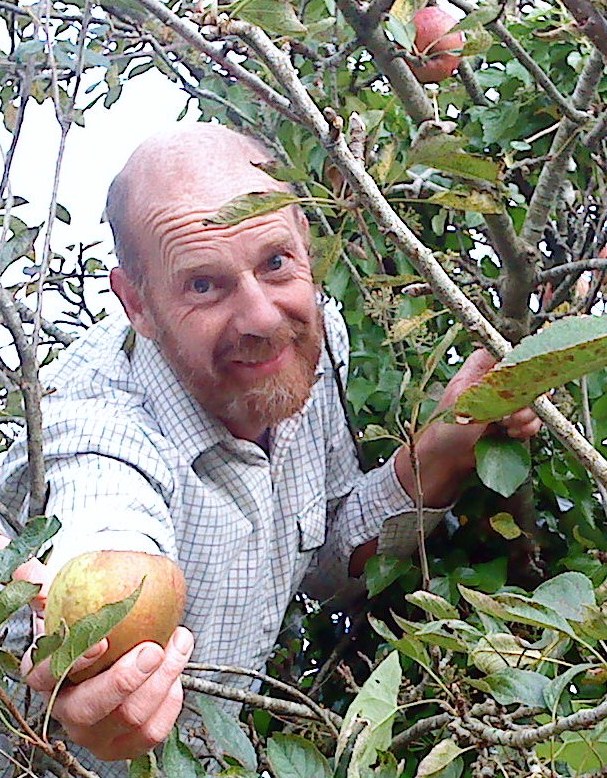
From my own experience, I recommend Rosanne Sanders’ method of storing apples in a clear plastic bag:
“The material maintains high humidity and so prevents the fruits from shrivelling too quickly. However, the apple must be allowed to breathe.
The skin of the bag should be perforated with a hole the diameter of a pencil for every pound of fruit, and the top of the bag folded over rather than sealed. Use clear polythene so that the apples can be seen and any rots removed if necessary.
The required conditions of coolness, darkness and ventilation still apply.”
We’ll be including the remainder of the Lord Hindlip harvest in the apple juice we’re going to produce on Camel CSA’s site at St Kew Highway on Sunday. But we could do with some more. So please – if you know about any surplus apples going begging, do let us know.

October 21, 2009
We’ve located not just one but two fruit crushers and presses so we’re looking forward to Camel CSA’s apple juicing event this Sunday.
All members and their families are very welcome – children particularly so. Just come to our site behind St Kew Harvest Farm Shop between 10 a.m and 1 p.m.
Everyone will be able to have a hand in washing, cutting up, crushing and pressing the apples.
Please bring a clean plastic container to put the juice in. You can either keep it in the fridge and drink it within 48 hours or freeze it in the container.
Wanted – more apples
We picked loads of apples last week in St Mabyn. Thanks to Anne, Callum, Caroline, Charlotte, Kitty, Mark M, Mark N, Mike H, Mike S, Robert and Tess.
The best of the fruit is going in this week’s share of the harvest. The remainder will be turned into juice.
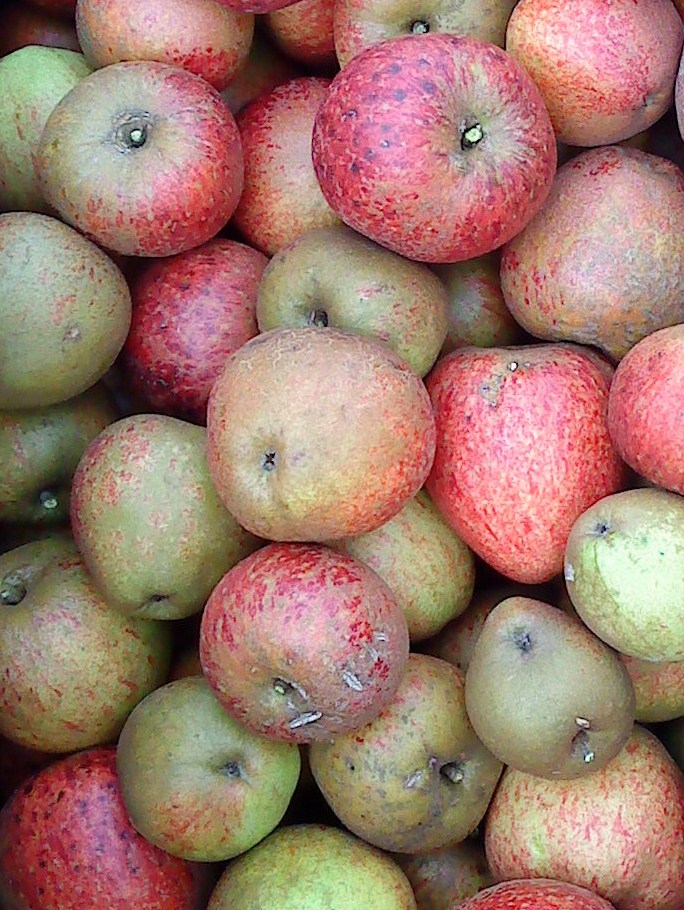
However we could do with some more. The crushing and pressing process uses up a lot of fruit! Around 20 lbs (10kg) of apples are needed to produce a gallon (4.5 litres) of juice.
So if if you know of any surplus apples going spare, please get in touch. Even better, bring them along with you.
Click here to find out more about Vigo’s traditional fruit crushers and presses.